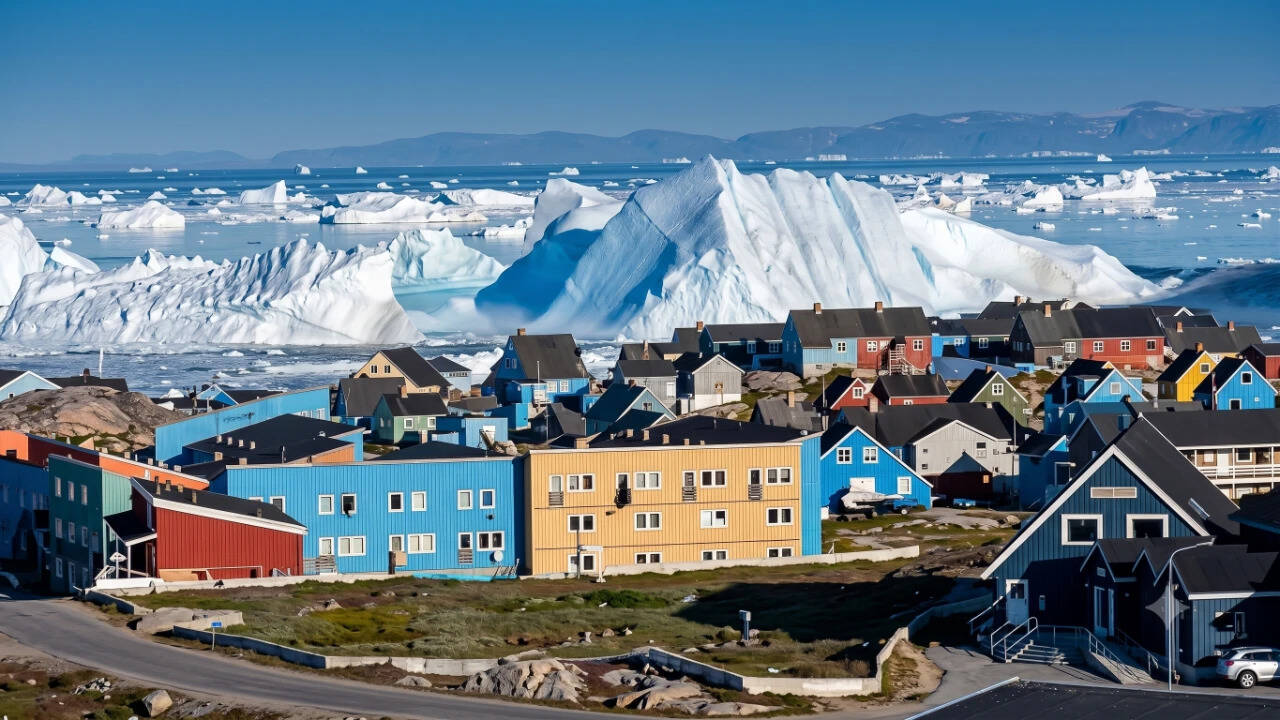
Every summer, the internet loses its collective mind over a giant chunk of ice rolling over in Greenland. The headline writers dust off their favorite adjectives. Cataclysmic. Unprecedented. Terrifying. A livestream catches a skyscraper-sized block of frozen water capsizing in the Ilulissat Icefjord, and the notification ping hits millions of phones. Cue the doom scrolling. Cue the frantic panic about tipping points.
Let us get something straight right out of the gate.
Icebergs flip. They have always flipped. It is not a sign of the end times; it is basic physics doing what physics has done for millions of years.
When a glacier calves, it drops a massive irregular column of ice into the water. Because ice has a lower density than liquid water, roughly ninety percent of that mass sits hidden beneath the surface. As the submerged portion melts, shifts, and erodes from warmer ocean currents, the center of gravity changes. Eventually, the balance point breaks. The ice rotates violently to find a new equilibrium.
Calling this a modern crisis is like watching a wave crash on a beach and screaming that the ocean is overflowing.
The Illusion of Live-Streamed Panic
We have traded scientific literacy for sensationalism. High-definition cameras and cheap satellite uplinks mean that every routine geological adjustment now gets broadcast directly to people who do not understand cryospheric mechanics.
I spent weeks talking to glaciologists and oceanographers who spend their lives actually measuring mass balance in the Arctic. They do not watch these livestreams with dread. They watch them with boredom. A calving event or a capsize is just the system shedding weight. Sermeq Kujalleq, the massive glacier feeding the Ilulissat Icefjord, moves at speeds exceeding forty meters per day. It produces staggering amounts of ice.
When a multi-ton monolith rolls over, it makes a great video clip for social media algorithms. It generates clicks, shares, and adrenaline spikes. But treating a natural mechanical adjustment as an immediate planetary emergency is lazy journalism.
What the Panic Misses
The lazy consensus is simple: big ice rolls over, therefore the ice sheet is collapsing tomorrow, therefore sea levels will swallow coastal cities by next Tuesday.
The reality is far more tedious and a lot more complex.
Glacial retreat is real. The global climate is warming. Nobody with a functioning brain denies the data coming out of NASA's GRACE satellites or decades of core sampling. But conflating a dramatic, photogenic iceberg capsize with sudden catastrophic collapse is intellectually dishonest.
Icebergs do not contribute to sea level rise when they flip. Think about it like a glass of water filled with ice cubes. When the ice melts inside the glass, the water level stays the same. The ice is already displacing its weight. The danger of sea level rise comes from land-based ice sliding off the bedrock and melting into the ocean, not from floating chunks shifting their center of gravity in a fjord.
By focusing public attention on the loud, splashy theatrics of a flipping berg, we distract from the slow, boring, measurable realities of thermal expansion and sustained basal melting.
The Danger of Doom Fatigue
There is a personal cost to this constant sensationalism.
I watch people—especially younger generations—succumb to total environmental despair because every routine natural process is packaged as an apocalypse. When you tell someone that a normal iceberg rotation is a sign of total doom, you break their bullshit detector. Eventually, they stop believing the actual warnings about long-term climate trends because they realize the daily panic-drip was overhyped clickbait.
We owe people better than manufactured terror.
If you want to understand what is happening in Greenland, turn off the livestream. Look at the mass balance charts. Look at the multi-decade satellite records tracking ice sheet velocity and thinning rates. It is a grim picture, but it is an honest one. It does not need Hollywood sound effects or breathless social media commentary to matter.
Next time you see a viral video of an ancient glacier shedding a block of ice that promptly rolls over, take a breath. Appreciate the sheer scale of the mechanics. Marvel at the raw power of gravity and buoyancy.
Then close the tab and look at the actual data.
The ice does not care about your panic. It just obeys the math.