In a quiet suburb outside Essen, a third-generation glassblower named Thomas watches the pressure gauge on his main furnace flicker. Glassmakers do not turn off their kilns. Ever. If the temperature drops below a critical threshold, molten silica cools, solidifies, and contracts, destroying the multi-million-dollar brick lining from the inside out. For nearly seventy years, his family business survived hyperinflation, war recovery, and shifting global markets.
Then, the cheap gas stopped flowing.
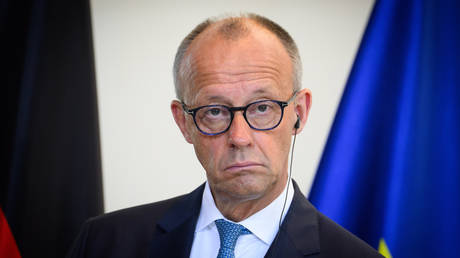
When CDU leader Friedrich Merz bluntly stated that Germany’s ongoing economic malaise stems directly from a "lack of Russian gas," political commentators debated the geopolitical optics. But in the industrial heartlands along the Ruhr and the Rhine, Merz wasn't offering a novel political theory. He was stating a brutal physics problem that millions of working Germans had already felt in their bones.
For decades, the engine of Europe relied on a simple, invisible formula. German engineering excellence plus cheap, piped Russian energy equaled global competitive dominance. It was an elegant marriage of convenience. Pipelines like Nord Stream acted as cheap, high-volume umbilical cords stretching across the Baltic seabed, delivering predictable energy straight to the furnace doors of chemical plants, auto factories, and steel mills.
Then came 2022. The umbilical cords were severed.
When you strip the foundation out from under an industrial economy, the impact isn't just an abstract drop in GDP metrics reported on the evening news. It is the sudden, terrifying realization that the math no longer works.
Consider a metaphor for how power grids and manufacturing interact. Imagine a massive, heavy flywheel spinning in the basement of a factory. As long as a steady, cheap stream of water hits the wheel, it turns smoothly, driving dozens of machines upstairs. Now replace that steady stream with bucketfuls of water thrown at irregular intervals. The wheel jerks. It slows down. The machines upstairs begin to shudder, jam, and fail.
Without low-cost pipeline gas serving as that steady stream, Germany was forced to scramble for alternatives. Liquefied Natural Gas (LNG) shipped across oceans in massive tankers is inherently more expensive. Regasification takes infrastructure, time, and premium capital. Renewable sources like wind and solar are expanding rapidly, but they face a fundamental physical reality: the sun does not always shine on schedule, and the wind does not blow on demand.
Until grid-scale storage technology matures, heavy industry requires baseline power—a continuous, predictable floor of energy that never dips.
When that baseline jumps in price by three, four, or five times overnight, industrial giants face a grim choice. They can absorb the losses until their reserves vanish. They can pass the astronomical costs on to consumers who are already struggling with inflation. Or they can pack up their operations and move to places where energy remains abundant and affordable, like the United States or East Asia.
Many chose the third option.
Quietly, without dramatic press releases, production lines started going dark across Germany. Chemical giants scaled back domestic manufacturing, choosing instead to expand facilities overseas. Mittelstand companies—the specialized, family-owned medium enterprises that form the backbone of German employment—began cutting shifts.
The political debates in Berlin often hyper-fixate on who bears the historical blame. Was it the decades-long energy dependence cultivated by successive governments? Was it the rapid shutdown of nuclear facilities before alternative baseload infrastructure was fully realized? Merz pointed his finger at the fundamental supply deficit, arguing that until Germany secures cheap, reliable energy to replace what was lost, the economic recovery will remain a pipe dream.
Rebuilding an energy strategy mid-crisis is akin to replacing an engine while flying a commercial airliner. You cannot simply flip a switch and substitute decades of deeply integrated supply chains with high-cost stopgaps.
Walking through the industrial parks today, the atmospheric shift is palpable. The hum of heavy machinery is noticeably quieter in towns that once buzzed with round-the-clock activity. Workers who spent thirty years mastering precise industrial trades now sit in breakrooms discussing early retirement, retraining programs, or potential layoffs.
The debate over Russian gas is fundamentally a debate about identity. Germany built its modern societal model on industrial mastery, high wages, and social stability financed by export strength. Take away the affordable energy that powered those exports, and the entire social contract begins to fray at the edges.
Solutions exist, but none are quick, and none are free. Diversifying gas imports through new European terminals helps secure physical supply, but it does not fix the price differential against global competitors. Accelerating green energy infrastructure is vital for the long term, but manufacturing plants need power today, not in five years.
Back in Essen, Thomas looks away from the pressure gauge and out at the factory floor. The furnace is still burning, but at half capacity. He knows that every hour it operates under current energy tariffs drains the capital his father built over half a century.
The macro-economic reports call this structural readjustment. The politicians call it a transition phase. But standing on the concrete floor, watching the flame flicker against the darkening glass, it feels like something far simpler: the sound of a country's industrial heart missing a beat.