The rain in eastern Democratic Republic of Congo does not fall; it assaults. It thrashes against the plastic sheeting of makeshift isolation tents, creating a rhythmic, deafening roar that drowns out almost everything else. But it cannot drown out the silence.
In the treatment centers outside Butembo, the silence is heavy. It is the quiet of a mother holding her breath, waiting to see if the fever breaking means recovery or the beginning of the end. It is the stillness of a healthcare worker, sweating profusely inside layers of impermeable protective gear, pausing before stepping into the hot zone.
We treat global health crises as math problems. We count the infected, map the vectors, and calculate the mortality rates. Right now, the math is terrifying. The number of suspected Ebola cases in this latest outbreak is rapidly spiraling toward 1,000.
Numbers, however, are an anesthetic. They numb us to the reality of what Ebola actually does. It does not just attack the body; it dismantles families. It turns a touch—the most basic human instinct of comfort—into a weapon. When a child cries out in the night, a parent’s instinct is to gather them close. Ebola turns that fierce love into a death sentence.
But the real problem lies elsewhere. The virus is only half the enemy. The other half is the gunfire.
The Invisible Front Line
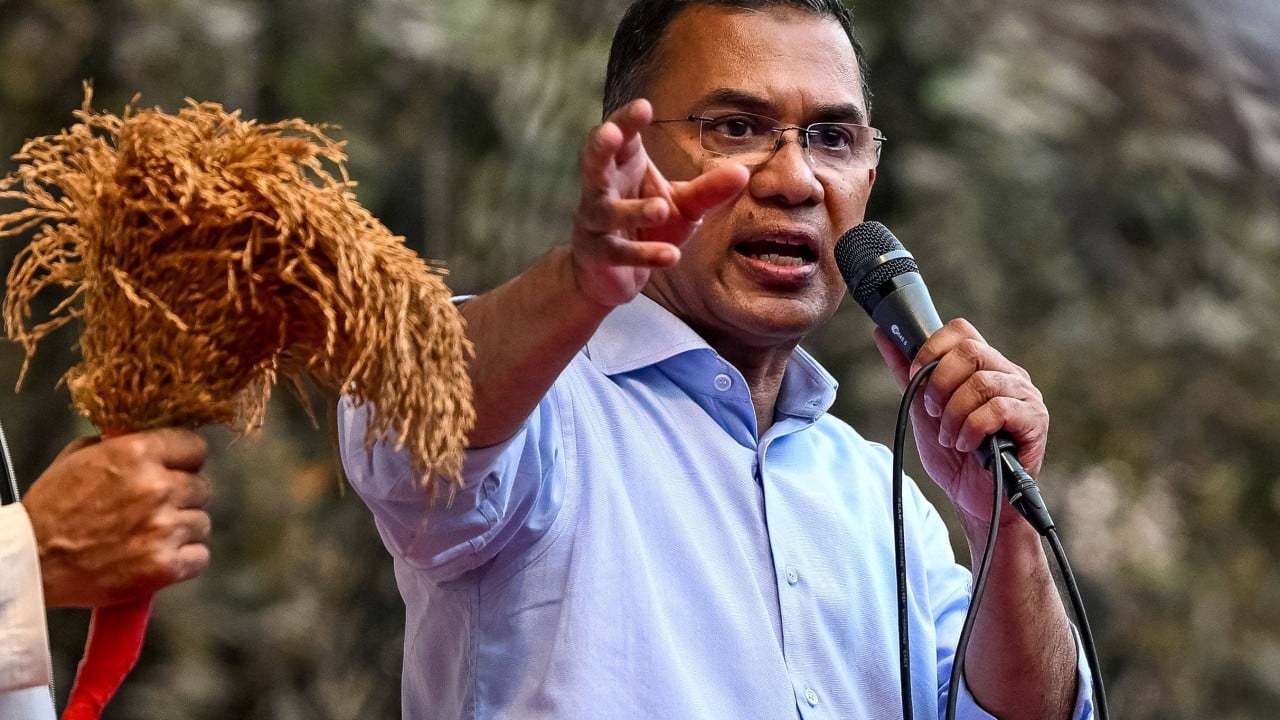
Dr. Tedros Adhanom Ghebreyesus, the head of the World Health Organization, recently did something rare for a bureaucratic official. He dropped the sterile language of global diplomacy and issued a desperate, unvarnished plea. He called for an immediate ceasefire. Not because the WHO is a political entity, but because you cannot fight a hemorrhagic fever when you are dodging bullets.
Consider the geography of this nightmare. Eastern DRC has been a crucible of conflict for decades. Dozens of armed militia groups roam the dense forests and fractured towns. They fight for land, for minerals, for power.
Now, introduce one of the deadliest pathogens known to humanity into this chaos.
When a health worker enters a village to track down anyone who interacted with an Ebola patient, they are not just fighting misinformation or fear. They are navigating active combat zones. Imagine trying to explain the concept of contact tracing to a community that has known nothing but betrayal and violence from outsiders for twenty years.
Trust is a fragile currency. In a war zone, it does not exist.
The rumors spread faster than the virus. The foreigners brought the sickness. The treatment centers are organs-harvesting factories. The government invented the disease to cancel the upcoming elections. To an outsider, these claims sound absurd. To someone whose entire life has been upended by systemic neglect and violence, they sound like a plausible explanation for an invisible killer.
When health teams arrive in trucks, flanked by armed security, they do not look like saviors. They look like another invading force.
The Anatomy of an Outbreak
To understand why this milestone of 1,000 cases is a tipping point, we have to look at how Ebola operates. It is an opportunist. It thrives on broken systems.
A standard Ebola response relies on a simple, clinical formula: isolate the sick, treat them with experimental therapeutics, trace every single person they touched, and safely bury the deceased. Traditional burials in this region involve washing and dressing the body, a final act of profound respect. But an Ebola victim’s body is at its most contagious immediately after death. The fluids are lethal.
Stopping a traditional burial feels, to the locals, like condemning their loved one’s soul to wander. It is an agonizing choice. Choosing between honoring your ancestors or protecting your living children is a choice no one should have to make.
When violence erupts, the entire response mechanism grinds to a halt.
A single night of fighting in a town like Beni or Butembo means health workers must lock themselves in their compounds. It means the contacts of an Ebola patient go unmonitored for twenty-four hours. In the world of viral transmission, twenty-four hours is an eternity.
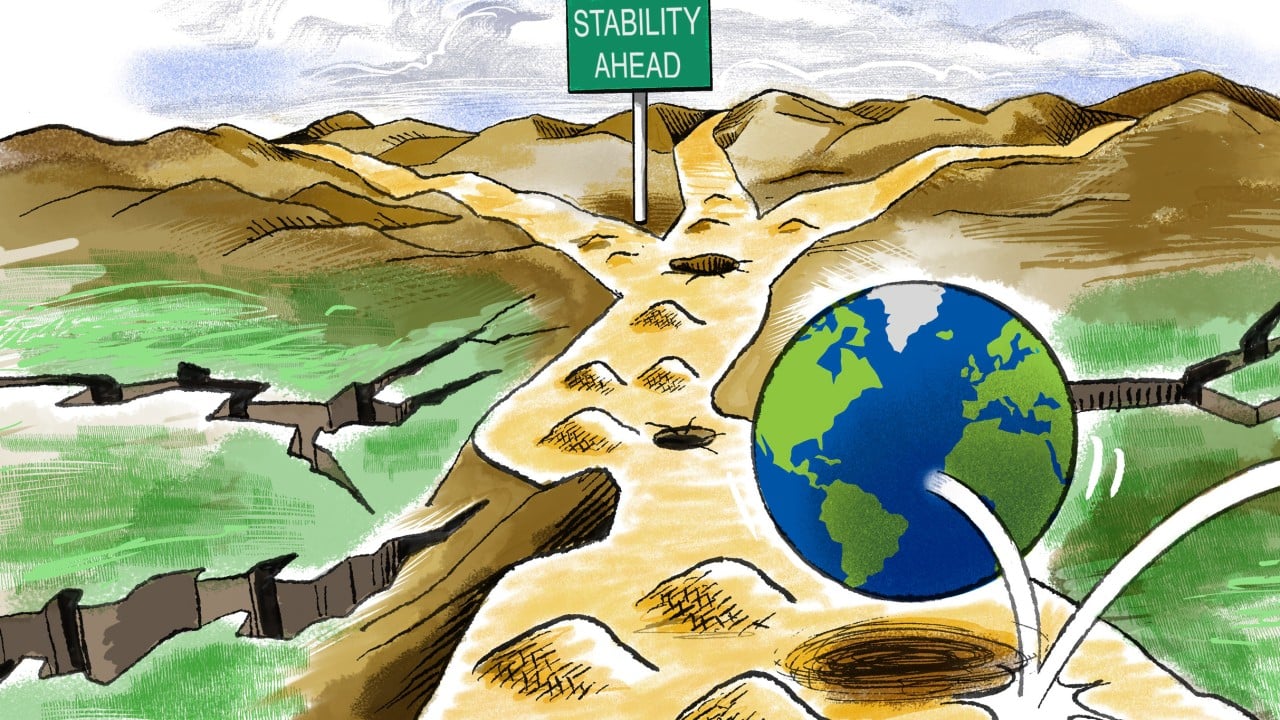
A single infected person, frightened by the gunfire, might flee into the forest or board a motorbike taxi to another town. By the time the security situation stabilizes, the virus has hopped across three new provincial borders. The clock resets. The numbers climb.
The Cost of the Uniform
There is a human face to this administrative failure. Let us call her Alphonsine. She is not a statistic. She is a twenty-four-year-old nurse from Goma who volunteered to travel north into the conflict zone.
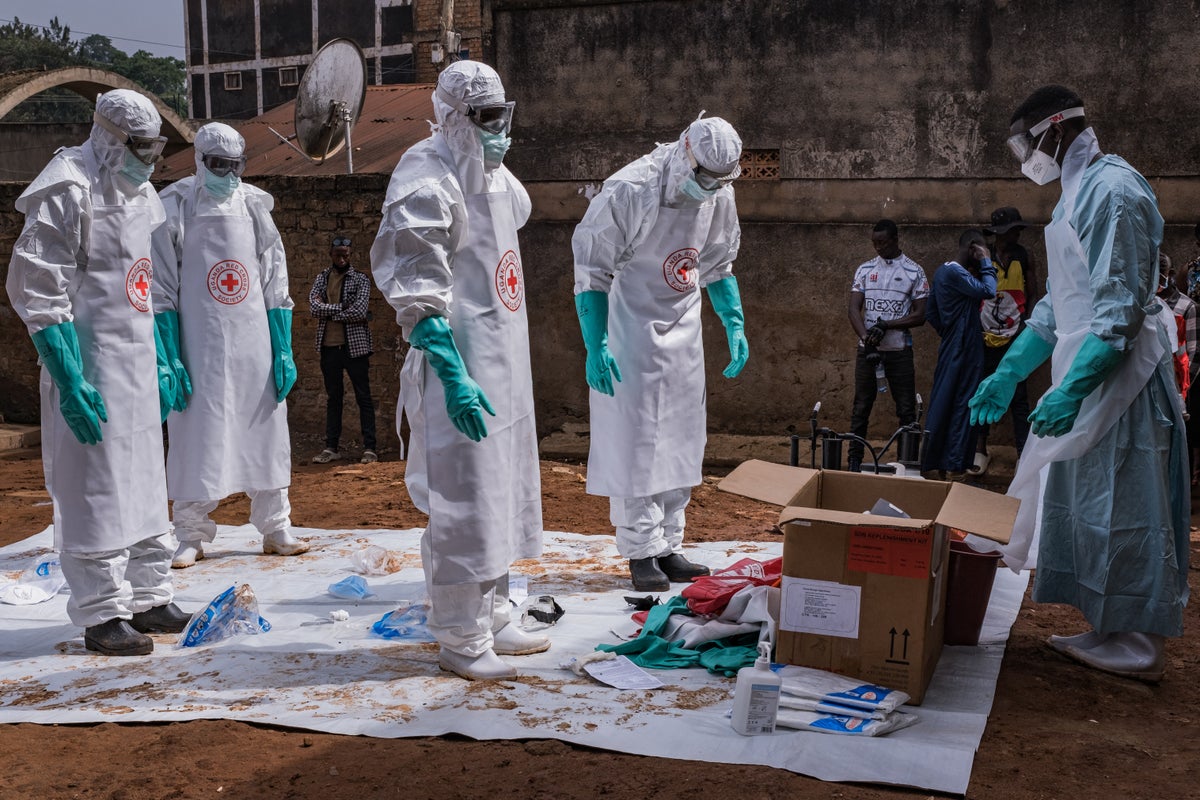
Every morning, Alphonsine zips herself into a yellow hazmat suit. The humidity inside the suit rises instantly to suffocating levels. Goggles fog up. Gowns restrict movement. She works in two-hour shifts because any longer risks heat exhaustion, which leads to mistakes. And a mistake inside an Ebola ward is fatal.
She comforts patients through two layers of rubber gloves. She looks at them through a scratched plastic visor. She tries to project warmth with her eyes because her mouth is covered by an N95 mask.
Last week, the rebel shelling started three miles from her clinic. The ground shook. The patients, already terrified by their internal bleeding, began to panic. Alphonsine had a choice: strip off the gear safely—a process that takes ten minutes of meticulous bleaching—or run. If she ran in the gear, she would tear it and expose herself. If she stayed, she might take a mortar shell.
She stayed. She sat on the dirt floor of the tent, holding the hand of a dying boy, singing softly until the mortar fire drifted west.
This is what a ceasefire means on the ground. It is not about political treaties or signatures on a document in Geneva. It is about giving Alphonsine ten minutes to take off her suit without fearing she will be shot in the back. It is about allowing a mother to bring her feverish child to a clinic without fearing an ambush on the road.
The Global Echo
It is easy for the rest of the world to look at eastern Congo and see a tragedy that is tragic, but distant. A localized fire in a remote corner of the world.
That view is a luxury we can no longer afford.
An outbreak that nears 1,000 cases in a highly mobile, war-torn region is no longer a local event. Butembo is a commercial hub. People travel from here to Uganda, to Rwanda, to South Sudan. The virus does not respect geopolitical borders, and it certainly does not check for militia permits before crossing a river.
Every day the conflict continues is a day the virus gets to mutate, to adapt, to find new pathways through human flesh. The international community reacts with pledges of money. Millions of dollars are funneled into bank accounts. But you cannot buy your way out of a bullet trajectory. You cannot deploy a vaccine if the vaccinator is targeted by snipers.
The WHO’s demand for a ceasefire is a test of our collective sanity. It asks a fundamental question: Can humanity pause its self-destruction long enough to fight a common predator?
The Breaking Point
The rains eventually stop, leaving behind a thick, oppressive mist that clings to the banana trees. The mud makes the roads impassable for the supply trucks carrying the experimental vaccines.
Inside the treatment center, a generator hums, powering the monitors that track failing organs. Outside, the silence returns, brief and fragile, hanging in the air like a gasp before a sob.
Tomorrow, the count will cross 1,000. The press releases will be drafted. The experts will hold press conferences in well-ventilated rooms thousands of miles away, analyzing charts and discussing containment strategies.
But in Butembo, Alphonsine will zip up her yellow suit once more. She will step into the heat, look toward the hills where the gunfire usually starts, and wonder if the world will ever listen to the quiet.