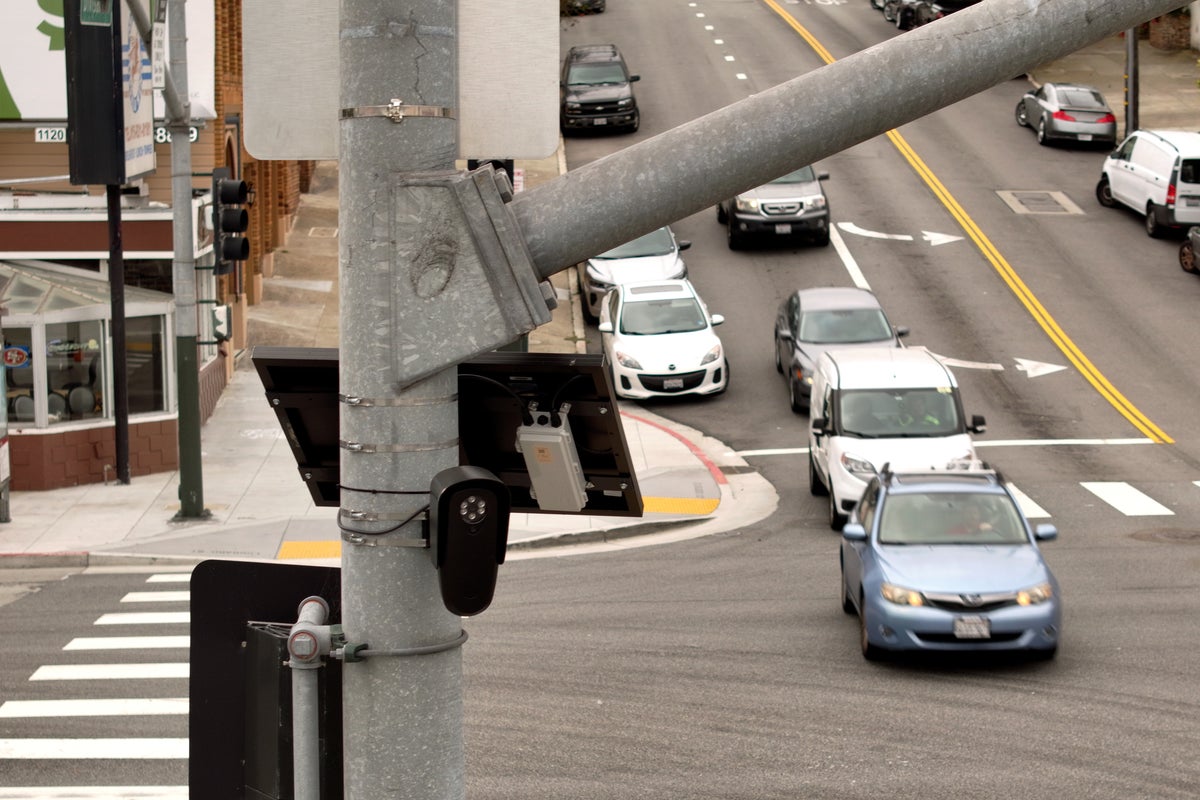
The deployment of Automated License Plate Reader (ALPR) networks by municipal law enforcement operates on a fundamental asymmetric advantage: the marginal cost of digital tracking approaches zero, while the systemic surface area of public tracking expands exponentially. A class-action lawsuit filed against Westchester County, New York, by a coalition of civil rights groups—including the Policing Project at NYU School of Law, the Knight First Amendment Institute at Columbia University, and the New York Civil Liberties Union—exposes the structural tensions between localized administrative expansion and constitutional limits. By amassing a database of 1.6 billion vehicle scans via a network of nearly 600 fixed cameras without explicit legislative authorization, the municipality has converted standard traffic corridors into an infrastructure for continuous geolocation logging.
The core legal friction emerges from a technological shift. Historically, physical tracking required significant human labor and vehicle assets, establishing a natural economic constraint on state surveillance. Modern computer-vision networks eliminate these cost constraints, creating a structural policy failure where executive branch agencies can deploy permanent surveillance networks silently. The Westchester litigation represents a coordinated strategic effort to force state courts to re-evaluate the third-party doctrine and public-space privacy limits in an era where data can be permanently retained, aggregated, and federated.
The Three Structural Pillars of Low-Cost Surveillance Architecture
To evaluate the operational impact of the Westchester ALPR apparatus, the system must be separated into its three structural component parts. Each pillar functions to increase data density while driving down the administrative friction of tracking law-abiding citizens.
+------------------------+      +------------------------+      +------------------------+
| 1. Passive Capture     | ---> | 2. Permanent Retention | ---> | 3. Lateral Federation  |
| 600 Fixed Cameras      |      | 1.6 Billion Scans      |      | 50+ External Agencies  |
| No Individual Suspicion|      | Chronological Patterns |      | Data Leakage Risk      |
+------------------------+      +------------------------+      +------------------------+
1. Passive Optical Capture At Scale
The frontline infrastructure consists of approximately 600 camera units positioned at high-throughput choke points across a 430-square-mile geographic sector. Westchester County sits directly north of New York City, serving as an unavoidable conduit for commuter and commercial transit via major regional expressways including Interstate 87, Interstate 95, and the Hutchinson River Parkway.
Unlike traditional policing mechanisms that require reasonable suspicion or probable cause to initiate a license plate query, these optical sensors operate indiscriminately. The sensor captures every vehicle entering its field of view, extracts alphanumeric strings using optical character recognition, logs precise GPS coordinates, and appends a cryptographic timestamp.
2. Permanent Retention and Data Volatility
The second pillar is the compounding database of 1.6 billion scans collected between 2023 and 2026. Individual tracking frequency is extraordinarily dense. Case documentation indicates that a vehicle belonging to a single plaintiff, Lora Nelson, was logged more than 2,400 times over this multi-year period, while another plaintiff's vehicle was captured 1,134 times.
When a database achieves this level of granularity, the data undergoes a qualitative transformation. Individual data points are no longer isolated observations of public transit; instead, they aggregate into highly accurate predictive models of human behavior, revealing a driver's:
- Employment locations and professional routines.
- Medical visits and specialized healthcare access.
- Religious affiliations, political associations, and personal relationships.
3. Unregulated Lateral Federation
The final pillar is the systemic sharing of this centralized data repository with more than 50 external law enforcement agencies, including federal entities such as U.S. Immigration and Customs Enforcement (ICE). This structural integration bypasses localized political oversight. Because the data transfer protocols lack strict judicial warrant requirements, local municipal infrastructure effectively serves as an outsourced data-collection node for federal agencies. This occurs even when those federal agencies operate under mandates that conflict with local legislative priorities or state-level sanctuary policies.
The Constitutional Architecture and the Demise of the Public Visibility Doctrine
The primary defense of ALPR systems relies on the traditional public visibility doctrine: because a vehicle operates on public roads, drivers have no reasonable expectation of privacy regarding their license plates. This doctrine stems from a pre-digital legal framework. The Westchester litigation targets this specific assumption by leveraging the analytical foundations laid down in United States v. Jones (2012) and Carpenter v. United States (2018).
The legal bottleneck for municipalities lies in the distinction between discrete observation and comprehensive aggregation. In Carpenter, the Supreme Court recognized that cell-site location information (CSLI) provides an intimate window into a person’s life, requiring a warrant despite being shared with a third-party telecommunications provider. The civil rights coalition argues that a dense network of 600 fixed ALPR units generates an identical localized tracking effect.
The systemic tracking equation can be modeled by analyzing the probability of an individual evading surveillance within a managed geographic zone. Let $P_e$ represent the probability of an individual avoiding detection across a network of intercept zones. If a driver passes through $n$ high-density traffic nodes, each with a camera capture probability of $p_i$, the total probability of remaining unmonitored matches:
$$P_e = \prod_{i=1}^{n} (1 - p_i)$$
As $n$ approaches 600 across a highly restricted suburban corridor, $P_e$ drops toward zero. This mathematical reality transforms public roadways from spaces of open transit into closed tracking environments. This structural shift undercuts the premise that driving remains a voluntary action that implies consent to continuous surveillance.
Market Responses and Systemic Risk in Public Data Pools
The legal exposure of municipal ALPR programs has triggered defensive adjustments across the private surveillance industry. Private vendors provide the hardware, cloud storage, and predictive analytics that power these networks.
       +---------------------------------------------+
       | Private Vendor (e.g., Flock Safety)        |
       +---------------------------------------------+
                              |
               Suspends Direct Integration
                              v
       +---------------------------------------------+
       | Federal Enforcement Agencies (e.g., DHS/ICE)|
       +---------------------------------------------+
                              |
                Forces Manual Interoperability
                              v
       +---------------------------------------------+
       | Municipal Data Repositories (Westchester)   |
       +---------------------------------------------+
A prominent vendor in this sector, Flock Safety, suspended direct data-sharing configurations with the Department of Homeland Security following public scrutiny regarding the unchecked leakage of local data to federal immigration authorities. This operational pivot exposes a major point of friction for the industry. Private companies face clear reputational and legal risks when their platforms link local municipal funding with federal enforcement programs without explicit policy guardrails.
This data sharing creates a secondary vulnerability: the centralization of longitudinal tracking records creates a high-value target for state-sponsored cyber adversaries and malicious actors. Unlike credit card numbers or passwords, historical geolocation data cannot be rotated or reset following a data breach. The permanent retention of 1.6 billion data points exposes millions of citizens to persistent tracking vulnerabilities if those systems are compromised.
Operational and Governance Frameworks for Data Management
The fundamental policy failure in Westchester County was administrative. The police department deployed an expansive surveillance apparatus unilaterally, bypassing the legislative review, public comment, and explicit statutory authorization required for programs of this scale.
To mitigate these legal and constitutional risks, municipal entities must transition from unregulated data collection to a structured governance model built on clear operational limits.
Strict Retention Limits
Data not explicitly tied to an active, documented criminal investigation must be purged within a short timeframe, such as 24 to 48 hours. Retaining unflagged records for multiple years to build a historical travel archive creates clear legal liability under state constitutional protections against warrantless searches.
Auditable Access Controls and Hot-List Management
ALPR systems must operate purely on a reactive "hot-list" model. The system should only generate an alert when a scanned plate matches an active database of stolen vehicles, Amber Alerts, or outstanding judicial warrants. Human operators must be barred from conducting historical, open-ended queries on individual citizens without a judge signing off on a warrant based on probable cause.
Technical Firewalls Against External Sharing
Municipalities must implement strict technical blockades on automated data syndication. External data sharing must require a formal, case-specific Intergovernmental Agreement (IGA) or a judicial subpoena. This ensures local municipal assets cannot be repurposed into an unaccountable tracking resource for external agencies.
Long-Term Legal and Regulatory Shifts
The class-action suit against Westchester County will likely establish a clear legal precedent for local governance. State courts are increasingly receptive to the argument that when technologies scale up in volume and drop in cost, they change the fundamental nature of law enforcement surveillance, moving it outside the boundaries of historical legal doctrines.
+-----------------------------------------------------------------------+
|                       Surveillance Evolution Model                     |
+-----------------------------------------------------------------------+
| Phase 1: Resource-Constrained (Manual tailing, high marginal cost)    |
| Phase 2: Unregulated Proliferation (Low-cost ALPR, massive databases) |
| Phase 3: Statutory Stabilization (Warrant mandates, strict purging)   |
+-----------------------------------------------------------------------+
Municipalities that continue to scale up their ALPR infrastructure without clear statutory frameworks face a high risk of court-ordered shutdowns, significant civil liability, and the wholesale exclusion of evidence in criminal prosecutions. As this litigation works its way through the New York court system, the operational baseline for local police departments will shift toward mandatory legislative approvals, transparent data disclosures, and strict limits on data retention.
Administrators should move quickly to audit their current surveillance assets, implement immediate data-purging schedules, and seek formal legislative mandates before judicial rulings force a chaotic teardown of their tracking networks.