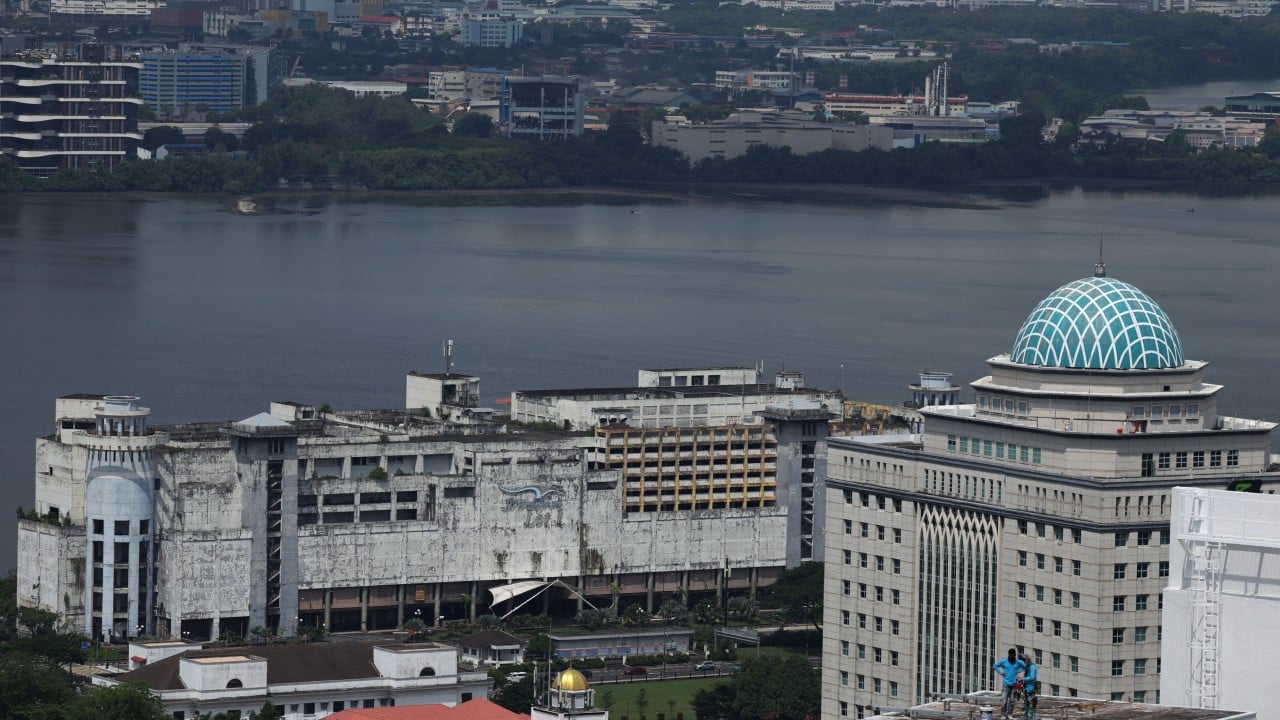
Big-ticket economic announcements don't fill stomach gaps. While politicians in Kuala Lumpur trade barbs over ideological purity and federal scandals, the ground in Johor has shifted entirely. Heading into the July 11 state election, the narrative isn't about the grand "green wave" or historical political betrayals. It's about the kitchen table. Specifically, it's about why an apartment in Johor Bahru costs eight times the median annual household income while local wages remain stubbornly flat.
For the state's Chinese electorate, the upcoming vote has stripped away the luxury of voting on pure ideology. A recent survey by the Institute of Strategic Analysis and Policy Research (Insap) alongside two local universities laid it bare: 60% of Johoreans rank the soaring cost of living as their absolute biggest worry. Nearly half of that survey sample consisted of Chinese respondents. The message is loud, clear, and incredibly pragmatic. Ideological wars are for people who can easily afford their grocery bills.
The Disconnect Between Inflows and Daily Lives
Johor is booming on paper. The state recorded a massive 110 billion ringgit in approved investments in 2025, topping the country's foreign direct investment charts. Data centers are popping up, logistics hubs are expanding, and the Johor-Singapore Special Economic Zone (JS-SEZ) is hailed as the next big economic engine.
But talk to a wet market trader in Johor Jaya or a retail worker in Kulai, and you get a completely different story.
The proximity to Singapore drives a brutal economic paradox. While Malaysia's national inflation rate floated around 1.2% to 2% over the past year, Johor consistently burned higher at 1.8% to 2.5%. The relentless strength of the Singapore dollar pulls local prices upward, making everyday items expensive for those paid in ringgit. Over 300,000 workers cross the Causeway daily to escape this trap, but for those rooted entirely in the local economy, the pressure is immense.
Housing has drifted into what monitoring websites like New Projek classify as "severely unaffordable." When modest apartments hit RM600,000 while local entry-level graduate salaries linger under RM3,000, something breaks. The economic discontent isn't racial or ideological; it's basic arithmetic.
Pragmatism Over Party Loyalty
For a long time, the Chinese vote in Johor's urban pockets was considered a reliable fortress for Pakatan Harapan (PH) and the Democratic Action Party (DAP). Not anymore. Support isn't guaranteed when survival becomes a monthly calculation.
Voters are showing intense fatigue with national-level political theater. MCA secretary-general Datuk Chong Sin Woon noted that attempts by various factions to campaign on old federal issues or abstract ideological threats are failing to stick. Voters simply don't care. They want to hear about flash floods, broken streetlights, parking, and why their children have to migrate to Singapore just to buy a home.
This weariness opens the door for a chaotic, crowded race. Alongside the major coalitions of PH, Barisan Nasional (BN), and Perikatan Nasional (PN), smaller reformist parties are testing the waters. The newly relaunched Parti Bersama Malaysia—led by former cabinet ministers Rafizi Ramli and Nik Nazmi Nik Ahmad—and the youth-centric MUDA are fighting for these exact frustrated urban voters.
Bersama is running a campaign explicitly targeting the dark side of Johor's investment boom. They argue that unmanaged foreign investment drives up land costs and prices out locals before wages can catch up. It's an argument that hits home for parents watching their children pack their bags for Singapore.
What the Ground Actually Wants
If political parties want to secure the Chinese vote in Johor, they need to ditch the abstract manifestos and focus on tangible economic relief.
- Real wage alignment: Big data centers and tech investments look great in press releases, but they need to translate into high-paying local jobs for graduates, not just real estate speculation.
- Targeted housing interventions: The state must aggressively curb speculative property pricing that pushes standard apartments out of reach for families earning in ringgit.
- Infrastructure over optics: Flash floods remain a persistent nightmare across Johor's commercial districts. Voters want drainage systems that work, not more high-end luxury townships.
Relying on old political brand loyalty is a dangerous strategy in 2026. The coalition that wins Johor won't be the one with the loudest political attacks. It will be the one that convinces voters they have a plan to lower the price of a plate of mixed rice and put homeownership back within reach.