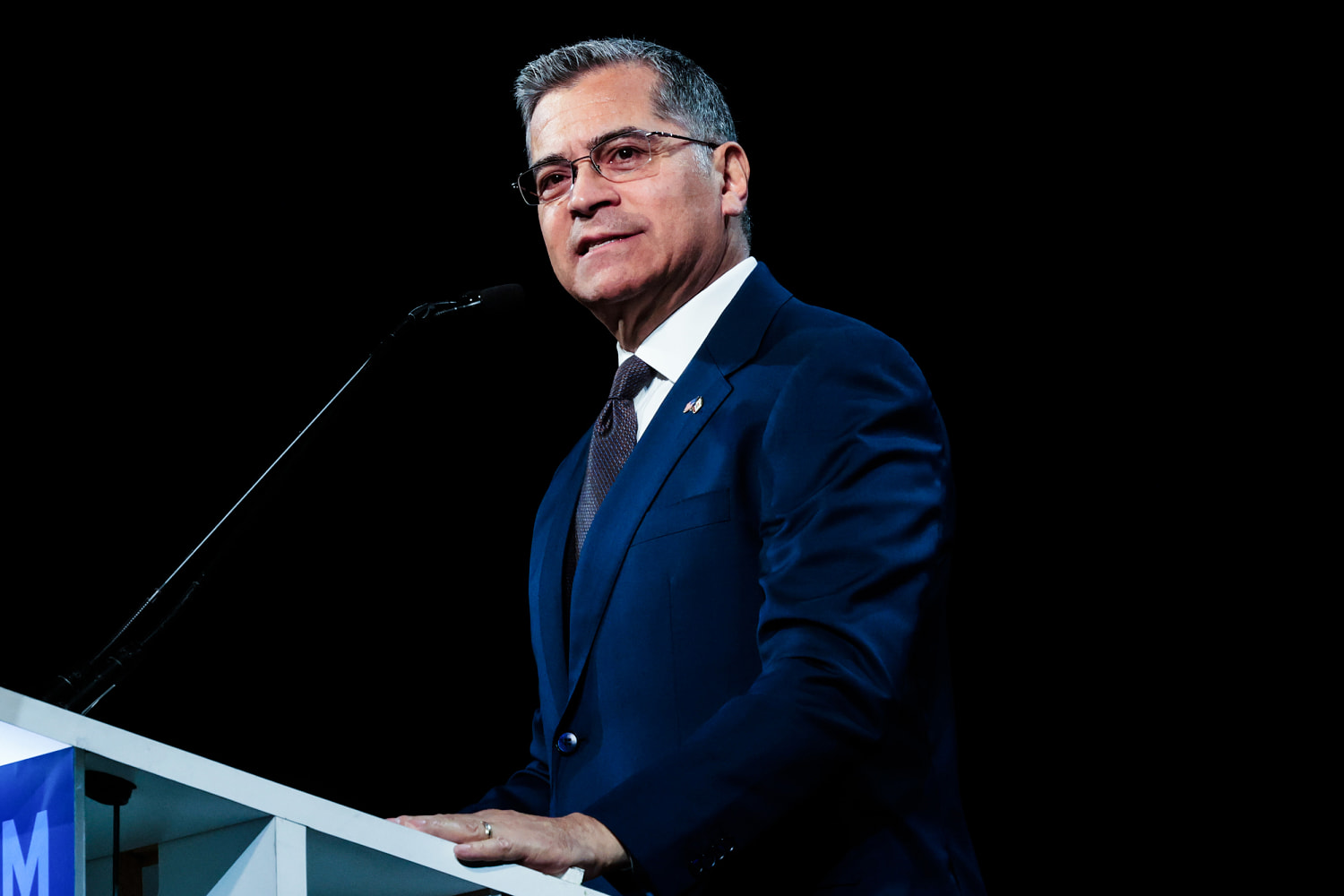
The corporate media is currently spinning a comforting fairytale about the California gubernatorial primary. They want you to believe that Xavier Becerra’s late-stage surge to secure a spot in the November general election is a triumph of "pragmatism over passion." They are calling it a masterful underdog story. They point to his 26.6% vote share as a sign that California Democrats are playing it safe, choosing a seasoned bureaucratic heavyweight to defend the state against a second Trump administration.
It is a comforting narrative. It is also completely wrong.
I have watched political machines burn through hundreds of millions of dollars across decades of tracking western campaigns. What happened in California this week was not a strategic masterclass by a seasoned statesman. It was a default victory triggered by the sudden collapse of Eric Swalwell’s campaign and a massive, last-minute cash injection from corporate monopolies.
By nominating Becerra to face Republican Steve Hilton in November, California Democrats did not select their strongest shield. They chose an uninspiring insider with a track record of bureaucratic mismanagement. They just handed national Republicans a goldmine of weaponized opposition research.
The Illusion of the Pragmatic Underdog
To understand how flawed the mainstream consensus is, look at how Becerra actually got here. Three months ago, his campaign was so stagnant he failed to qualify for major candidate debates. He was bleeding money and invisible in the polls.
Then, two things happened that had absolutely nothing to do with political merit. First, former Representative Eric Swalwell faced a career-ending scandal and dropped out of the race in April. His supporters needed somewhere to go, and Becerra was the only established establishment figure left standing who lacked a billionaire headline. Second, corporate interests panicked over the rise of billionaire climate activist Tom Steyer.
"His campaign got additional support from business interests like the California Chamber of Commerce, Chevron, and PG&E, which funded efforts to boost Becerra or attack Steyer." — Associated Press, June 5, 2026.
Think about that list of donors: Chevron and PG&E. The very corporate entities that everyday Californians blame for soaring energy bills and catastrophic wildfires funded the independent expenditure committees that saved Becerra’s political life. Yet, the public is expected to believe his platform promises to "freeze utility rates" is anything more than empty theater.
This is not a victory for middle-of-the-road pragmatism. It is a corporate bail-out of a failing political campaign.
The Vulnerability of a 35-Year Résumé
Mainstream pundits treat Becerra’s 35 years in public office as an unassailable asset. In modern politics, an endless government record is not a shield; it is a target.
As the former U.S. Secretary of Health and Human Services (HHS), Becerra sat at the epicenter of federal pandemic management and the 2021 unaccompanied migrant children crisis. His department faced severe independent scrutiny for housing children in inadequate shelter conditions and failing to thoroughly vet the sponsors with whom those children were placed.
When Steve Hilton—a sharp, media-trained former Fox News host—takes the debate stage in the general election, he will not be debating California’s future. He will be prosecuting Becerra’s federal record. Every policy failure, every bureaucratic delay, and every mismanaged federal shelter will be broadcast on a loop across the state’s media markets.
The Myth of the Unbeatable Blue State
The lazy political calculus says that because California is a deep-blue state, any Democrat who makes it to the general election automatically has a lock on the governor's mansion. This ignores the growing electorate fatigue with the state's structural crises.
California is currently wrestling with chronic housing shortages, a volatile home insurance market where major carriers are fleeing the state, and some of the highest utility costs in the country. Becerra’s solution? He promises to "declare states of emergency" to freeze insurance and utility rates.
Imagine a scenario where a state executive tries to fix complex market failures by simply writing an emergency decree. It fails every single time. Freezing insurance rates by executive fiat does not force companies to write policies; it causes them to pack up and leave the state entirely, completely destroying the market for everyday homeowners.
Voters are smarter than political consultants give them credit for. They can spot a candidate who offers cosmetic, short-term rhetoric to cover up structural rot. When given a choice between a corporate-backed insider promising more of the same bureaucracy and an outsider offering an aggressive critique of Sacramento's failures, the margin closes quickly.
The Cost of Playing It Safe
By consolidating behind a candidate who represents the absolute baseline of the party establishment, California Democrats missed an opportunity to redefine governance in a state desperately needing structural reform. They rejected candidates offering distinct policy departures from the status quo in favor of a career politician who offers little more than an institutional pedigree.
The primary results are not a sign of a healthy political ecosystem. They are the symptoms of an establishment that has learned to rely on corporate lifelines and structural advantages rather than popular enthusiasm. Relying on an opponent's structural disadvantage is a dangerous gamble when the electorate is frustrated, anxious, and tired of the same old playbook.