The escalating friction in global critical mineral markets is not a temporary trade dispute; it is a structural realignment driven by asymmetric supply chain monopolies. While political rhetoric focuses on mining volumes and raw ore deposits, the true point of vulnerability lies in the midstream processing, separation, and metallurgical transformation of rare earth elements (REEs). Western strategy frequently mistakes geological abundance for supply chain security. China’s dominant position does not stem merely from containing deposits within its borders, but from a deliberate, multi-decade execution of industrial policy that concentrated the global capacity to refine these deposits into high-purity oxides, metals, and permanent magnets.
Evaluating the current friction requires moving past sensationalized headlines regarding "trade wars" and instead mapping the precise economic and technical chokepoints that dictate global tech production, defense manufacturing, and energy infrastructure.
The Asymmetry of the Rare Earth Value Chain
The rare earth supply chain is divided into four distinct phases: extraction, beneficiation/separation, metallurgy, and component manufacturing. The geopolitical leverage points shift dramatically across these phases, creating a steep gradient of dependency.
[Extraction] ----> [Separation/Refining] ----> [Metallurgy] ----> [Component Manufacturing]
(Geologically      (Chemically Complex;        (High Pollution;   (Sintered Neodymium
 Distributed)      Highly Concentrated)        CapEx Intensive)   Magnets - 90%+ Monopolized)
Upstream Extraction and the Illusion of Diversity
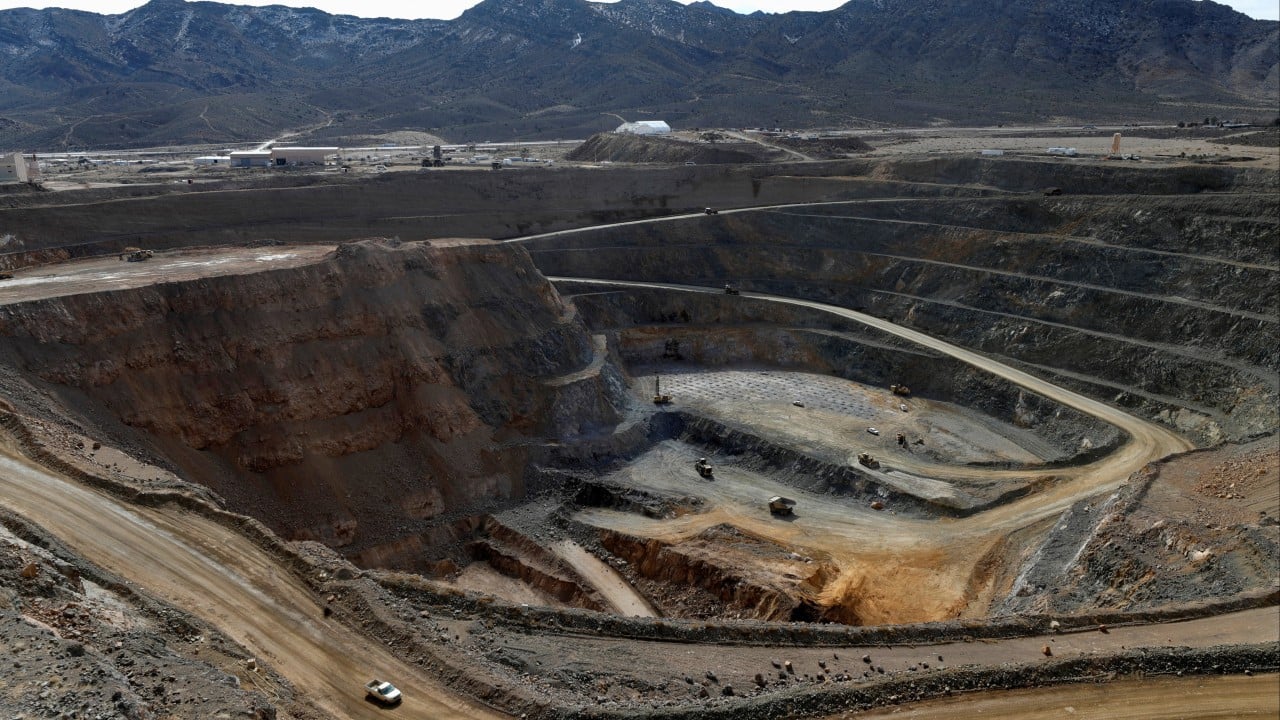
Light rare earth elements (LREEs) such as neodymium ($Nd$) and praseodymium ($Pr$) are geologically common. Deposits exist across North America, Australia, Africa, and Southeast Asia. The opening of mines like Mountain Pass in the United States or Mount Weld in Australia proves that extracting raw ore outside of China is commercially viable. However, raw ore is a low-margin commodity with zero utility in advanced manufacturing.
Midstream Separation and the Refining Bottleneck
The first true bottleneck occurs during chemical separation. Rare earth elements are chemically similar and bind tightly to one another and to radioactive co-products like thorium and uranium. Separating them requires solvent extraction lines consisting of hundreds of sequential stages utilizing hazardous acids.
China controls approximately 70% of global mining extraction capacity but commands over 90% of the world's chemical refining capacity for these elements. A mine operating in the West that cannot access domestic refining infrastructure must export its concentrates to Chinese facilities for separation, rendering the upstream independence mathematically irrelevant.
Metallurgy and Alloy Production
Once oxides are separated, they must be converted into pure metals or specific metallurgic alloys. This phase is characterized by thin commercial margins, high energy consumption, and significant environmental externalities. Western supply chains possess almost zero commercial-scale capacity to convert separated rare earth oxides into metals.
Downstream Component Manufacturing
The final, highest-value phase involves transforming alloys into sintered neodymium-iron-boron ($NdFeB$) permanent magnets. These components are vital for electric vehicle drive motors, wind turbine generators, guidance systems, and consumer electronics. China produces roughly 90% of the world’s permanent rare earth magnets. This creates a compounding dependency: even if a Western nation successfully mines, separates, and turns the material into metal, it must still rely on a supply chain that terminates in Chinese component fabrication.
The Strategic Triad of Export Controls
The re-emergence of trade restrictions operates through three distinct tactical vectors designed to squeeze Western supply chains at different levels of maturity.
1. Element-Specific Export Restrictions
Rather than executing a blanket ban on all rare earth exports—which would accelerate Western capital deployment into substitute infrastructure—the strategy employs surgical restrictions on specific high-value elements.
- The Gallium and Germanium Precedent: While not technically rare earths, the export restrictions placed on gallium and germanium serve as the operational blueprint. By requiring specific export licenses for these semiconductor precursors, supply availability can be throttled precisely to disrupt foreign defense and chipmaking operations without completely crashing the market price.
- Heavy Rare Earth Element (HREE) Target Dominance: The primary points of vulnerability are dysprosium ($Dy$) and terbium ($Tb$). These elements are added to neodymium magnets to preserve magnetism at high operating temperatures, such as those found in military hardware and electric vehicle drivetrains. China holds a near total monopoly on HREE extraction and processing, primarily from ionic clay deposits. Restricting HREEs acts as a structural kill-switch for high-performance magnet manufacturing outside of Asia.
2. Technology and Processing Intellectual Property Embargoes
The most significant escalation is not the restriction of the physical material, but the prohibition of exporting the underlying technology used to process it. China's export catalog restricts the transfer of technology related to:
- Rare earth extraction and separation systems.
- Production equipment for high-performance rare earth permanent magnets.
- Advanced metallurgical techniques for heavy rare earth alloy formulation.
This technology embargo lengthens the Western runway for building independent supply chains. Western firms cannot simply buy off-the-shelf equipment; they must reinvent proprietary chemical engineering processes, pilot them, and scale them under strict regulatory environments.
3. State-Directed Consolidations
The reorganization of China's state-owned enterprises into centralized entities like the China Rare Earth Group has consolidated pricing power and production quotas. This structural alignment eliminates internal competition, allowing a unified state apparatus to manipulate global spot prices. By flooding the market with low-priced LREEs, the state can intentionally depress global prices, making Western mining projects economically non-viable and suffocating capital investment before projects reach processing maturity.
Western Counter-Strategies and Structural Failure Modes
Western governments have responded with capital subsidies, defense procurement mandates, and international partnerships like the Minerals Security Partnership. These strategies, however, face deep economic and physics-based limitations.
Capital Expenditure Lag and Financial Death Valleys
Building a greenfield rare earth separation facility requires immense capital expenditure and carries an execution timeline of seven to ten years from permitting to steady-state production. During this window, private companies must survive the "financial death valley"—a period of zero revenue combined with high debt service costs. Because Western capital markets demand quarterly returns, private equity is structurally disincentivized to fund projects that face predatory pricing from a state-subsidized competitor.
Environmental Regulatory Friction
The chemical extraction of rare earth elements produces massive volumes of toxic wastewater and radioactive tailings. In North America and Europe, obtaining environmental permits to handle, store, and process these materials is an arduous, litigious process. The regulatory overhead increases the per-kilogram operating cost ($OpEx$) of Western refiners, ensuring that even if a facility comes online, its output requires a significant price premium compared to Chinese material.
The Balancing Problem in Chemical Processing
Rare earth elements exist in fixed, geologically determined ratios within specific ores (such as bastnäsite or monazite). A refiner cannot choose to mine only neodymium; they must mine the entire elemental suite present in the rock.
$$\text{Total Yield} = \sum (Ce + La + Nd + Pr + Sm + \dots)$$
This creates the "balancing problem." To obtain one ton of high-demand neodymium, a processor must simultaneously extract and refine multiple tons of low-demand cerium ($Ce$) and lanthanum ($La$). The market for cerium and lanthanum is perpetually oversupplied, turning these elements into economic liabilities rather than assets. If a Western facility cannot find a commercial market for 70% of its elemental throughput, the entire financial model collapses onto the pricing of the remaining 30%, driving costs to unsustainable levels.
Tactical Execution Blueprint for Supply Chain Resilience
To decouple successfully from the primary midstream supplier, industrial consumers and defense procurers must shift away from broad diplomatic agreements and execute granular operational changes.
Implementing Direct Offtake and Toll-Processing Agreements
Industrial buyers must stop purchasing raw metals or processed magnets via spot markets or third-party brokers, which obscures the origin of the material. Instead, enterprises need to secure direct upstream offtake agreements with domestic miners and simultaneously fund dedicated toll-processing arrangements with allied separation facilities in regions like Australia or Japan. This ensures a closed-loop supply chain where the material never enters the dominant competitor’s geographical jurisdiction.
Engineering Around the Bottleneck: Substituting and Reducing HREEs
Automotive and industrial engineering teams must aggressively redesign hardware to minimize reliance on the most heavily monopolized elements.
- Heavy Rare Earth Free Magnets: Shift to permanent magnets that utilize grain boundary diffusion technology, which concentrates dysprosium and terbium only at the edges of the magnetic grains rather than throughout the entire structure, reducing HREE consumption by up to 80%.
- Alternative Motor Architectures: In sectors where weight constraints are less critical, transition from permanent magnet synchronous motors to induction motors or externally excited synchronous motors that completely eliminate rare earth elements from the rotor assembly.
Establishing Strategic Government Buffer Stocks
Voluntary commercial stockpiling is insufficient due to the holding costs of inventory. Governments must construct physical reserves of separated oxides and pure metals, specifically targeting dysprosium, terbium, and neodymium. These stockpiles must not be static reserves reserved exclusively for wartime scenarios; they must function as market-stabilizing mechanisms capable of loaning material to domestic component manufacturers during artificial supply crunches or predatory pricing maneuvers.
The structural reality of the rare earth market dictates that independence cannot be achieved through mining alone. Until Western capital markets and regulatory frameworks adapt to build out high-pollution, low-margin chemical refining and metallurgical infrastructure, the dependency on the primary midstream monopoly remains absolute. Strategic positioning requires funding the unglamorous chemical and physical processing steps that transform dirt into industrial value.