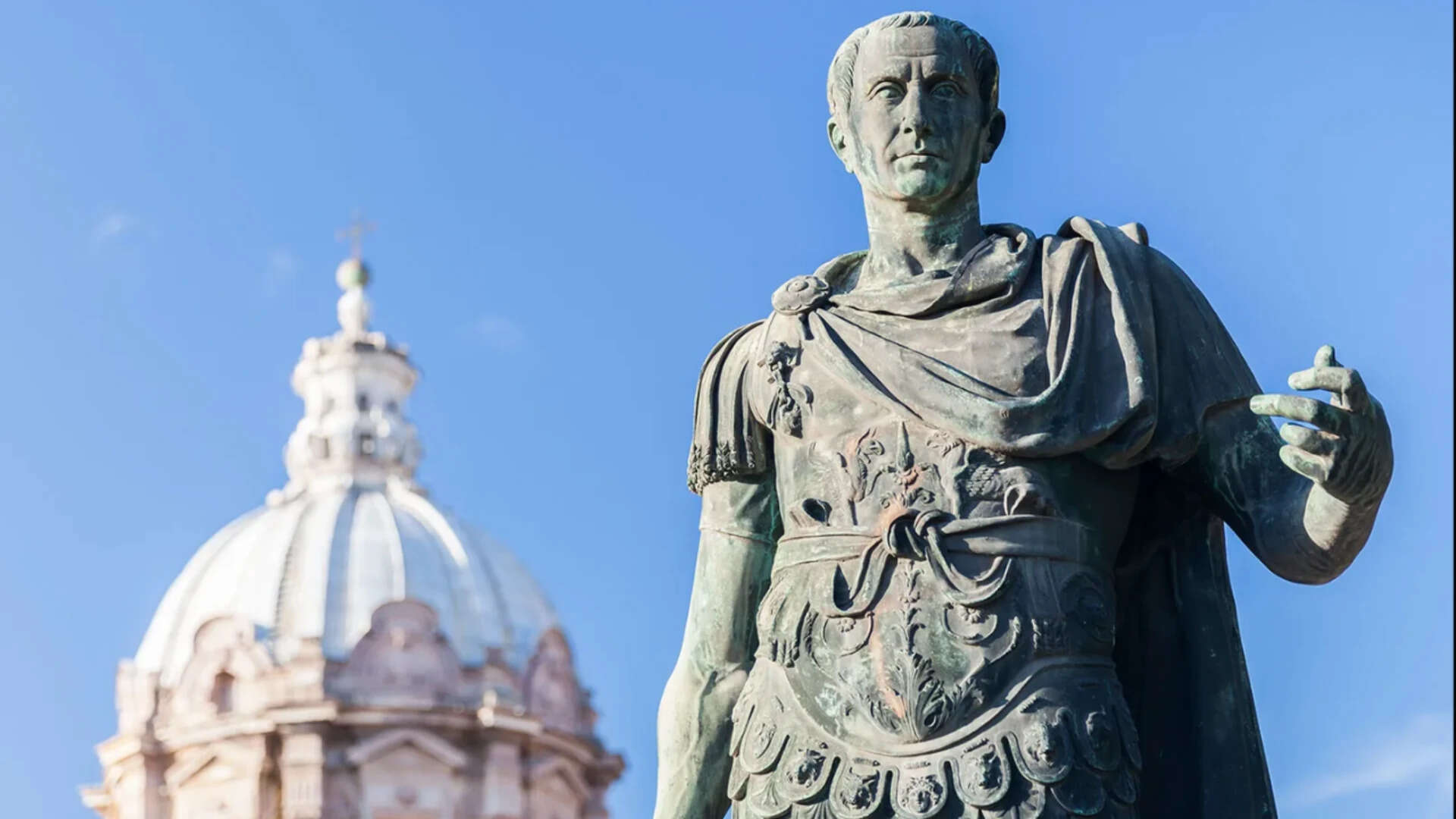
You have probably seen the quote plastered across social media graphics or leadership blogs. It goes something like this: "The greatest power is not in defeating an enemy, but in making him no longer desire to fight you." People love stamping Julius Caesar's name under it. It sounds sophisticated, deeply strategic, and perfectly fits our modern obsession with psychological intelligence over brute force.
There is just one glaring problem. Julius Caesar never actually said it.
Historians have combed through every surviving scrap of his military commentaries, personal letters, and political speeches. You won't find that sentence anywhere in De Bello Gallico or De Bello Civili. But while the exact phrasing is a modern invention, the core philosophy behind it was completely real. Caesar didn't just believe in this concept; he weaponized it to build an empire.
Understanding how he used this psychological approach—and why it eventually cost him his life—changes everything we think we know about handling conflict, managing rivals, and surviving competitive environments.
The Reality of Caesar's Empty Sword
When Caesar stood at the banks of the Rubicon River in March of 49 BC, he wasn't just launching a civil war. He was launching a massive psychological experiment. The Roman Senate had given him an ultimatum: disband his legions or face execution as a public traitor. By crossing that river with a single legion, he backed his political rival, Pompey the Great, into a corner.
Most generals of antiquity would have marched through Italy burning towns and executing anyone loyal to the opposition. Caesar did the exact opposite. He ordered his soldiers to treat civilian populations with absolute respect. He refused to execute captured enemy officers. Instead of demanding their heads, he offered them unconditional pardons and invited them to join his ranks.
This wasn't born out of pure kindness. It was cold, calculated strategy.
Caesar called this approach clementia, his formal policy of mercy. In a letter to his trusted advisor Gaius Oppius during those chaotic early days of the war, Caesar spelled out his thinking clearly. He wrote that his new way of conquering would be to strengthen himself through mercy and generosity.
Think about the sheer genius of this maneuver. By refusing to act like a bloodthirsty tyrant, he completely dismantled the Senate's propaganda. He made it incredibly difficult for his enemies to motivate their troops. How do you convince your soldiers to fight to the death against a man who promises to forgive them, pay them, and treat them as equals the moment the battle ends? You can't. Caesar won several early engagements without shedding a drop of blood because the opposing forces simply laid down their weapons. They had no desire to fight him.
Breaking Resistance Without a Single Blow
This strategy didn't start with ancient Rome. Hundreds of years before Caesar crossed the Rubicon, the Chinese military strategist Sun Tzu laid down the foundational theory of this mindset in The Art of War. He famously noted that subduing an enemy without actual fighting represents the absolute peak of skill.
True security never comes from completely wiping out a rival through raw violence or aggressive litigation. When you completely crush an opponent, you leave behind a toxic residue of humiliation, bitterness, and a deep desire for revenge. You might win the immediate battle, but you guarantee a future war.
Sun Tzu focused heavily on understanding human behavior to manipulate an opponent's choices. If you alter the conditions so your opponent realizes that fighting will result in their total ruin—while cooperation offers a clear path to survival—their will to resist evaporates.
Centuries later, the English philosopher Thomas Hobbes expanded on this in Leviathan. Hobbes argued that the nature of war isn't just the physical act of combat, but the continuous, known disposition toward hostility. True peace isn't just a temporary pause in shooting; it's the total removal of the underlying reasons that drive people to conflict in the first place. Caesar understood this perfectly. He didn't want to just defeat Pompey's armies; he wanted to dissolve the very idea of resistance against his rule.
Why Aggressive Win-Lose Tactics Fail in Modern Projects
We see the exact same dynamics play out in modern corporate ecosystems. Leaders who rely on aggressive, scorched-earth tactics to dominate their industries or suppress internal corporate rivals usually end up destroying their own operations from the inside out.
Take a look at standard corporate negotiations or hostile takeovers. When a dominant company uses its massive legal budget or market share to completely force a smaller vendor or partner into an unfair, one-sided agreement, they celebrate it as a massive victory. It looks great on a quarterly report.
Research out of Harvard Law School highlights exactly why these aggressive win-lose scenarios backfire. When you force a rival into total submission, you create a poisoned relationship. That defeated partner will spend every single day looking for a loophole. They will cut corners on quality, withhold critical information, provide the bare minimum of cooperation, and jump ship the very second a better alternative appears. The cost of policing a bitter, defeated opponent often outweighs whatever value you gained by crushing them.
Real power in business means structuring deals, partnerships, and competitive strategies where your rivals naturally lose their incentive to fight you. You don't need to litigate them into oblivion if you can make cooperation far more profitable than competition.
The Dark Side of Mercy
If Caesar's strategy of clementia was so brilliant, why did his story end with twenty-three stab wounds on the floor of the Senate?
This is the critical twist that most modern leadership gurus completely ignore when they quote Caesar. His greatest strategic strength became his literal death sentence.
When the civil war ended and Caesar assumed total control as dictator of Rome, he stuck to his policy of forgiveness. He didn't execute his political enemies. He pardoned them. He went even further by appointing his former battlefield rivals to high-ranking positions within his new government. Marcus Junius Brutus and Gaius Cassius Longinus had both fought alongside Pompey against Caesar. Caesar forgave them, embraced them, and elevated them to prestigious administrative roles.
He thought that by showing them ultimate mercy, he had removed their desire to fight him. He was completely wrong.
Caesar failed to understand a fundamental aspect of human psychology: pardoning a proud, aristocratic enemy doesn't make them grateful. It humiliates them. Every time Brutus or Cassius looked at Caesar, they weren't thinking about how nice he was. They were constantly reminded that their positions, their fortunes, and their very lives existed solely because Caesar had allowed it. His mercy was a daily display of his absolute dominance.
By keeping his enemies alive and placing them in his inner circle, Caesar built his own execution squad. The very men he pardoned were the ones who organized the conspiracy to assassinate him on the Ides of March in 44 BC.
How to Apply Psychological Victory Without Creating Traitors
To use this strategy effectively without repeating Caesar's fatal mistake, you have to change how you handle rivals and competitive conflicts. Whether you are dealing with a difficult corporate negotiation, an adversarial colleague, or a major market competitor, you need a framework that neutralizes opposition without creating latent resentment.
Build Gold Bridges for Retreat
When you back a rival completely into a corner with no face-saving options, they will fight to the absolute bitter end because they have nothing left to lose. Always give your opponent a clear, dignified path out of the conflict. In business negotiations, this means allowing the other party to walk away with a minor win or a narrative they can present to their stakeholders as a success. If they can save face, they lose the desire to keep fighting you.
Shift to Interest-Based Solutions
Stop focusing on positions and start focusing on underlying interests. If a competitor is aggressively attacking your market share or an internal team is blocking your initiative, figure out what they actually want. Often, their hostility is driven by fear of losing resources, visibility, or security. If you can restructure the situation to protect their core interests while still achieving your primary objective, you completely dissolve their motivation to oppose you.
Avoid the Trap of Artificial Closeness
This was Caesar's downfall. Forgiving a rival or finding a mutual compromise doesn't mean you should bring them into your core decision-making circle. Acknowledge the resolution, maintain professional boundaries, and ensure your operational security remains completely intact. True psychological victory means neutralizing the threat, not pretending that a former adversary is suddenly your most loyal ally.
Create Clear Boundaries of Escalation
Your willingness to find a peaceful, collaborative resolution should never be mistaken for weakness. Caesar's enemies mistook his mercy for a lack of resolve. When you offer a collaborative path forward, make it clear that this choice is an act of strategic leverage, not desperation. Maintain a position of undeniable strength so your rival understands that working with you is their best option, while fighting you remains entirely too expensive to attempt.