The dirt in southern Saskatchewan does not look like geopolitical leverage. In the dry heat of mid-June, it looks like dust. It clings to the boots of farmers pulling durum wheat from the soil and cakes the tires of trucks hauling heavy machinery toward northern mining shafts. For decades, the story of this place was simple: grow it, dig it up, ship it south. The American market was close, hungry, and predictable.
But predictability is a luxury of the past.
Thousands of miles away, across an ocean currently whipped by shifting political winds, a factory worker in Prague shifts his eyes to a computer readout monitoring energy grid stability. He is not thinking about Canadian mud. He is thinking about a long winter, the ghost of supply chain blockades, and where his city will find the uranium to keep the lights on without relying on hostile neighbors.
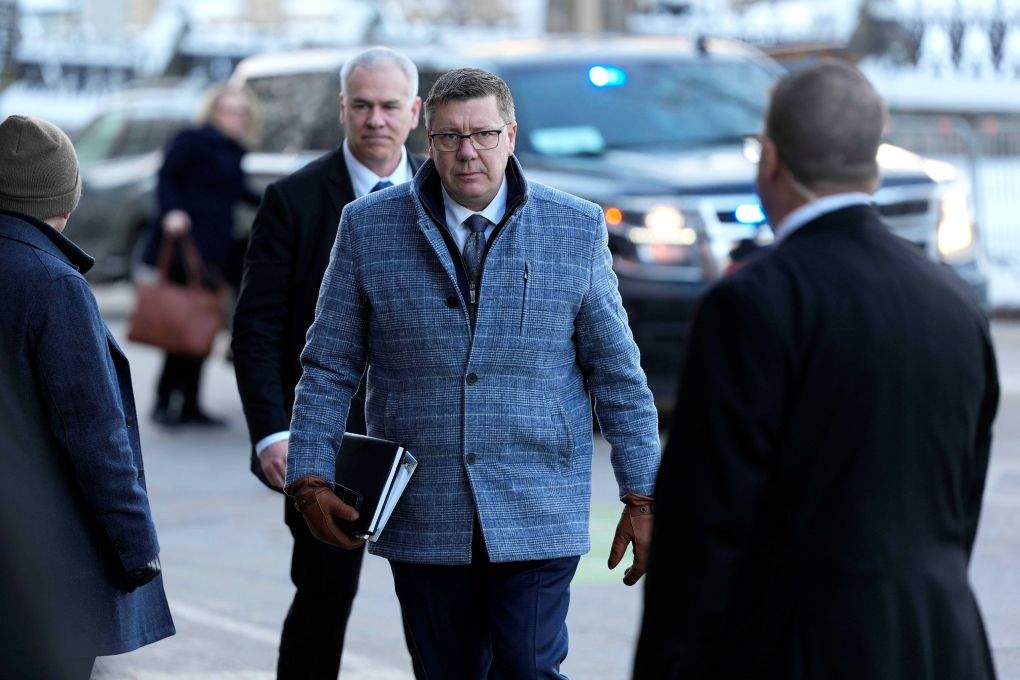
These two realities collided quietly this week. When Saskatchewan Premier Scott Moe signed a memorandum of understanding with the Czech Republic’s First Deputy Minister Karel Havlíček, the news hit the wires with the dull thud of typical bureaucratic prose. The headlines spoke of trade diversification and provincial delegations.
They missed the real story.
The real story is about an economic bridge built in 2017 that we simply forgot to cross. The Canada-European Union Comprehensive Economic and Trade Agreement—CETA—was supposed to eliminate 98 percent of tariffs on day one. It did. Yet for nearly a decade, the massive free-trade highway between the Canadian prairies and the European continent has sat remarkably quiet, a multi-lane superhighway operating like a dirt backroad.
Now, out of sheer necessity, someone is finally stepping on the gas.
The Invisible Friction of Abundance
To understand why this matters, look at a map through the eyes of a local exporter. Let us call him David. David runs a specialized manufacturing shop just outside Saskatoon. He builds heavy-duty components used in mining extraction—the kind of steel-toothed machinery that can bite through northern granite to find potash and uranium.
For years, selling to a buyer in France or Poland meant running a gauntlet of red tape. It was not just the tariffs, which acted as a heavy tax on Canadian ingenuity. It was the testing. A part built in Saskatoon had to be certified by a Canadian inspector, shipped across the Atlantic, and then pulled apart by a European inspector who did not trust the Canadian paperwork.
Imagine paying for the same exam twice, knowing a failing grade on the second one means your product rots on a dock in Rotterdam.
CETA was designed to eliminate that exact duplication. Under the agreement, a certification body in Canada can test a piece of machinery to European standards, and Brussels is legally bound to accept the result. The path is clear. The tariff walls are down.
Yet, as the premier noted while speaking from a defense and security conference in Paris, Saskatchewan has barely scratched the surface of what this deal allows. We fell into the trap of convenience. It is always easier to sell to the neighbor next door than to build a relationship across an ocean.
But relying on a single neighbor means you inherit their bad days. When American politics fluctuates and trade pacts are threatened with non-renewal, a province dependent on one market begins to look fragile. Diversification is no longer a corporate buzzword. It is survival.
The New Architecture of Security
Consider the shift in the European landscape. The continent is undergoing a massive, agonizing rewiring of how it feeds itself, powers its cities, and defends its borders. The numbers tell a stark story: over a five-year period leading into 2025, Saskatchewan's exports to the EU jumped from $1.6 billion to $3.8 billion. That is a 137 percent surge, driven not by clever marketing, but by a continent looking for a safe harbor in a storm.
What does Europe see when it looks at the Canadian prairies? They see the three pillars of modern state survival: food, fuel, and fertilizer.
The Czech Republic deal highlights a specific hunger for nuclear innovation and small modular reactors. Eastern Europe wants sustainable energy security, and they want it from places that share their democratic alignment. The yellowcake uranium sitting deep beneath the Saskatchewan rock is no longer just a commodity; it is a strategic asset for a world trying to decarbonize while locking out autocratic suppliers.
The tension is real. Walk through Eurosatory in Paris—one of the largest defense and security exhibitions on earth, where the Saskatchewan delegation spent days trying to wedge local suppliers into global supply chains. The atmosphere there is not academic. It is defined by rising military budgets and the frantic search for industrial capacity.
Saskatchewan’s expertise in mining and heavy manufacturing is not separate from this world. It is the foundation of it. The same engineering that allows a machine to survive three kilometers beneath the earth’s surface can be pivoted to support defense infrastructure.
Bridging the Knowledge Gap
The real barrier to making better use of the European trade deal is not a lack of political will; it is a lack of imagination at the ground level.
Small and medium-sized business owners do not have international trade departments. They do not have time to read hundreds of pages of trade text to figure out how to bid on a public procurement contract in Belgium. To a shop owner with twenty employees, Europe feels like a myth. It feels too far, too complicated, and too risky.
This is where the vulnerability of our current position shows itself. If governments sign agreements but do not build the actual connective tissue—the trade offices in Germany, the direct corporate match-making, the logistical pipelines—the paperwork is useless. A bridge that no one drives across is just an expensive pier.
The effort to push deep into places like Poland and the Czech Republic is an admission that the old ways of doing business from Regina or Saskatoon are done. You cannot sell high-grade durum wheat, potash, and uranium via email anymore. You have to show up in the rooms where the long-term energy strategies for the next thirty years are being locked down.
The Final Chord
The sun sets late over the Saskatchewan horizon in June, casting long, dramatic shadows across fields that stretch until the earth curves away from view. It is an isolated landscape, but it is no longer disconnected.
Every time a drill bit spins in the north or a combine moves through the southern loam, the ripples are felt in the boardrooms of Prague, Paris, and Warsaw. The free-trade agreement with Europe is not a historical artifact from 2017 to be filed away in a vault. It is a live, underutilized engine waiting to be throttled up.
The space to grow is there. The tariffs are gone, the protocols are written, and the global demand has never been more urgent. The only question left is whether the people working the prairie dirt have the appetite to claim the ground that has already been cleared for them.