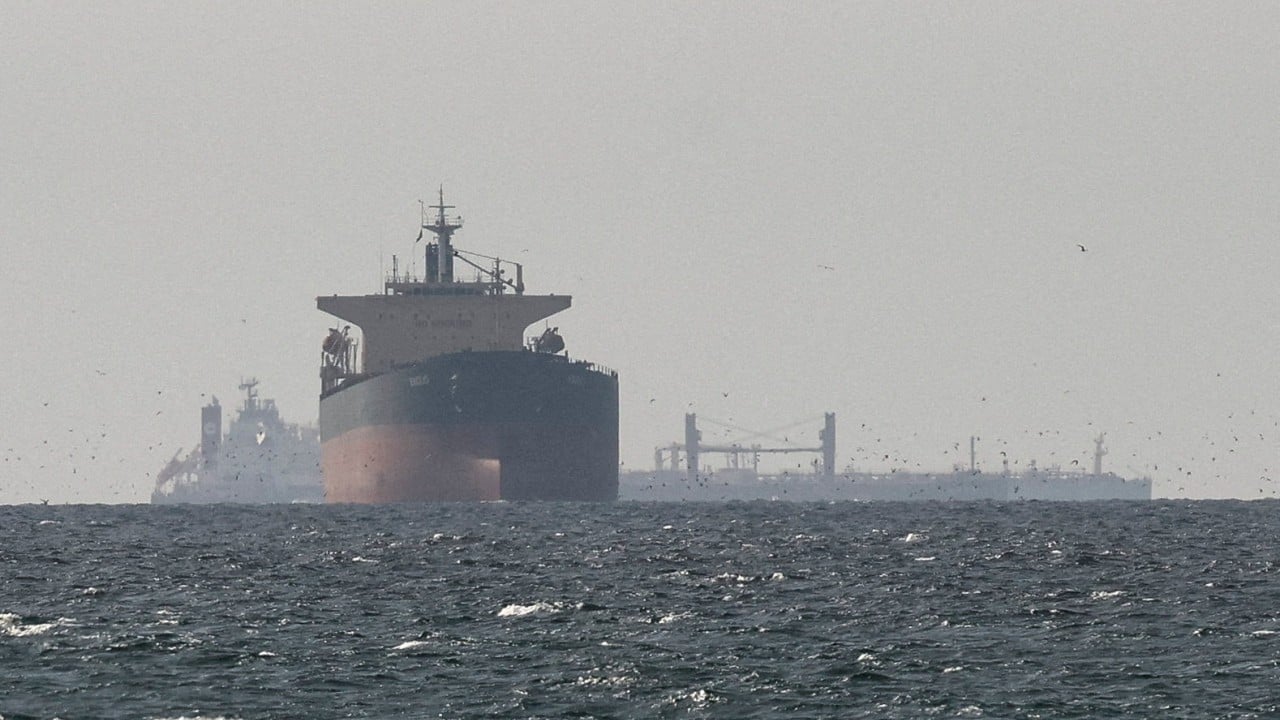
Standing on the deck of a VLCC—a Very Large Crude Carrier—you feel less like a sailor and more like a speck of dust on a floating skyscraper. These vessels are gargantuan. They carry two million barrels of oil, a staggering volume of energy that keeps the lights on in Tokyo and the factories humming in Shanghai. But as you enter the Strait of Hormuz, the world starts to feel uncomfortably small.
The horizon narrows. To your left, the jagged, sun-bleached cliffs of Oman’s Musandam Peninsula rise like broken teeth. To your right, the hazy coastline of Iran. At its tightest point, the navigable shipping lanes are only two miles wide in either direction. It is a geographical throat. And for decades, the hand resting against that throat has belonged to the Islamic Revolutionary Guard Corps (IRGC).
We often talk about naval power in terms of carrier strike groups and billionaire-dollar destroyers. We envision grand battles on the open indigo of the Pacific. But the reality of modern conflict in the Persian Gulf is grittier, cheaper, and far more intimate. It is a game of asymmetrical nerves played in a bathtub.
The Architecture of a Shadow Navy
If you were a commander in the IRGC, you wouldn't try to build a fleet that looks like the U.S. Navy. You couldn’t. Instead, you would turn the very constraints of the Strait into your primary advantage.
The Iranian strategy is not about command of the sea. It is about the denial of it.
Consider the "swarm." Imagine a hundred small, fiberglass speedboats, some no larger than a recreational fishing vessel, screaming across the chop at fifty knots. Individually, they are fragile. Collectively, they are a nightmare. Each one might carry a pair of anti-ship missiles, a heavy machine gun, or a belly full of high explosives. For a billion-dollar American destroyer, tracking and engaging one or two targets is easy. Engaging sixty simultaneously from every point of the compass is a mathematical crisis.
This is not a hypothetical headache for the Pentagon. It is a practiced doctrine. These boats are built in nondescript sheds, launched from hidden coves, and operated by crews who view the water not as a highway, but as a home turf. They use the cluttered civilian traffic—thousands of dhows, tankers, and tugs—as a living shield.
The Invisible Fleet Beneath the Waves
While the speedboats grab the headlines and the grainy GoPro footage, the real lethality of the Strait lies just beneath the surface tension.
The Persian Gulf is shallow. In many places, it’s less than 100 feet deep. This makes it a hostile environment for the massive, nuclear-powered Virginia-class submarines the U.S. favors. Those are ocean-going predators, built for depth and distance. In the Strait, they are like whales in a swimming pool.
Iran, conversely, has invested heavily in the Ghadir-class midget submarine. These are tiny, diesel-electric boats that can sit on the sandy bottom, completely silent, and wait. Because they are so small and the water is so thermally complex—layers of salt and heat distorting sonar—they are nearly impossible to find until they fire.
Then there are the mines.
A naval mine is perhaps the most cost-effective weapon in the history of warfare. A "dumb" mine from the 1970s costs a few thousand dollars but can break the back of a ship worth half a billion. Iran possesses thousands of them. They don't even need to sink a ship to win. They only need to suggest that mines might be present. The moment a single tanker hits a stray explosive, the global insurance markets go into a vertical climb.
Shipping companies refuse to sail. The flow of 21 million barrels of oil per day—about a fifth of global consumption—stutters. In a world of just-in-time delivery, that stutter is a heart attack for the global economy.
The Fortress in the Rock
Geography granted Iran a series of "unsinkable aircraft carriers" in the form of islands like Abu Musa and the Greater and Lesser Tunbs.
Over the last decade, these islands have been transformed into bristling fortresses. Imagine mountains that have been hollowed out. Inside, beneath meters of reinforced concrete and natural rock, sit mobile missile launchers. These aren't the clunky Scuds of the past. These are precision-guided anti-ship cruise missiles like the Noor or the Ghadir, based on advanced designs but manufactured locally.
From these hidden silos, a missile can reach the center of the shipping lane in under sixty seconds.
The psychological weight this places on a bridge crew is immense. You are sailing a vessel the size of a village through a corridor where every cliffside could be a garage door for a cruise missile. There is no "front line" here. The line is everywhere.
The Human Toll of the Chokehold
We speak of "geopolitics" as if it’s a game of Risk played by giants, but the stakes are felt by people whose names never make the news.
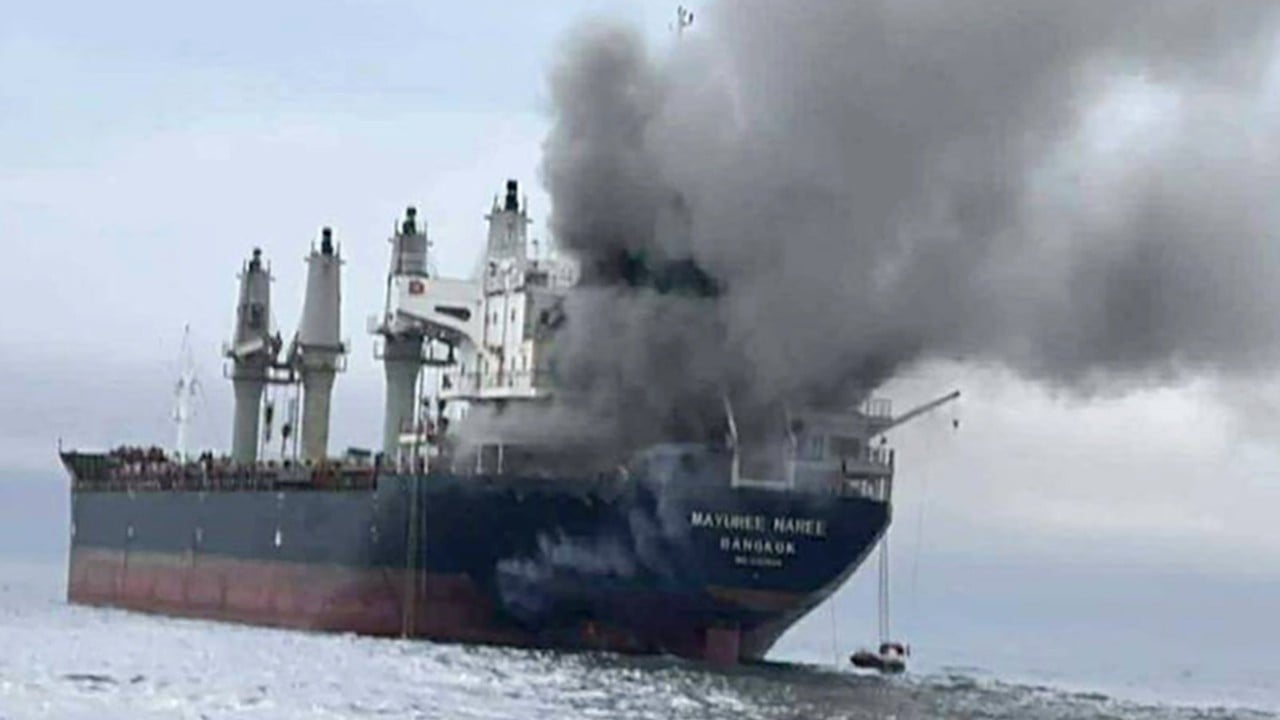
Think of the merchant mariner from the Philippines or India, working a nine-month contract to send money home to a family he hasn't seen in half a year. He isn't a combatant. He doesn't have a side. But when the "Tanker War" dynamics flare up, he is the one sleeping in a life vest, watching the radar screen with a dry mouth, wondering if a drone or a limpet mine will turn his workplace into a localized inferno.
Or consider the energy analyst in London or Singapore. They see the Strait not as a body of water, but as a pressure gauge. Every time an IRGC drone shadows a British frigate, a decimal point moves on a screen. That movement dictates whether a farmer in Iowa can afford to fill his tractor or if a family in Lebanon can afford bread.
The Strait of Hormuz is the world's most sensitive nerve ending. Iran has learned exactly how hard to press it to cause pain without triggering a full-scale amputation.
The Logic of the Unconventional
The United States spends roughly $800 billion a year on its military. Iran spends a fraction of that. If the two nations met in a desert for a fair fight, the outcome would be decided in hours.
But Iran has no intention of fighting a fair fight.
Their "potent weapon" is not a single piece of technology, but a philosophy of irritation. It is the realization that you don't need to win a war to defeat a superpower; you only need to make the cost of "peace" too expensive to bear.
By layering shore-based missiles, midget subs, drone swarms, and smart mines within a twenty-mile-wide corridor, they have created a zone where the traditional advantages of a blue-water navy are neutralized. High-tech sensors struggle with the clutter of the coast. Massive deck guns are useless against a target that costs less than the shell being fired at it.
The US bombardment that planners discuss in Washington—the "surgical strikes" and "kinetic options"—must account for the fact that the moment the first bomb drops, the Strait closes. It is a suicide-pill defense.
The Echo in the Water
Last year, a series of "shadow" incidents occurred. Tankers were disabled by mysterious explosions. Drones were downed. Ships were boarded by commandos sliding down ropes from helicopters.
In each instance, the world held its breath.
There is a specific kind of silence that happens on a ship when the engines stop. It is a heavy, unnatural quiet that allows the sound of the water against the hull to become deafening. In that silence, you realize that all the treaties, all the rhetoric, and all the billions of dollars in hardware mean nothing if the person on the other side of the water is willing to break the world to save themselves.
The Strait of Hormuz is more than a shipping lane. It is a testament to the power of the small against the great, a place where geography and desperation have conspired to create a weapon that cannot be unmade.
The sun sets over the Musandam Peninsula, casting long, dark shadows across the water. A tanker moves slowly, its navigation lights blinking—red, green, white. It looks fragile. From the shore, unseen eyes watch through high-powered optics. They aren't looking for a fight today. They are simply reminding the world that they hold the key to the door, and the door is very, very narrow.
The water remains calm, but beneath the surface, the machinery of a different kind of war is always humming.
Would you like me to analyze the specific technical capabilities of the Ghadir-class submarines or the Noor missile systems used in this region?