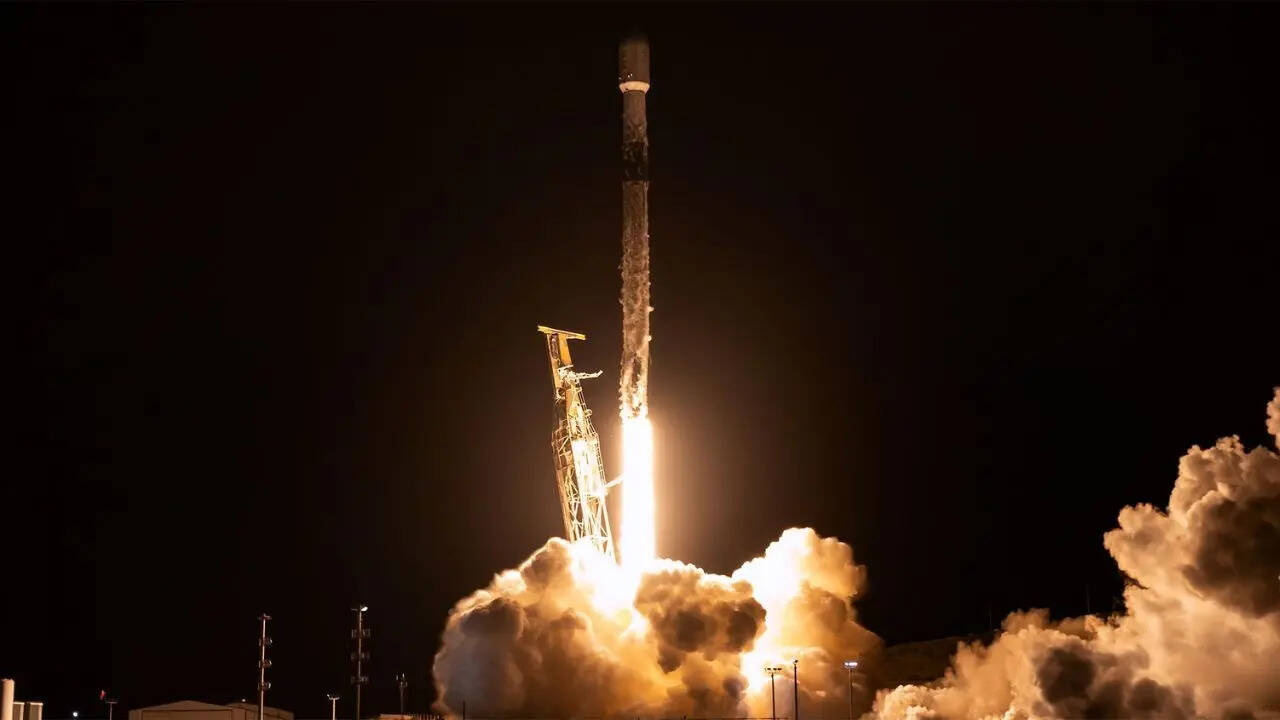
The aerospace press is currently tripping over itself to applaud SpaceX for yet another "flawless" Transporter mission. They see eighty-something satellites hitting orbit and call it a victory for democratized space access. They are wrong.
What you actually witnessed with Transporter-16 wasn't the opening of a frontier. It was the tightening of a noose. By flooding low Earth orbit (LEO) with "affordable" slots for 6U cubesats and experimental sensors, SpaceX isn't building a sustainable ecosystem. They are creating a digital junkyard while simultaneously suffocating the very innovation they claim to support.
We need to stop celebrating the volume of launches and start looking at the toxicity of the economics.
The Rideshare Trap
The industry has fallen for the "bus ticket" fallacy. The logic goes like this: if you can buy a slot on a Falcon 9 for a fraction of what a dedicated launch costs, space is now "open for business."
I have sat in boardrooms with venture capitalists who think a $300,000 launch price means a startup is viable. It doesn't. When you fly rideshare, you are not a customer; you are secondary luggage. You go where the primary payload goes. You deploy when the primary payload says so. If your mission requires a specific Sun-synchronous orbit (SSO) crossing time and the lead satellite needs a slight adjustment, your multi-million dollar sensor is now pointed at the wrong side of the earth at the wrong time of day.
SpaceX has commoditized the launch, but in doing so, they have devalued the mission. We are seeing a surge in "zombie sats"—hardware that reaches orbit but provides zero commercial utility because the orbital parameters were a compromise from day one.
The Hidden Cost of "Cheap"
Let’s talk about the Delta-V tax. The "cheap" price tag on a Transporter mission is a front-end illusion.
When a Falcon 9 dumps eighty payloads into a similar orbital plane, those satellites aren't where they need to be. They are in a cluster. To get to a usable operational slot, these tiny satellites—often lacking robust propulsion—must spend months "drifting" or burning through their extremely limited fuel reserves just to space themselves out.
By the time a cubesat from Transporter-16 is actually ready to do its job, it has often consumed 30% of its operational lifespan just getting into position.
The Math the Press Ignores
- Launch Cost: $300k (The headline number).
- Propulsion Upgrades: $200k (Required because SpaceX dropped you in the wrong spot).
- Lost Opportunity Cost: 6 months of drifting (In a 3-year hardware cycle, this is lethal).
- Ground Station Complexity: Higher, because you're fighting for bandwidth in a crowded "train" of satellites.
The "expensive" dedicated small-launch providers like Rocket Lab or Firefly look "inefficient" to the untrained eye. But if Peter Beck puts your satellite in the exact slot you need on day one, the total cost of ownership is actually lower. SpaceX is the Walmart of orbit: cheap prices, but you spend an hour walking through the parking lot and another hour in line. In space, that time is measured in millions of dollars of lost data.
The Kessler Syndrome Denialism
The "Space is Big" crowd loves to mock concerns about orbital debris. They point to the vastness of the vacuum. This is a fundamental misunderstanding of kinetic energy.
Each Transporter mission adds a massive density of objects into the most crowded bands of LEO. We aren't just adding satellites; we are adding deployment mechanisms, tensioning springs, and covers.
When you launch 80+ items at once, the tracking requirements for organizations like the 18th Space Defense Squadron become a nightmare. For the first 48 to 72 hours, we are essentially flying blind through a cloud of "untracked objects." One collision doesn't just end a mission; it creates a shotgun blast of shrapnel that moves at 17,500 miles per hour.
SpaceX is incentivized to ignore this because their business model depends on high-cadence, high-volume saturation. They are the ones selling the shovels while the ground is turning into a minefield.
The VC Delusion: Space is Not Software
Silicon Valley tried to apply "Move Fast and Break Things" to orbital mechanics. It’s failing.
The Transporter program has allowed "PowerPoint space companies" to survive far longer than they should. Because the barrier to entry (the launch cost) is low, VCs are funding companies with no clear path to revenue, simply because they can "get to orbit" quickly.
Getting to orbit is no longer an achievement. It’s a commodity. The real challenge is stay-up, not start-up. We are seeing a bubble of "sensor-fusion" companies that have no proprietary tech other than a cheap seat on a Falcon 9. When the next economic contraction hits, these companies will vanish, leaving behind a constellation of dead aluminum and lithium batteries that we have to dodge for the next twenty years.
The Myth of Reusability's Infinite Scale
The Falcon 9 is a marvel of engineering. No one is disputing that. But the industry's obsession with reusability has created a monoculture.
When we rely on one provider for the vast majority of small-sat access, we create a single point of failure. If a Falcon 9 has a structural anomaly on a landing leg tomorrow, the entire Western small-sat industry grinds to a halt for six months.
We have sacrificed resilience for a lower line-item cost. By cheering for SpaceX's dominance in the Transporter series, we are effectively cheering for the bankruptcy of their competitors. If Rocket Lab, Astra, and the European start-ups can’t compete with SpaceX’s predatory pricing—subsidized by massive Starlink internal launches—we lose the ability to choose how and when we go to space.
The Real Question You Should Ask
Instead of asking "How many satellites did SpaceX launch today?", start asking "How many of these satellites will be operational in twelve months?"
The answer would terrify the investors.
The Transporter-16 mission isn't a success story. It’s a symptom of an industry that has prioritized "meaningless milestones" over "mission integrity." We are treating the most hostile environment known to man like a suburban bus route, and the bill for that arrogance is going to come due much sooner than the SpaceX fan-clubs realize.
If you want to build a real space company, stop looking for a seat on the bus. Buy the car. Build the infrastructure. Or stay on the ground and stop adding to the junk pile.
The orbit is full. The party is over.
Stop clapping.