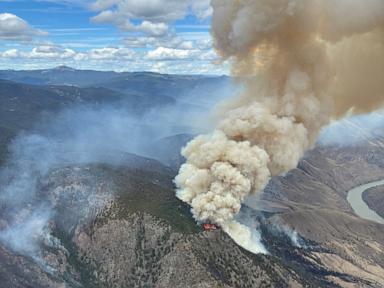
Transboundary wildfire smoke dispersion is not an isolated, erratic weather event; it is a predictable atmospheric pipeline governed by synoptic meteorology and fluid dynamics. When massive boreal forest fires ignite in Canada, the resulting smoke plumes do not merely drift. They are injected into major atmospheric transport vectors that channel high concentrations of particulate matter directly into the population centers of the Great Lakes and New England. Understanding this phenomenon requires moving past superficial weather reporting and analyzing the precise interaction between high-altitude steering winds, particulate chemistry, and regional economic vulnerabilities.
The systemic threat posed by these events rests on three distinct pillars: the meteorological injection mechanism, the chemical evolution of the plume during transit, and the failure thresholds of built human infrastructure.
Synoptic Meteorological Drivers of Transboundary Dispersion
The transit of wildfire smoke from Canadian source regions to the United States operates via specific atmospheric configurations. It is primarily driven by upper-level blocking patterns—most notably the Omega block—and the positioning of mid-latitude cyclones.
[Canadian Wildfire Source]
       │
       ▼ (Pyro-convective Injection: Troposphere/Stratosphere)
[Upper-Level Atmospheric Steering: Omega Block / Jet Stream]
       │
       ▼ (Subsidence & Downward Vertical Mixing)
[Boundary Layer Inversion: Great Lakes & New England Surface Influx]
When an Omega block forms, a high-pressure system becomes flanked by two low-pressure systems to the east and west. This configuration stalls the normal eastward progression of weather systems. If a persistent high-pressure ridge settles over western or central Canada while a deep low-pressure trough forms over the northeastern United States, the clockwise flow around the high combined with the counter-clockwise flow around the low creates a high-velocity atmospheric corridor. This synoptic conveyor belt pulls air directly from subarctic source regions southward across the international border.
A critical secondary variable is the mechanism of thermal injection. Intense wildfires generate significant thermal buoyancy, creating pyro-cumulonimbus (pyroCb) clouds. These systems act as industrial chimneys, bypassing the lower planetary boundary layer and injecting smoke columns directly into the free troposphere or lower stratosphere.
At these higher altitudes, wind speeds are significantly faster, and the absence of surface friction allows the plume to travel thousands of kilometers with minimal dilution. The smoke remains aloft until it encounters zones of large-scale atmospheric subsidence, typically on the eastern periphery of high-pressure systems, which forces the concentrated particulate matter down into the breathing zone of the surface boundary layer over the Great Lakes and New England.
The Micro-Physics of Particulate Matter Transport
The primary metric used to evaluate smoke hazards is Fine Particulate Matter, or PM2.5, denoting particles with aerodynamic diameters under 2.5 micrometers. The behavior of these particles changes significantly during long-range transport, altering their chemical composition and toxicity.
Wildfire smoke undergoes chemical aging as it moves from Canada to the United States. Fresh smoke is dominated by primary organic aerosols and black carbon. As the plume spends 24 to 72 hours in transit under solar radiation, volatile organic compounds within the smoke oxidize. This photo-oxidation process generates secondary organic aerosols, which actually increase the total mass concentration of PM2.5 downwind, even as atmospheric dispersion forces attempt to dilute the plume.
The physics of these particles dictate their persistence in the atmosphere. PM2.5 particles are small enough that their settling velocity—the speed at which gravity pulls them to earth—is negligible compared to the turbulent mixing forces of the air. The primary removal mechanism is wet deposition via precipitation. In the absence of rain along the transport pathway, a smoke plume can maintain structural integrity for days.
When the plume reaches the Great Lakes or New England, it frequently encounters local nocturnal radiation inversions. Cool air traps the descending smoke beneath a warm layer of air just hundreds of feet above the ground, concentrating PM2.5 levels to hazardous thresholds overnight and into the early morning hours.
Quantifying the Structural Shock on Regional Systems
The influx of transboundary smoke imposes immediate, measurable strains across multiple sectors of the United States economy and infrastructure. These strains reveal that regional systems are designed for historical baselines, not the emerging realities of prolonged atmospheric degradation.
Healthcare System Volatility
The surge in emergency department presentations during a smoke event follows a highly predictable chronological pattern. Within two hours of a PM2.5 spike, individuals with reactive airway diseases, such as asthma and chronic obstructive pulmonary disease, experience acute exacerbations. Within 48 hours, a secondary wave of cardiovascular presentations occurs, driven by systemic inflammation and blood viscosity changes induced by deep-lung alveolar penetration of sub-micron particles.
This influx creates operational bottlenecks. Emergency departments experience capacity constraints, diverting resources from elective procedures and non-emergency care. The financial burden shifts heavily onto municipal services and insurance providers, as the spike in pharmaceutical demand for short-acting bronchodilators routinely strains regional supply chains.
Industrial and Aviation Disruption
High concentrations of wildfire smoke directly degrade visibility, triggering Federal Aviation Administration ground delay programs at major hubs like Chicago O'Hare, Detroit Metropolitan, and New York's LaGuardia. Unlike fog, which can dissipate rapidly with solar heating, wildfire smoke layers are structurally stable and can suppress surface heating, prolonging low-visibility conditions for days.
The economic cost cascades through logistics networks. Flight cancellations and delays disrupt supply chains, while outdoor labor productivity drops precipitously. The Occupational Safety and Health Administration guidelines mandate reduced physical exertion when Air Quality Index values cross critical thresholds, effectively slowing down civil construction, agricultural operations, and last-mile delivery services across the entire affected geography.
Operational Vulnerabilities in Existing Mitigation Frameworks
Current built infrastructure and regulatory frameworks are ill-equipped to handle prolonged, multi-day atmospheric particulate events. The vulnerabilities exist within standard engineering practices and public communication metrics.
Standard commercial heating, ventilation, and air conditioning systems are designed to optimize thermal comfort and energy efficiency, not to act as high-efficiency air purification units. Most commercial buildings rely on Minimum Efficiency Reporting Value 8 to 11 filtration. These filters capture large dust particles but allow up to 80 percent of PM2.5 particles to pass through unimpeded.
[Outdoor Smoke Influx] ──> [MERV 8-11 Filter] ──> [80% PM2.5 Leakage Indoors]
                                 │
                         (HVAC System Failure)
                                 │
                                 ▼
                     [Indoor Air Degradation]
Upgrading to MERV 13 or High-Efficiency Particulate Air filtration introduces a serious operational trade-off: increased static pressure drop across the filter banks. Most existing HVAC air handlers lack the fan motor capacity to overcome this resistance, leading to reduced airflow, overheating of mechanical components, and potential system failure. Consequently, indoor air quality in commercial spaces rapidly normalizes to match outdoor hazardous conditions during extended smoke events.
The Air Quality Index system itself introduces a dangerous communication lag. The standard AQI reported to the public is a 24-hour rolling average. During a rapid smoke intrusion event, real-time hourly PM2.5 concentrations can be tentimes higher than the reported 24-hour average. This calculation method creates a false sense of security during the critical early hours of an inversion, delaying institutional decisions regarding school closures, outdoor athletic events, and warehouse operational shifts.
Engineering an Institutional Adaptation Protocol
Managing the reality of transboundary smoke transport requires shifting from reactive emergency responses to proactive engineering and operational controls.
Municipalities and corporate enterprises must transition from relying on retrospective AQI data to implementing real-time, sensor-driven automation. Facilities should integrate low-cost optical particle counters into their building automation systems. When indoor PM2.5 levels cross a 15-microgram-per-cubic-meter threshold, the HVAC system must automatically reduce outdoor air intake to the minimum allowable code level while simultaneously engaging secondary, dedicated recirculation filtration units equipped with carbon scrubbing stages to neutralize volatile organic compounds.
Regional grid operators must adjust their solar generation forecasting models. Wildfire smoke plumes significantly reduce solar irradiance, cutting photovoltaic output by up to 30 percent in affected zones. This reduction often coincides with increased peak demand as populations remain indoors and run air conditioning units continuously. Grid management protocols must factor in this specific generation deficit, securing dispatchable peater plant capacity ahead of verified synoptic smoke transport alignments.
The final operational imperative rests with supply chain and logistics coordinators. When a persistent atmospheric blocking pattern is identified over Canadian fire zones, transport routes must be dynamically rerouted away from predicted subsidence zones in the Great Lakes and Northeast. Relying on real-time adjustments after visibility drops below aviation and highway safety minimums guarantees capital loss. Institutional resilience relies entirely on deploying predictive meteorological models directly into the core decision-making frameworks of infrastructure management.

