The algorithms had it all mapped out.
It was supposed to happen at Lake Como. There would be a custom Valentino gown with a twenty-foot train trailing over sun-bleached Italian stone. There would be a security perimeter of speedboats, a drone ban, and a multi-million-dollar magazine spread to pay for the flowers. Ten million people on Instagram had already liked the photos. They had studied the lighting on her cheekbones and the sharp tailoring of his tuxedo.
Except none of it was real.
The images were the product of synthetic pixels, an AI-generated daydream fed to a public starving for a spectacle that wasn't theirs to own. The real wedding had already happened. It did not happen on a feed. It happened in the quiet, unphotographed spaces of the physical world, witnessed only by the people who actually knew the bride and groom before they became intellectual property.
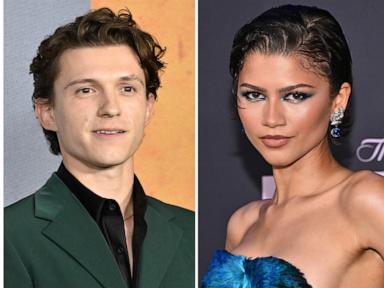
When Tom Holland sat down for an interview with Esquire, the conversation inevitably drifted toward those viral, fake wedding photos. The interviewer asked if the actor had to scramble to text his extended family to assure them the internet was lying, especially after his grandmother saw the images and worried she had been left off the guest list.
Holland paused. The silence carried the weight of a man protecting the perimeter of his life.
"No," he said simply. "Because they were all there."
With five words, the narrative machine fractured. There was no grand press release. No sponsored hashtags. Just a blunt confirmation that the world had missed the event of the decade because two twenty-somethings decided that their souls were not up for public consumption.
"That's all you'll get on that," Holland added.
He meant it.
To understand the sheer magnitude of this silence, consider what it takes to keep a secret in modern Hollywood. We live in an era where privacy is a currency most stars trade away for relevance. Every relationship is an opportunity for brand alignment; every breakup is a coordinated rollout handled by publicists. When two of the biggest movie stars on earth—the literal faces of a multi-billion-dollar cinematic universe—fall in love, the commercial pressure to commodify that love is immense.
Think back to the mid-2000s. If Peter Parker and MJ had fallen in love in real life twenty years ago, they would have been hounded across continents by long-lens cameras. Their wedding would have been disrupted by the thrum of paparazzi helicopters hovering over a church roof. Their private vows would have been transcribed by anonymous sources for the tabloids.
Holland and Zendaya chose a different path, one born out of survival.
They met in a casting room in 2016 for Spider-Man: Homecoming. She smashed her audition before she even walked out the door. He was a kid from Kingston upon Thames; she was an alum of the Disney Channel ecosystem. They grew up under a spotlight that has driven healthier people mad. When you live in a world where your face is plastered on billboards from Tokyo to New York, the public begins to believe they own your intimacy. They think they have a right to your kitchen table.
But the real problem lies elsewhere. The danger isn’t just the paparazzi; it’s the quiet erosion of the self that happens when you let the public into your sanctuary.
"Our business can present very stressful situations," Holland admitted during that same conversation. "And it’s really nice to have a bedrock of a relationship that will stand the test of time."
Consider what happens when that bedrock is missing. We watch young starlets and leading men unravel in real-time because they have no safe harbor. If your partner is just another asset in your career strategy, where do you go when the cameras turn off? Who looks at you and sees the human being instead of the marquee name?
Zendaya hinted at this exact dynamic during an appearance on the Modern Love podcast. She spoke about the profound intuition that comes with finding a person around whom you do not feel nervous. For someone whose daily existence requires an armor of hyper-vigilance, calm is a radical luxury. "I actually feel more nervous when I’m away from you than when I’m with you," she noted.
That calmness had to be protected by an iron wall.
When they got engaged in early 2025, the signals were sparse. A diamond ring worn at the Golden Globes. Later, in February 2026, a simple gold band replaced it on her left hand during a casual walk through Beverly Hills. When the internet began to dissect the gold ring, digging for clues, Zendaya drew her line in the sand. "No, I’m not going to do that," she told an interviewer. "They’re always searching for something."
The world wanted a performance. They gave us a marriage.
Even their closest inner circle acted as a human shield. In March 2026, stylist Law Roach stood on a red carpet at the Actor Awards, smiled at a reporter, and dropped the truth like a casual aside. "The wedding has already happened," he laughed. "You missed it."
People assumed it was a joke. They assumed it was a distraction technique to divert attention while a massive, star-studded event was being planned behind the scenes. We have become so cynical about celebrity privacy that when someone tells us the truth—that a private moment was kept genuinely private—we refuse to believe it. We expect the spectacle. We demand the receipts.
The brilliance of their strategy lies in their understanding of the luxury of absence. By refusing to give the world pictures of the dress, the venue, or the cake, they kept the memory untainted. There is no Vogue spread. There are no high-resolution files sitting on a server waiting to be leaked. The only place that wedding exists is in the memories of the family members who stood in that room.
"We can support each other in ways that only we can," Holland said, explaining the insular nature of their bond. "Because only we understand really what it’s like to live this life."
It is a profound act of defiance. In a culture that demands total transparency, keeping something sacred is the ultimate rebellion. They reminded us that some things are too valuable to be shared, too fragile to be exposed to the cold wind of public opinion.
The internet will keep creating its AI weddings. The algorithms will continue to generate fake images of them on Italian balconies, dressed in digital lace, smiling for an audience of ghosts. But the real couple is somewhere else entirely, living in the quiet safety of a reality they built with their own hands, completely out of frame.