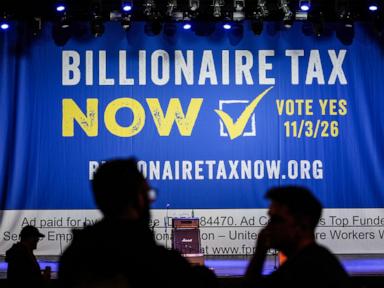
Every election cycle, California rolls out the exact same script. The state runs a massive budget deficit, Sacramento panics, and activists propose a shiny new ballot measure promising to fix everything by making billionaires pay their fair share. It sounds perfect on a bumper sticker. It plays beautifully in campaign ads.
It is also an economic suicide pact.
The lazy consensus dominating public discourse insists that California can simply treat its wealthiest residents as an infinite, immovable ATM. The logic is comforting: these individuals have more money than they could spend in a lifetime, so taking a few extra percentage points of their wealth won't hurt them, but it will fund schools, repair highways, and balance the books.
This view relies on a fundamental misunderstanding of what wealth actually is, how state revenues operate, and how highly mobile human beings behave when backed into a corner. Having spent two decades analyzing state fiscal policies and watching capital allocation strategies from the inside, I can tell you that the math behind these wealth tax proposals is a fantasy.
When you increase taxes on the ultra-wealthy, you do not collect more money. You just force capital to pack its bags.
The Mirage of Liquid Billionaire Wealth
Proponents of these ballot measures love to cite massive net worth figures. They look at a tech founder worth $20 billion and assume there is a giant vault of cash sitting in Silicon Valley waiting to be taxed.
This is amateur hour analysis.
Billionaire wealth is almost entirely illiquid. It consists of equity, stock options, real estate, and intellectual property. It is value locked up in companies that employ thousands of regular people. When a state attempts to tax this wealth, it faces two insurmountable hurdles: valuation and liquidity.
Imagine a scenario where a founder owns a massive block of shares in a highly volatile tech company. On November 1st, their net worth is calculated at $10 billion. By the time the tax bill arrives in April, the market has taken a downturn, and those shares are worth $4 billion. Is the state going to tax the phantom $6 billion that evaporated into thin air? If the founder is forced to sell millions of shares every single year just to pay a wealth tax, it triggers massive sell-offs, depresses the stock price, hurts retail investors, and strips the founder of voting control over the company they built.
When France implemented its infamous Impôt de solidarité sur la fortune (ISF) wealth tax, the results were disastrous. French economist Éric Pichet estimated that the tax drove out over $200 billion in capital between 1988 and 2006. The law cost the country far more in lost income tax, corporate tax, and value-added tax than it ever collected in wealth taxes. President Emmanuel Macron finally abolished it because he recognized that driving away capital creators destroys the tax base from the inside out.
California is on track to repeat this exact mistake, ignoring decades of European data showing that wealth taxes fail everywhere they are tried.
The High Earners Are Already Footloose
The biggest flaw in the eat-the-rich fiscal strategy is the assumption that billionaires are captive audiences. They are not. They are the most mobile population on the planet.
California already relies on an dangerously narrow tax base. The top 1% of earners pay nearly half of the state's personal income taxes. This creates a hyper-volatile budget system. When the tech sector booms, Sacramento is awash in cash and spends money like a drunken sailor. When the market dips, the state faces a $50 billion deficit.
Adding another targeted tax on billionaires does not stabilize this system; it supercharges the volatility. It tethers the state’s entire public infrastructure to the whims of a few hundred individuals who have private jets and second homes in Austin, Miami, and Las Vegas.
Consider what happened when California raised its top marginal income tax rate to 13.3%, and later pushed effective rates even higher for certain high earners through payroll adjustments. High-profile departures like Elon Musk, Larry Ellison, and Joe Lonsdale made headlines, but they represent the tip of an iceberg. For every billionaire who tweets about leaving, a dozen ultra-high-net-worth individuals quietly move their legal residence, their family foundations, and their venture capital firms to states with zero income tax.
The argument that people stay in California solely for the weather or the culture is a coping mechanism for politicians who refuse to look at a spreadsheet. At a certain threshold, the financial penalty of living in California outweighs the lifestyle benefits. When a billionaire moves to Florida or Texas, California does not just lose the new wealth tax revenue. It loses their regular income tax, their property tax, their sales tax, and the corporate investments they direct toward local startups.
You cannot fund a progressive utopia if the people paying for it no longer live within your borders.
Dismantling the People Also Ask Rationalizations
When you point out these flaws, defenders of wealth taxes immediately retreat to a predictable set of talking points. Let's look at these arguments with cold, hard numbers.
Won't this tax revenue fund essential services for working-class families?
Only in the short term, and only on paper. Public accounting does not work like a household budget. When a state projects billions in revenue from a new tax, it immediately bakes those assumptions into long-term spending commitments. If the revenue falls short because billionaires restructure their assets or move away, the state cannot easily cut those programs. Instead, it leaves a permanent structural deficit. The state then fills that gap by raising sales taxes, gas taxes, and sin taxes—regressive measures that hit working-class families the hardest.
If billionaires leave, won't new entrepreneurs just rise up to take their place?
This assumes that entrepreneurship happens in a vacuum. Innovation requires capital. When top-tier investors flee the state, they take their venture networks with them. A founder starting a company in Los Angeles or San Francisco today faces a significantly harder time securing local seed funding than they did a decade ago. Capital clusters where it is treated well. If you poison the soil, the next generation of companies will sprout in Austin, Salt Lake City, or Miami instead. You cannot tax a company that was never founded in your state.
Is it fair that the ultra-wealthy pay a lower effective tax rate than teachers?
This is a classic rhetorical trick that conflates income with wealth. A teacher pays income tax on their salary. A billionaire pays capital gains tax when they sell an asset. If a billionaire does not sell their stock, they do not have income in the traditional sense; they have an appreciating asset. Comparing a teacher's income tax rate to a billionaire's unrealized asset growth is an apples-to-oranges comparison designed to trigger emotional responses rather than sound fiscal policy.
If California wants to fix fairness, it should stop handing out massive corporate welfare subsidies and tax exemptions to politically connected industries inside the state, rather than trying to invent an unconstitutional tax on unrealized wealth.
The Invisible Cost of Capital Strike
The most damaging consequence of this proposed ballot measure is not the actual dollars collected. It is the chilling effect on investment, known as a capital strike.
Money goes where it is welcome and stays where it is well treated. When a state gains a reputation for hostility toward capital accumulation, investors alter their behavior long before a law even passes. They stop funding long-term infrastructure projects. They move their corporate headquarters. They advise their portfolio companies to expand headcount in other regions.
I have sat in boardrooms where expansion plans were completely rewritten based on a state's shifting tax posture. A company does not wake up one day and suddenly close its San Francisco office. It happens gradually. They hire 50 people in Phoenix instead of 50 people in San Jose. They build their next data center in Nevada. They host their annual developer conference in Florida.
This slow, creeping erosion of the business environment is nearly impossible to quantify in a single fiscal year, but over a decade, it results in a hollowed-out economy. California is currently skating on the thin ice of its historical successes. The tech boom of the 1990s and 2000s created an economic engine so powerful that it could withstand bad governance for a generation. But that engine is finally running out of fuel.
The Real Solution Sacramento Refuses to Consider
If California actually wants to fix its recurring budget crises, it needs to stop looking for scapegoats and start looking in the mirror. The state does not have a revenue problem. It has a spending problem compounded by a structural design flaw.
The state's budget has nearly doubled over the last decade, yet residents see deteriorating roads, failing public school systems, skyrocketing homelessness, and an energy grid that cannot handle a summer heatwave. Pouring billions more into a broken system controlled by special interests will not change the outcome.
Instead of chasing a tiny pool of highly mobile wealth with unworkable taxes, California needs to broaden its tax base and lower overall rates. A flatter, more predictable tax system would eliminate the wild revenue swings that paralyze state planning every few years. It would signal to the global business community that California is once again open for long-term investment.
Voters going to the polls in November think they are voting to balance the scales. They think they are punishing the elite and helping the average worker. The reality is far grimmer. By passing a billionaire tax, voters will simply give the state's highest earners a final, compelling reason to change their zip code, leaving the remaining residents to pick up the tab for a bankrupt fiscal ideology.
The wealthy will survive a wealth tax just fine. They will simply do it from Texas.