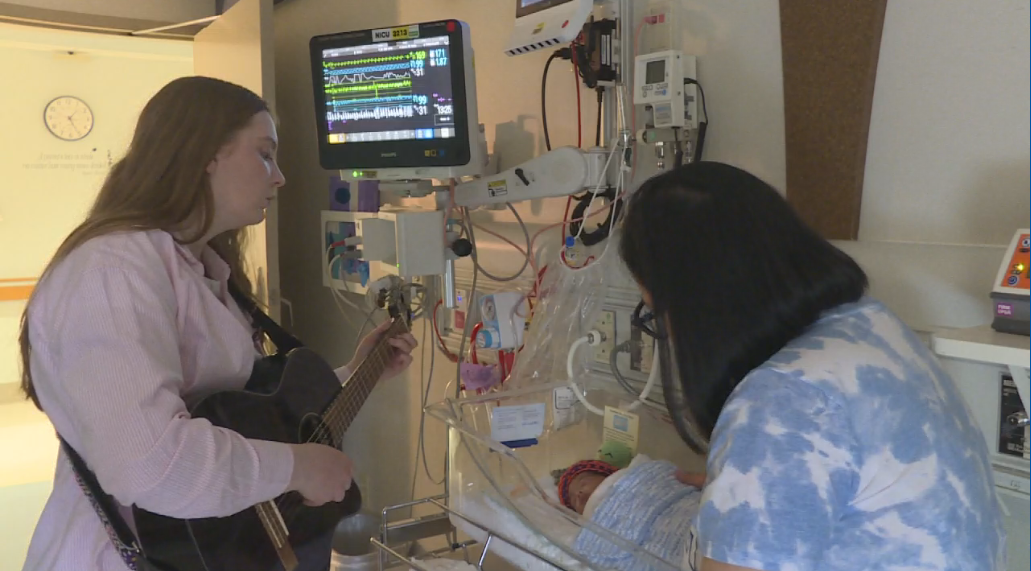
The modern Neonatal Intensive Care Unit is a marvel of human ingenuity, but it is also a sensory battlefield. Step inside the NICU at Edmonton’s Grey Nuns Community Hospital, and the first thing that hits you isn't the warmth or the smell of antiseptic. It is the noise.
Beep. Whir. Whine.
Alarms chime in unpredictable, jagged rhythms. Pumps click. The sharp tear of Velcro opens a diaper. Plastic tubing rattles against plexiglass. For a premature infant thrust into the world months ahead of schedule, this is the acoustic landscape replacing the dark, fluid, rhythmic safety of the womb. In the womb, the mother’s heartbeat is a steady, reassuring thud at roughly 70 beats per minute, muffled by tissue and water, accompanied by the whoosh of blood through the placenta. It is a biological symphony. The NICU, by comparison, is chaotic industrial noise.
We know these machines save lives. The incubators regulate temperature; the ventilators breathe; the monitors track every fractional shift in oxygen saturation. But survival is more than just mechanics.
While technology keeps the body functioning, the fragile, rapidly developing neurological system of a preemie is left to navigate a storm of stress. Prolonged exposure to high-decibel hospital noise can trigger fluctuations in blood pressure, elevate heart rates, and disrupt sleep patterns critical for brain development. The problem is clear, yet the solution isn't found in adding more silence. It is found in introducing the right kind of sound.
That is why the Grey Nuns Hospital is currently quiet, determined, and fighting to fund a dedicated music therapy program for its tiniest patients. They aren't looking for entertainment. They are looking for medicine.
The Sound of Healing
Consider a hypothetical patient named Liam. Born at twenty-eight weeks, Liam weighs barely two pounds. His skin is translucent, his fingers the size of matchsticks. He resides in a plastic isolette, separated from the physical touch of his parents for long stretches because his fragile system cannot handle too much handling. Every unexpected beep from a monitor causes his tiny shoulders to tense, his heart rate to spike, and his oxygen levels to plummet.
Now, imagine a trained music therapist sitting beside Liam’s incubator.
The therapist doesn't bring a loud stereo or a blasting acoustic guitar. Instead, they use an instrument called an ocean disc—a circular drum filled with tiny metal beads that, when tilted slowly, mimics the exact, fluid whoosh-whoosh of a maternal placenta. The therapist watches Liam’s monitors. They sync the rhythm of the instrument to his elevated heart rate, then slowly, deliberately, decelerate the tempo.
Within minutes, something extraordinary happens. Liam’s heart rate slows to match the instrument. His breathing stabilizes. The deep, furrowed lines on his tiny forehead smooth out. He falls into a restorative, REM-stage sleep.
This isn't magic. It is neuroscience.
Music therapy in a neonatal setting is a precise, evidence-based clinical intervention. Unlike recorded music, which cannot adapt to a baby’s sudden distress, a live therapist reads the infant’s subtle cues—a change in skin color, a twitch of a finger, a dip on the monitor—and alters the volume, pitch, and tempo in real time. When the baby tenses, the music softens. When the baby relaxes, the music sustains them.
The Invisible Stakes of the NICU
For decades, medicine viewed premature infants through a purely physiological lens. If they were breathing and growing, they were thriving. But the long-term data tells a more complicated story. The stress of an early birth and a prolonged hospital stay can cast a long shadow, affecting everything from language acquisition to emotional regulation later in childhood.
When a baby is born early, their brain is growing at an exponential rate. Millions of neural connections are forming every single hour. In a typical pregnancy, those connections are shaped by the rhythmic, predictable sounds of the mother’s body and voice. In the NICU, those connections are bombarded by erratic static.
The human voice is the ultimate anchor. Part of the proposed program at the Grey Nuns Hospital involves working directly with parents to incorporate their own voices into the therapy. Having a child in the NICU is an agonizing, disempowering experience for a parent. You stand on the outside looking in, watching strangers tend to your child through a pane of glass. You feel useless.
Music therapy bridges that devastating divide. Therapists coach mothers and fathers on how to sing to their babies in a specific, low-stimulation manner—humming simple, repetitive lullabies at a quiet, conversational volume.
The results are profound. Studies show that when parents sing to their premature infants using these targeted techniques, the parents’ anxiety levels drop significantly. They feel a sense of agency restored to them. More importantly, the infants show improved feeding efficiency. They learn to suck and swallow faster because the comforting, familiar sound reduces their neurological distress, allowing them to conserve precious calories for growth rather than wasting them on anxiety.
Building the Funding Bridge
The medical staff at the Grey Nuns Hospital see the potential every day, but executing a sustainable, fully integrated music therapy program requires specialized funding. Hospital operational budgets are notoriously strained, often prioritizing structural hardware, medication, and essential nursing staff. Creative arts therapies, despite their clinical utility, frequently rely on the generosity of donors and community foundations to get off the ground and remain operational.
The push to fund this program isn't about buying a few instruments and hiring someone to strum a tune in the hallway. It is about embedding a certified professional into the healthcare team—someone who understands neonatal development, pharmacology, and the delicate psychology of traumatized families.
It is an investment in the long-term trajectory of these children. Preventing developmental delays and reducing the length of hospital stays doesn't just benefit individual families; it alleviates the long-term burden on the provincial healthcare system as a whole. A week shaved off a NICU stay translates to thousands of dollars saved, freeing up resources for the next family in crisis.
Yet, when looking at the numbers on a balance sheet, it is easy for decision-makers to lose sight of the human reality. A line item for "Music Therapy Program" can look like a luxury to an accountant who has never stood in a room full of critically ill newborns. It requires a shift in perspective to see that sound is an environment, and just like clean air or sterile water, a healthy acoustic environment is a foundational requirement for healing.
The Resonance of a Single Note
Step away from the clinical data for a moment and look at the physical reality of the unit. Late at night, when the visitors have gone and the hallway lights are dimmed, the true weight of the NICU settles in. It is a place of profound hope, but also of profound grief and terrifying uncertainty.
Parents sit under the harsh glow of the monitors, listening to the relentless, robotic metronome of their child's fragile existence. Every spike in the alarm sets off a corresponding spike in the parent's chest. It is an exhausting, traumatic vigil.
When music enters that space, the atmosphere changes. The rigid, clinical environment softens. The music isn't just treating the baby; it is holding the room. It offers a moment of collective exhalation for the nurses who have been on their feet for twelve hours, for the parents who haven't slept a full night in weeks, and for the infant fighting for every single breath.
The efforts to fund this program at Edmonton's Grey Nuns Hospital represent a quiet revolution in care. It recognizes that the human body is not merely a machine to be repaired with wires and tubes, but an intricate, sensitive instrument that responds to the world around it.
The machines will keep doing their vital work. They will monitor, pump, and ventilate. But as the community rallies to provide the necessary financial backing, the hope is that soon, the mechanical noise will no longer have the final word. Instead, the chaotic sounds of survival will be met, softened, and ultimately overcome by a gentle, deliberate lullaby, guiding a fragile new life safely into the world.