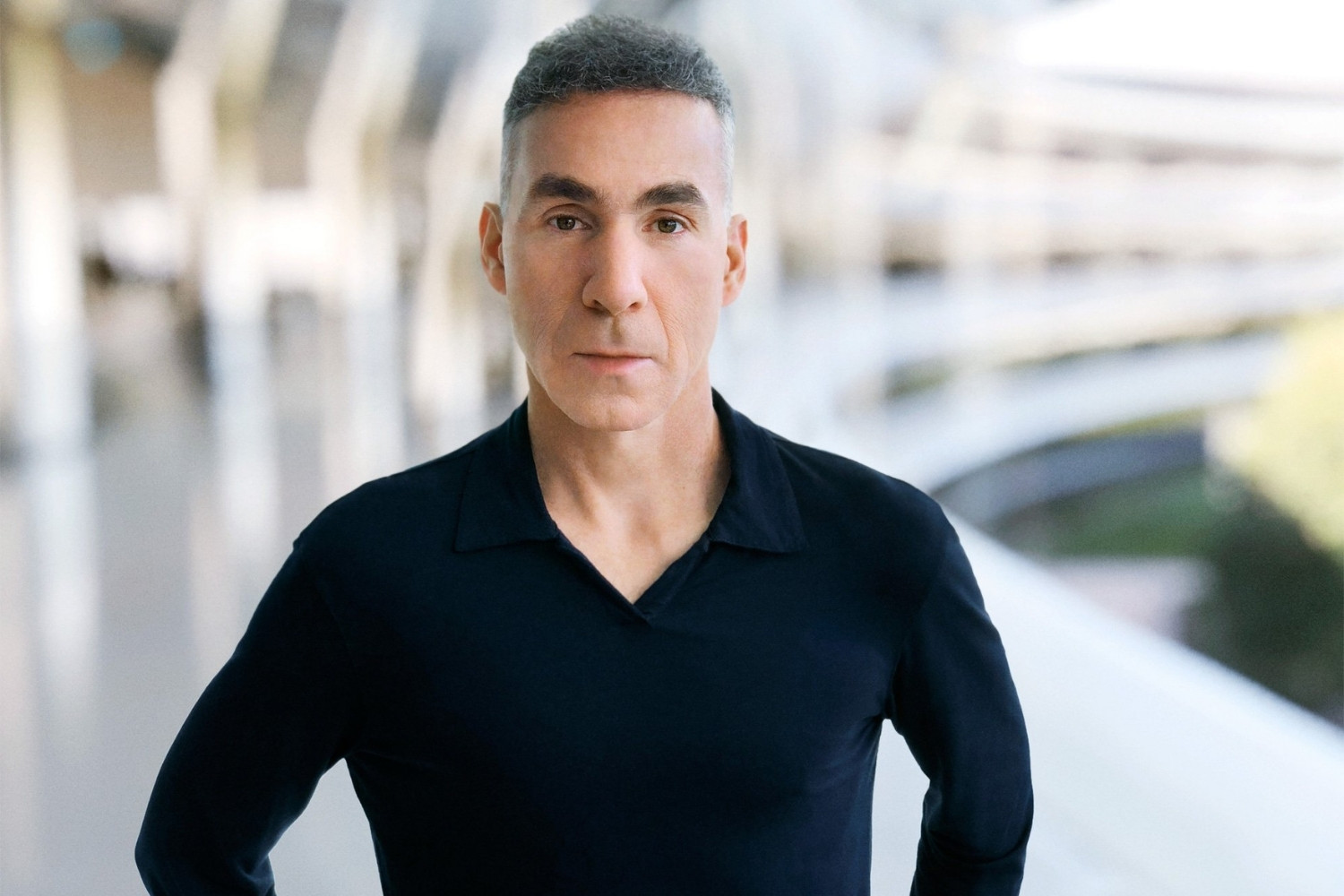
The elevation of John Ternus to the chief executive office at Apple represents more than a changing of the guard. It is the final confirmation of a design philosophy that has shifted from the cult of the individual to the supremacy of the system. For decades, the public has viewed Apple through the lens of its leaders: the firebrand founder, the "sugar water" corporate salesman, the operations maestro. But a closer look at the seven men who preceded Ternus reveals that Apple’s survival never actually depended on a visionary at the top. It depended on the tension between the product and the process.
Today, Apple is a $4 trillion entity. It is less a computer company and more a sovereign economic state. Ternus, a hardware veteran who joined in 2001, is the first CEO who grew up entirely within the modern, post-iMac architecture. He is the ultimate insider, a man built by the system to run the system. To understand why this matters, we have to look at the wreckage and the triumphs of the men who came before him.
The Adult Supervision Era
In 1977, Apple was not a titan. It was a chaotic start-up run by a 21-year-old Steve Jobs who lacked the temperament to manage a lemonade stand, let alone a Silicon Valley heavyweight. Mike Markkula, the investor who provided the initial $250,000, knew he couldn't leave Jobs in charge. He recruited Michael Scott—known as "Scotty"—from National Semiconductor.
Scott’s tenure was defined by a brutal, almost military discipline. He was the man who banned typewriters from the office and, on a day known as Black Wednesday in 1981, personally fired 40 employees because he felt the company had become bloated. Scott understood a truth that Jobs would eventually adopt: Apple could not survive on genius alone; it needed a factory-floor mentality.
When Scott left, Markkula took the reins himself for two years. Markkula is often the forgotten CEO, yet he authored the "Apple Marketing Philosophy," a three-point document focusing on empathy, focus, and impute. This document remains the bedrock of the company’s identity. He proved that Apple needed a moral and strategic compass, not just a product roadmap.
The Sugar Water Betrayal
John Sculley’s arrival in 1983 was supposed to be the moment Apple grew up. Jobs famously lured him from Pepsi with the challenge: "Do you want to sell sugared water for the rest of your life, or do you want to come with me and change the world?"
Sculley changed the world, but not in the way Jobs intended. He scaled Apple from $800 million to $8 billion, but he did so by prioritizing the Macintosh as a high-margin luxury item and eventually ousting Jobs in 1985. The "Sculley Era" was a masterclass in brand building and a failure in technical foresight. By the time he was pushed out in 1993, Apple was losing the OS wars to Microsoft.
The industry often paints Sculley as the villain, but he was merely the first to realize that Apple’s greatest product wasn't the computer—it was the brand. He failed because he didn't understand that a brand without a revolutionary product is just an empty vessel.
The Spiral of the Nineties
The mid-1990s were Apple’s dark ages. Michael Spindler and Gil Amelio are frequently dismissed as placeholders or failures. Spindler, nicknamed "The Diesel" for his work ethic, oversaw the transition to PowerPC processors—a technical feat that kept the Mac alive—but he lacked the charisma to fight off the rising tide of Windows 95. He tried to sell Apple to Sun, IBM, and Hewlett-Packard. No one wanted it.
Gil Amelio, a turnaround specialist with a PhD in physics, lasted only 500 days. He inherited a company weeks away from bankruptcy. History treats Amelio as a joke, but his tenure was the most consequential in Apple’s history. He made two decisions that saved the company:
- He canceled the disastrous "Copland" operating system project.
- He bought NeXT for $400 million, bringing Steve Jobs back into the fold.
Amelio was the sacrificial lamb. He cleaned up the balance sheet and bought the technology that would become macOS, only to be devoured by Jobs in a boardroom coup in 1997.
The Operations King
When Steve Jobs died in 2011, the consensus was that Apple’s creative soul had vanished. Tim Cook was an operations guy, a supply-chain wizard who spent his days looking at spreadsheets, not sketchbooks. Critics waited for the collapse.
It never came. Instead, Cook turned Apple into the most efficient profit-generating machine in human history. Under Cook, Apple stopped being a company that made "insanely great" things and became a company that sold an inescapable ecosystem. He grew the services business—iCloud, the App Store, Apple Music—into a Fortune 50 company on its own.
Cook’s brilliance was in recognizing that Apple no longer needed to invent the wheel every year. It just needed to make sure the wheel was attached to every part of your life. He didn't just manage the company; he managed the geopolitics of the 21st century, navigating China and Washington with a diplomat’s touch.
The Ternus Doctrine
Now comes John Ternus. His appointment marks the end of the "Operations Era" and the beginning of the "Integration Era."
Ternus is a hardware man. He led the transition to Apple Silicon—the M-series chips that gave the Mac a second life. This move was the ultimate expression of Apple’s desire for total control. By making their own silicon, Apple decoupled itself from Intel’s stagnation.
Ternus takes over a company that is facing a mid-life crisis. The iPhone is a mature product. Growth in China is slowing. Regulatory bodies in Europe and the US are tearing at the walls of the "Walled Garden." The Vision Pro, Apple's first major new category in years, is a technical marvel looking for a purpose.
Unlike Jobs, Ternus is not a mystic. Unlike Cook, he is not just a logistics expert. He represents the "Engineering First" approach. The challenge he faces is that engineering alone doesn't create culture. Apple is currently at risk of becoming a high-end utility company—reliable, expensive, and utterly predictable.
The real threat to Ternus isn't a competitor; it is the weight of Apple's own success. The company is now so large that any move it makes is scrutinized by global regulators. Innovation is harder when you have to protect a $4 trillion valuation.
The Ghost in the Machine
The history of Apple CEOs shows a recurring pattern: the company thrives when it balances a radical product vision with ruthless operational discipline. When it leans too far into marketing (Sculley) or too far into survival (Spindler/Amelio), it falters.
Ternus has the discipline. He has the technical pedigree. What remains to be seen is if he has the stomach for the "wrong" decision. Jobs was famous for following his gut even when the data said otherwise. Cook was famous for following the data until it became the truth.
Ternus enters a landscape where AI is the new frontier, a field where Apple is uncharacteristically behind. His success will not be measured by how many iPhones he sells—the machine will do that on its own for a decade—but by whether he can find the "Next Big Thing" that isn't just a better version of the last thing.
Apple has always been a mirror of its CEO. Under Scott, it was disciplined. Under Jobs, it was defiant. Under Cook, it was efficient. Under Ternus, Apple is likely to be precise. In an era of messy tech and half-baked AI, precision might be enough. But in the long run, Apple has never survived on precision alone. It requires the spark of the irrational.
John Ternus has the keys to the most valuable kingdom on earth. He just has to decide if he’s a king or a caretaker.
Apple CEO Comparison
| CEO | Tenure | Primary Legacy |
|---|---|---|
| Michael Scott | 1977–1981 | Operational discipline; Black Wednesday. |
| Mike Markkula | 1981–1983 | The "Apple Marketing Philosophy." |
| John Sculley | 1983–1993 | Brand expansion; ousting Steve Jobs. |
| Michael Spindler | 1993–1996 | PowerPC transition; international growth. |
| Gil Amelio | 1996–1997 | NeXT acquisition; bringing back Jobs. |
| Steve Jobs | 1997–2011 | iMac, iPod, iPhone, iPad; modern Apple. |
| Tim Cook | 2011–2026 | Supply chain mastery; services growth. |
| John Ternus | 2026–Present | Apple Silicon lead; AI and Vision Pro era. |
The transition is complete. The architect is now the occupant.