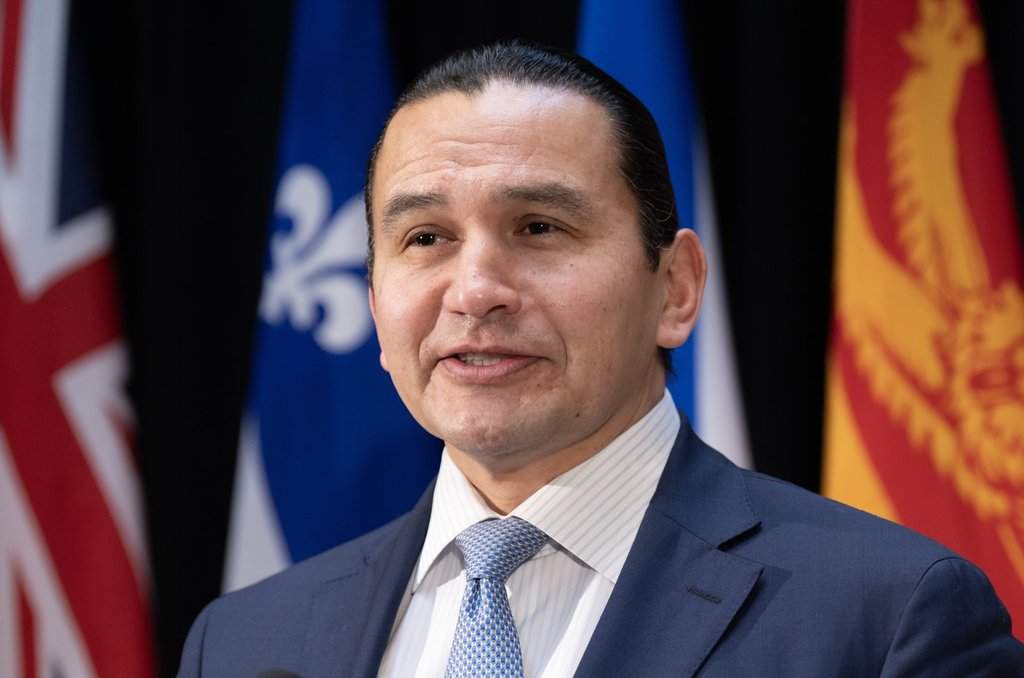
The viability of the Port of Churchill as a mid-continent trade artery depends not on political timelines, but on the successful mitigation of three systemic bottlenecks: permafrost-induced rail instability, seasonal hydrological limitations of the Hudson Bay, and the high cost-per-ton of Arctic-grade logistics. Premier Wab Kinew’s recent confirmation of a federal timeline for the Churchill project signals a shift from speculative interest to operational commitment. However, the actualization of this corridor requires a transition from intermittent government subsidies to a self-sustaining volume-based economic model.
The Infrastructure Integrity Constraint
The Hudson Bay Railway operates on a precarious foundation of discontinuous permafrost. This geological reality dictates the entire maintenance and capital expenditure (CAPEX) profile of the project. Traditional rail infrastructure relies on static subgrades; Churchill’s tracks sit on shifting thermal layers.
When the permafrost thaws, the ground loses its bearing capacity, leading to track heaving and sinkholes. This physical degradation forces speed restrictions that increase transit times and decrease the effective throughput of the line. Any federal timeline must account for the Thermal Stabilization Lag: the period required for newly engineered thermosyphons and aggregate layers to settle and prove their durability under heavy freight loads.
- Subgrade Thermal Management: Utilizing passive cooling systems to prevent the heat sink effect of gravel beds.
- Dynamic Weight Distribution: Upgrading rail weight (e.g., from 80-lb to 100-lb rail) to accommodate modern grain hoppers and mineral transport cars without risking derailment.
- Sensor-Driven Maintenance: Integrating fiber-optic strain sensing to identify sub-millimeter shifts in the rail bed before they result in catastrophic failure.
The Seasonal Economics of Arctic Logistics
The Port of Churchill is historically limited by its shipping season, which typically spans from late July to November. This 4-to-5-month window creates an Amortization Gap. Infrastructure that sits idle for 60% of the year must generate disproportionately high margins during its active months to cover annual overhead and the premium costs of Northern labor.
Extending this window is not merely a matter of wait-and-see climate change. It requires active ice-management strategies. The introduction of heavy icebreaking support and the installation of automated navigation aids could theoretically push the season into December. Yet, insurance premiums remain the invisible hand of the Arctic; underwriters view the Hudson Strait as a high-risk zone regardless of ice thickness. The project’s success hinges on whether the federal government will underwrite these risks or if the volume of exported commodities can absorb the insurance overhead.
The Commodity Diversification Mandate
Churchill’s historical reliance on grain exports made it vulnerable to shifts in global trade routes and the privatization of the Canadian Wheat Board. For the port to achieve long-term solvency, the export profile must diversify into high-value minerals and energy products.
Critical Mineral Synergies
The Canadian Shield is rich in nickel, copper, and rare earth elements. Transporting these minerals from Northern Manitoba and Nunavut through Churchill reduces the land-transit distance by thousands of kilometers compared to routing them through Vancouver or Montreal. This creates a Distance-Cost Arbitrage that should, in theory, favor the Churchill route.
Energy Sovereignty and Hydrogen
There is a growing logic for Churchill to serve as a hub for green hydrogen production, utilizing Northern Manitoba’s hydroelectric surplus. Transporting hydrogen or ammonia directly to European markets via the North Atlantic offers a strategic advantage over southern ports congested by high-volume container traffic.
The Social License and Indigenous Ownership Model
The ownership structure of the Arctic Gateway Group, which includes OneNorth—a consortium of Indigenous and northern communities—represents a fundamental shift in the development of Canadian infrastructure. This is not a matter of corporate social responsibility; it is a mitigation strategy for legal and operational risk.
Indigenous ownership ensures that the labor force is localized, reducing the "fly-in-fly-out" costs that plague other Northern projects. It also streamlines the regulatory environment. When the communities most impacted by the rail line are also its primary shareholders, the timeline for environmental assessments and local permitting accelerates. This alignment of interests reduces the Project Friction Coefficient that typically stalls large-scale resource plays in the Canadian North.
Competitive Pressure and the Northwest Passage
As the Northwest Passage becomes increasingly navigable, Churchill faces a new competitive landscape. While it currently serves as a terminus for rail-to-ship transfer, it may eventually serve as a transshipment point for vessels moving between the Atlantic and Pacific.
The "Northern Corridor" concept posits that Churchill could compete with the Panama Canal for specific types of cargo, particularly between Northern Europe and Asia. However, the Panama Canal offers year-round reliability and a massive ecosystem of bunkering and repair services. Churchill’s competitive edge must be built on speed for specific mid-continent markets, not on attempting to match the sheer scale of established global maritime hubs.
Structural Bottlenecks in the Federal Timeline
The federal timeline mentioned by Premier Kinew is subject to the Political Multiplier Effect. Infrastructure projects of this scale often see costs expand by a factor of 1.5 to 2.0 due to the unpredictability of Arctic construction.
- Labor Scarcity: Skilled trades for rail and port construction are in high demand across North America; enticing them to Churchill requires significant wage premiums.
- Supply Chain Latency: Equipment and materials must be staged months in advance. A single missed barge or delayed freight train can derail an entire construction season.
- Regulatory Overlap: Coordinating between federal transport safety standards, provincial environmental mandates, and Indigenous land rights creates a complex approval matrix.
Strategic Priority: The Resiliency Pivot
To move beyond the current announcement, the strategy must pivot toward the hardening of the assets. The focus should be on the Intermodal Efficiency Ratio—the speed at which grain, ore, or fuel can be transferred from rail to ship.
Modernizing the 90-year-old grain elevator is the first step, but the second must be the construction of multi-commodity loading facilities. A port that can only handle one type of cargo is a single point of failure. The federal timeline must prioritize the dual-tracking of critical sections of the railway and the deepening of the berthing areas to accommodate larger, more modern vessels.
The ultimate feasibility of the Port of Churchill rests on its ability to prove it is a reliable alternative to the Port of Vancouver. During periods of southern rail disruption—whether due to flooding, landslides, or labor strikes—Churchill must be ready to act as a pressure valve for the Canadian economy. Reliability is the currency of global trade; until Churchill can guarantee a consistent shipping window and a stable rail bed, it will remain a secondary option.
The strategic play is to front-load the most difficult engineering challenges—the permafrost stabilization—before committing to massive surface-level expansions. If the rail bed cannot hold a 100-car train at 40 miles per hour, the port’s capacity is irrelevant. Investors and stakeholders should look for specific engineering benchmarks in the upcoming federal reports: the number of kilometers stabilized, the cubic meter capacity of new storage facilities, and the verified draft depth of the shipping channels. These are the only metrics that transcend political rhetoric.