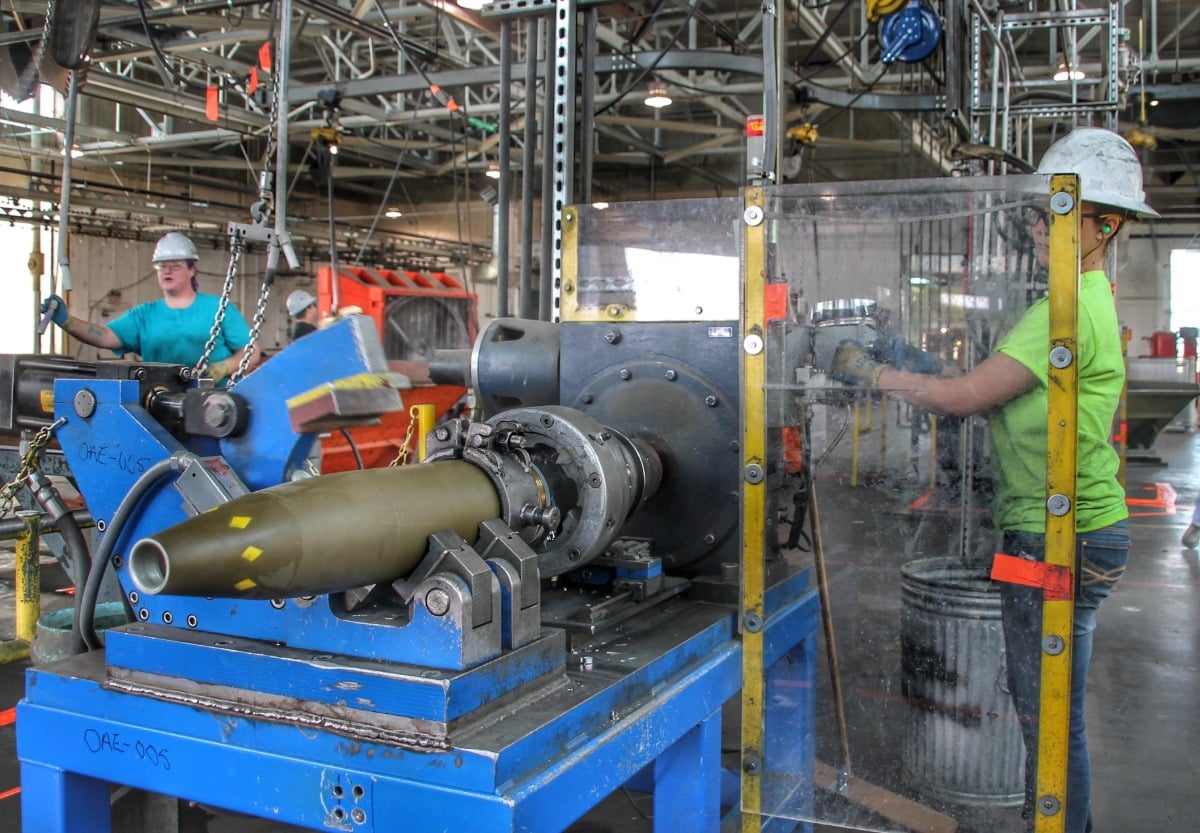
The narrative surrounding the decline of American manufacturing is broken. For a decade, mainstream economists, politicians, and talking heads have parroted the same defeatist script: reviving domestic production is a monumental, nearly impossible uphill battle. They point to high labor costs, a depleted supply chain, and a massive skills gap as insurmountable hurdles.
They are looking at the wrong map.
The lazy consensus laments the loss of 1970s-style assembly lines, treating factories as jobs programs rather than competitive engines. The truth is uncomfortable for both political parties: the goal should not be to resurrect the labor-heavy manufacturing plants of the past. Trying to out-handicraft the rest of the world is a guaranteed way to burn billions in capital.
We do not have a manufacturing crisis. We have an automation and deployment crisis.
The Labor Myth That Distorts the Entire Debate
The most common objection to domestic production is that American worker wages are too high to compete globally. This argument assumes that manufacturing in 2026 still relies on rows of workers manually assembling components. It treats labor as a fixed, linear variable in the cost equation.
That is an archaic way to view productivity.
When you shift the metric from labor cost per hour to output per dollar of capital invested, the entire equation flips. Advanced automation radically compresses the percentage of total production cost attributed to direct human labor. In a highly automated facility, direct labor often drops to under 10% of total operating expenses. At that threshold, the wage differential between a worker in Ohio and a worker in Southeast Asia becomes rounding error.
Traditional View:
High Wages = High Production Costs = Uncompetitive Products

Modern Reality:
High Capital Investment = Extreme Automation = Labor Cost Irrelevance
The real problem isn't that American workers cost too much. It is that American executives are terrified of the upfront capital expenditures required to eliminate labor dependencies entirely. They prefer the predictable variable costs of overseas logistics over the fixed capital investment of a fully autonomous domestic facility. I have sat in boardrooms where projects were killed not because the math didn't work, but because the payback period on a robotics deployment was 36 months instead of 18. That is short-term managerial cowardice, not a structural economic flaw.
The Supply Chain Obsession is a Red Herring
Another favorite talking point of the defeatist crowd is the "ecosystem" argument. They claim that because the component supply chains—the resistors, the molded plastics, the specialized fasteners—have moved to Asia, it is logistically impossible to assemble finished goods in the United States.
This fundamentally misunderstands how modern product design works.
If you design a product the same way it was designed in 1990, yes, you need an sprawling, hyper-localized ecosystem of component vendors. But modern engineering allows for radical component consolidation. Through additive manufacturing and advanced generative design, assemblies that used to require fifty distinct parts can now be printed or machined as a single, complex geometric structure.
Instead of whining about the absence of a local ecosystem, forward-thinking companies rewrite the bill of materials (BOM). They eliminate the ecosystem entirely.
Consider a thought experiment based on basic manufacturing physics. Imagine a company manufacturing an industrial pump. The traditional approach requires sourcing thirty different cast and machined parts from various global suppliers, leading to massive inventory holding costs and customs delays. The contrarian approach redesigns the pump casing and internal impellers into a single, unified component produced via high-throughput additive manufacturing, followed by automated robotic assembly of the motor. You have bypassed the supply chain by substituting design intelligence for logistics.
The downside to this approach? It demands elite, highly compensated design engineers who understand physics, material science, and robotic toolpaths—not purchasing managers who excel at negotiating freight rates.
Dismantling the "Skills Gap" Excuse
Whenever a factory struggles to staff its facility, the immediate reaction is to blame the American education system or lament a "skills gap." This is a convenient shield for management. It shifts the blame from the company’s operational failures onto the public sector.
The reality is brutal: if your manufacturing process requires an army of highly specialized, manual virtuosos to execute repetitive tasks perfectly every day, your process is poorly engineered.
Human variation is the enemy of quality control. The objective of modern manufacturing engineering is to de-skill the shop floor while elevating the engineering office. The frontline worker should not need a five-year apprenticeship in manual machining; they should be monitoring an interface that manages ten autonomous CNC centers simultaneously.
The real gap is not a lack of willing hands; it is a lack of operational competence at the executive level. The industry has a massive deficit of automation engineers, systems integrators, and software developers who understand how to make physical hardware talk to digital control systems. We do not need more trade schools teaching manual welding. We need more institutions producing industrial automation experts who can program six-axis robotic arms.
The Dangerous Allure of Government Subsidies
The consensus view celebrates industrial policy, pointing to multi-billion-dollar government subsidies as the savior of domestic production. This is a profound miscalculation.
Subsidies are an economic narcotic. They artificially distort the market, insulate companies from the harsh realities of global competition, and encourage rent-seeking behavior over pure innovation. When a facility is built on the back of government handouts, its primary metric of success becomes compliance with political mandates rather than operational efficiency.
History shows that heavily subsidized industries eventually become bloated and fragile. They spend their energy lobbying for the preservation of protectionist tariffs and additional tranches of funding rather than relentlessly driving down their unit economics. Look at the long-term trajectory of heavily protected industrial sectors globally; they inevitably lose their competitive edge to hungry, unsubsidized competitors who have no choice but to innovate or die.
True manufacturing resilience cannot be legislated or subsidized into existence. It must be engineered on the shop floor through superior technology and ruthless operational efficiency. If a domestic factory cannot achieve cost parity with global competitors after accounting for logistics and inventory costs, it should not exist.
The Actionable Blueprint for Real Domestic Dominance
If you want to build a highly profitable, resilient production footprint in the United States, you must invert the traditional playbook. Stop trying to scale by adding head count. Step away from the traditional outsourcing model and adopt a radically different operational framework.
1. Enforce a Strict 10x Automation Mandate
If a production process cannot be executed by an automated system with minimal human intervention, do not build it. Redesign the product from scratch. Every manual step introduced into a manufacturing line is a future quality defect and a recurring line-item expense that compounds over time. Demand that your engineering teams design for automated assembly (DFAA) as a non-negotiable constraint.
2. Vertically Integrate the Core Technology
Stop outsourcing your critical manufacturing processes to third-party contract manufacturers who margin-stack you at every turn. If the manufacturing process is a source of competitive advantage, own it. Build the internal capability to iterate on your production technology as fast as you iterate on your software. The line between product design and process engineering must be entirely erased.
3. Replace Purchasing Agents with Software Engineers
The traditional procurement department is obsolete. Modern inventory management and production scheduling should be governed by dynamic algorithms, not spreadsheets and phone calls. Hire software engineers to build closed-loop systems that sync your demand forecasting directly with raw material acquisition and machine utilization metrics.
The Brutal Truth About the Transition
This approach is not a painless panacea. It requires massive, upfront capital deployment. It results in significantly fewer jobs per factory floor, which means it will not win politicians any photo opportunities cutting ribbons at new facilities. It demands a culture of hyper-competence where mediocre engineering is exposed instantly by machine downtime.
But it functions.
The companies that accept this reality are quietly building highly profitable, unassailable production engines inside domestic borders. They do not complain about foreign competition because their unit economics are superior. They do not beg for subsidies because their cash flow is self-sustaining.
The choice facing American business leaders is stark. You can continue to moan about the structural difficulty of reviving traditional manufacturing, or you can build autonomous production systems that render the entire debate irrelevant. Stop looking backward at what factories used to be. Start engineering what they must become.