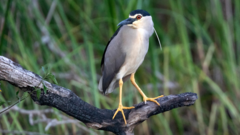
The Fetishization of Vagrancy
Every few months, the local press and regional wildlife trusts erupt into collective hysteria over a solitary vagrant bird. A black-capped night heron touches down on a National Trust wetland in Britain, and suddenly the birding community, local conservation boards, and well-meaning nature enthusiasts start throwing a digital parade. Headlines trumpet it as a triumph of habitat restoration. Commentators pat themselves on the back, claiming that the presence of an exotic, vagrant species is proof positive that localized rewilding projects are working.
It is a comforting narrative. It is also complete nonsense.
What the public sees as a triumph is, in ecological terms, statistical noise. A single night heron blown off course by Atlantic gale-force winds or pushed north by erratic weather patterns is not a sign of a thriving ecosystem. It is an anomaly. Celebrating a lost, displaced individual bird as evidence of environmental recovery is the ecological equivalent of finding a Rolex in a landfill and declaring the dump a luxury retail district.
We have allowed conservation journalism to devolve into a vanity metric contest. By chasing the thrill of high-value vagrants, organizations divert public attention from the unsexy, grinding reality of systemic biodiversity collapse.
Why Rare Sightings Are a False Signal
To understand why a rare bird sighting is rarely good news, you have to understand the mechanics of avian vagrancy. Birds end up thousands of miles outside their normal breeding or wintering ranges for a handful of reasons:
- Reverse Migration Disorientations: Genetic anomalies that cause a bird to fly in the exact opposite direction of its flock.
- Extreme Meteorological Displacement: Unseasonal storms forcing migratory routes off-course.
- Habitat Destruction at Origin: Desperate exploration caused by the destruction of primary breeding grounds elsewhere.
Notice that "successful local habitat management" is not on that list.
A lone black-capped night heron roosting in an English reed bed does not mean the reed bed is a thriving biome. Night herons are opportunistic feeders. They will sit on a concrete canal bank in southern Europe and eat plastic-contaminated goldfish if given the chance. The bird is there because it is lost and trying to survive, not because a local conservation trust spent five years clearing invasive balsam.
The Hard Truth: A single lost bird tells you nothing about the health of a site. A stable, dense population of boring, common species tells you everything.
When we focus on the flashiness of a rare sighting, we mistake a lost tourist for a permanent resident. True ecological health is measured by carrying capacity, reproductive success rates, and species richness across foundational trophic levels—not by how many twitchers with $10,000 telephoto lenses flock to a car park on a Tuesday morning.
The Economics of Eco-Distraction
I have spent years watching conservation groups, non-profits, and land management trusts navigate the brutal competition for public funding and donor dollars. The reality is bleak: boring conservation does not sell.
Maintaining a healthy population of dung beetles, native earthworms, or common sedges does not generate virality. It does not drive foot traffic to gift shops, nor does it secure front-page coverage in national broadsheets. But a rare heron? That is marketing gold.
+------------------------------------+------------------------------------+
| Flashy Conservation (The Illusion) | Structural Conservation (The Fact) |
+------------------------------------+------------------------------------+
| Focuses on rare vagrants & strays  | Focuses on native breeding biomass |
| Drives short-term traffic spikes   | Requires decades of quiet land use |
| High PR value, low ecological yield| Low PR value, high ecological yield|
| Masks broader systemic decline     | Confronts regional land management |
+------------------------------------+------------------------------------+
This dynamic creates a dangerous incentive loop. Reserves are nudged to design landscapes that attract high-visibility "trophy" species for quick PR wins, rather than doing the deep, unglamorous work of repairing functional ecosystems from the soil up.
When a National Trust site or regional reserve spotlights a lost night heron, they are leveraging an accident of geography to validate their existence. It is performative environmentalism. It satisfies the public’s desire for a quick "win" in an era dominated by eco-anxiety, while hiding the fact that baseline numbers for common native birds—skylarks, lapwings, song thrushes—continue to plummet across the exact same geographic region.
The Cost of Ignoring Common Species Collapse
While the internet coos over a misplaced heron, the functional fabric of regional ecology is fraying.
The phenomenon of "Shifting Baseline Syndrome" explains how each generation accepts the degraded state of the environment as the normal baseline. Fifty years ago, the skies over European and North American agricultural lands were thick with flocks of farmland birds. Today, those numbers have collapsed by over 50% across major territories.
Yet, because the decline is slow, steady, and affects "boring" brown birds, it rarely makes the evening news.
What Actually Matters in Wetland Ecology
If you want to know if a wetland restoration project is working, ignore the bird alerts. Look at these three indicators instead:
- Invertebrate Density: Is the aquatic insect biomass sufficient to support multi-generational breeding cycles for native predators?
- Hydrological Connectivity: Is the water table managed naturally, or is it artificially manipulated with pumps and sluice gates to create an idealized aesthetic for visitors?
- Breeding Density of Key Bioindicators: Are resident species successfully fledging chicks at or above replacement rates year-over-year?
If a site fails these three metrics, it is an ecological dead zone, no matter how many exotic vagrants drop in to rest for forty-eight hours before dying of starvation or moving on.
Dismantling the "Twitcher" Delusion
The birding community itself bears responsibility for this misplaced priority. Modern twitching has increasingly decoupled itself from actual field biology. It has borrowed the worst mechanics of gamified collection culture: tick the box, post the photo, log the spot on an app, drive home.
This carbon-intensive chase culture sees hundreds of people jump into combustion-engine vehicles to drive three hours and stare at an exhausted, disoriented bird. The carbon footprint of the crowd gathered to view a rare vagrant frequently outweighs the annual environmental benefit of the tiny patch of land the bird is standing on.
It is ecological consumerism masquerading as a love for nature.
If we actually cared about wildlife, a rare bird alert would be met with quiet concern, not a rush of traffic. We would ask: Why is this bird here? What climate anomaly pushed it off course? What habitat at its origin has been destroyed to make this error more likely?
Instead, we treat it like a circus act.
How to Fix Our Conservation Priorities
If we want to move past headline-driven eco-placating, we have to change how we measure and reward land management.
1. Stop Funding PR, Start Funding Biomass
Grants and public subsidies should be tied strictly to verified increases in resident, breeding biomass over five-to-ten-year cycles. If a park cannot demonstrate a measurable rise in native insect and common bird reproduction, they should not receive biodiversity premiums, regardless of how many rare species stop by.
2. Redefine "Success" in Public Reporting
Media outlets must stop framing vagrant sightings as environmental victories. Journalists covering these events need to ask land managers tough questions: Is this species breeding here? Is this sighting tied to climate displacement? What are the year-over-year numbers for the site's native baseline species?
3. Embrace the Unspectacular
We need to cultivate an appreciation for the ordinary. A muddy, insect-rich marsh filled with common snipes and midges is infinitely more valuable to global biodiversity than an aesthetically manicured park that occasionally traps an exotic vagrant.
The black-capped night heron sitting on a fence post in a managed reserve is not a symbol of hope. It is a biological mistake, an individual stranded in an increasingly hostile, unpredictable global climate.
Stop taking victory laps over ecological accidents. Demanding real, structural restoration of the unsexy, baseline ecosystems right in front of us is the only metric that counts. Everything else is just noise.