The dirt in northern Alberta does not yield easily. In the deep winter, it freezes into something resembling concrete, a stubborn mixture of muskeg and frost that breaks iron teeth off excavators. To lay a pipe there is to wage a war against geography itself.
For decades, this province won that war. We built an empire on the willingness to move heavy things through frozen ground. But lately, the dirt is not the only thing resisting.
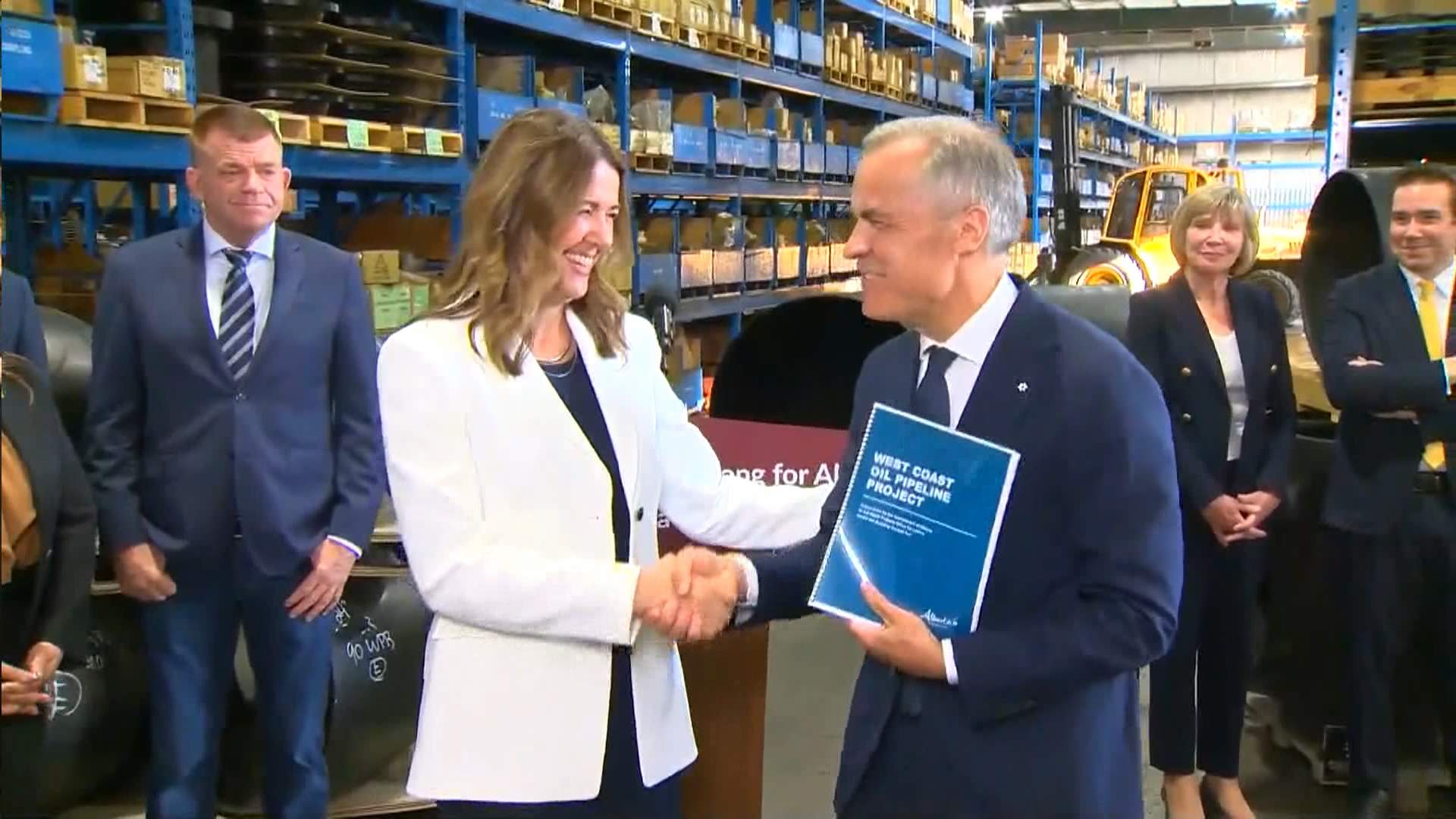
When the provincial government announced its latest ambition to push another major pipeline corridor across the map, the reaction followed a familiar, exhausting script. Politicians spoke of economic lifelines. Environmental advocates warned of ruin. Investors looked at their spreadsheets and quietly calculated the distance between political promises and actual cash flow.
Beneath the noise of the press conferences lies a quiet, uncomfortable truth. The era of building massive energy infrastructure on sheer willpower is over. The calculations have changed, and the people who actually wear the hardhats or balance the provincial ledgers are beginning to realize that the hardest part of building a pipeline is no longer the frost. It is the math.
The Ghost of Megaprojects Past
To understand why a new pipeline proposal feels heavy, you have to talk to the people who built the last one. Consider a welder named Jim. He spent two years on the Trans Mountain expansion, living out of a motel room, watching the sun rise through the steam of his own breath. Jim represents a generation of workers who know exactly what happens when a project slips its leash.
The Trans Mountain expansion was supposed to be a straightforward triumph. Instead, it became a lesson in economic gravity. The initial price tag was a manageable fraction of what it ultimately cost. By the time the oil finally started flowing to the Pacific coast, the bill had ballooned past thirty billion dollars.
Taxpayers absorbed much of that weight.
When a single project swallows that much capital, it leaves a scar on the collective psyche of the financial sector. Banks are no longer willing to write blank checks based on regional pride. They want guarantees. They want to know who pays if the route hits an unexpected mountain ridge, an unresolved land claim, or a regulatory wall.
In the new proposal, those guarantees are remarkably hard to find. The government suggests that this new corridor will avoid the traps of the past by securing agreements early. But history suggests that agreements on paper tend to dissolve when the heavy machinery arrives at the edge of a community's backyard.
The Friction of the Earth
A pipeline is not just a steel tube. It is a legal intervention across thousands of individual lives, sovereign Indigenous territories, and fragile ecosystems.
Imagine standing on a piece of land that your family has hunted on for six generations. To you, the valley is a library of memory. To an engineer in Calgary, it is a straight line on a topographical map, an optimal trajectory between a production facility and a shipping terminal.
That disconnect is where projects stall. The regulatory process is often blamed for these delays, described by proponents as a bureaucratic swamp designed to choke out industry. But that view misses the point. The regulations are merely the arena where deep, unresolved questions about ownership and stewardship are fought.
Every kilometer of new pipe requires a negotiation. Not just a financial transaction, but a fundamental conversation about consent. When a province proposes a new route, it is stepping into a minefield of legal precedents that have grown sharper over the last decade. Courts are no longer deferential to industrial necessity. They require proof that communities were not just informed, but genuinely heard.
That takes time. Months turn into years. Years turn into interest payments on billions of dollars of borrowed money. Before a single trench is dug, a project can bleed out on the balance sheets of its backers.
The Cold Logic of the Market
Even if the earth relents, and even if the legal battles fall away, the ultimate arbiter sits in boardrooms thousands of miles from the oil patches of Fort McMurray.
The global energy market is a fickle entity. For a pipeline to be profitable, it needs two things: a guaranteed supply of product at one end, and a hungry, high-paying customer at the other. For a long time, that equation was simple. The world wanted every drop of heavy crude Alberta could squeeze from the sand.
Now, the horizon looks different. Refineries in Asia and the Gulf Coast are shifting. Refinement capacities are changing, and competing supplies from other parts of the world are constantly shifting the global price scale.
Building a pipeline is a thirty-year bet. You are wagering that the world of 2056 will want oil just as badly as the world of today. It is a gamble against technological acceleration, shifting international climate policies, and the domestic economic priorities of countries that currently buy Canadian energy.
If global demand peaks in the next decade, a new pipeline becomes a monument to a past era. A very expensive, hollow monument. Shipping companies will not pay high tolls to move oil through a new line if cheaper alternatives exist, or if the market simply shrinks. If those tolls cannot cover the cost of construction, the entire structure collapses inward, leaving the province holding the bag.
The Human Cost of Uncertainty
The real tragedy of these grand industrial announcements is the human collateral.
When a new pipeline is proposed, small towns along the hypothetical route begin to speculate. Motels prepare for an influx of workers. Local diners imagine packed booths. Young people sign up for trade schools, betting their futures on the promise of high-paying construction gigs.
Then, the delays begin. The project stalls in an appeals court. A major investor pulls out, citing regulatory uncertainty. The town is left in suspense, suspended between a boom that never arrives and an economy that is slowly drying up.
This uncertainty is a heavy weight to bear. It prevents real diversification. Why invest in new industries or local businesses when everyone is waiting for the big pipeline money to arrive? It keeps communities hooked on a cycle of hope and disappointment, tied to decisions made by executives who will never visit their towns.
We must look past the colorful maps and the optimistic press releases. The real problem lies in our stubborn refusal to admit that the game has changed. We are trying to solve modern, complex economic and social puzzles with tools from the twentieth century.
Consider what happens next if the province presses forward without a radical change in approach. More billions will be committed. More political capital will be burned. And the people of Alberta will be left wondering why a resource that was supposed to secure their future feels increasingly like an anchor pulling them down.
The frost will always break the iron teeth of an excavator. That is a given. But it is the quiet, relentless friction of a changing world that might finally break the dream of the endless pipeline.