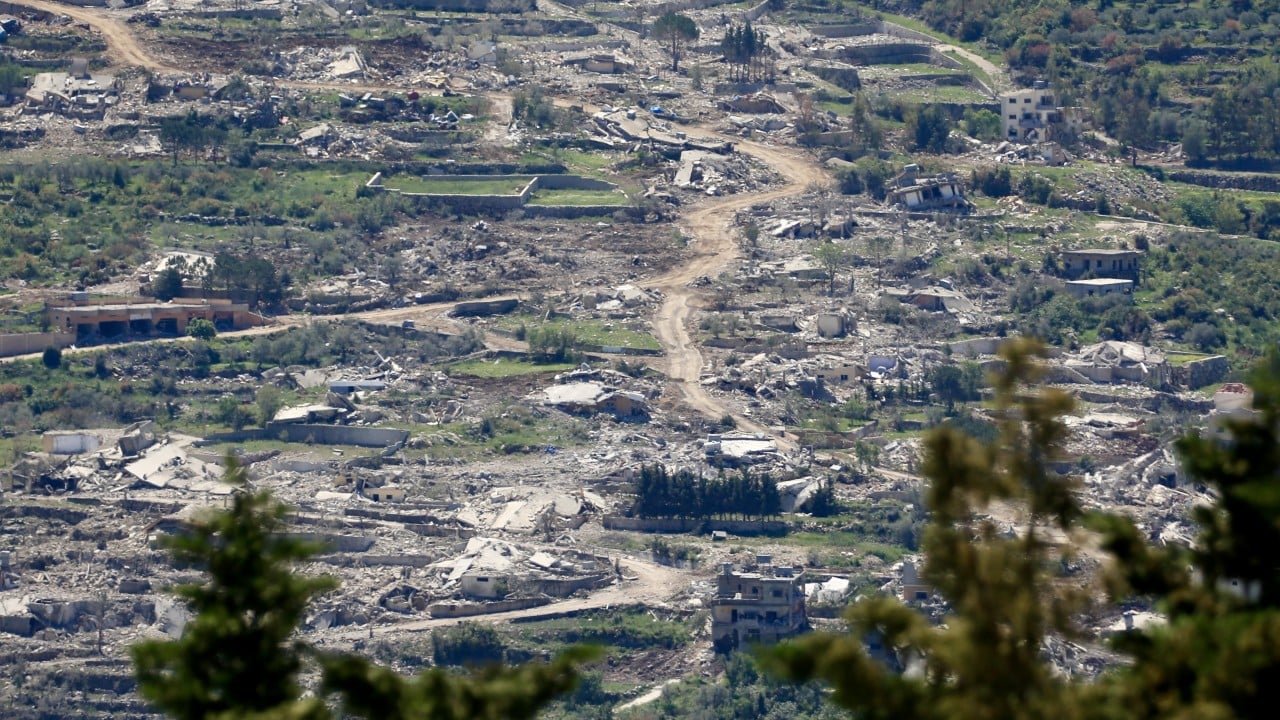
The ceasefire meant to silence the guns across the Blue Line was never supposed to include the sound of controlled explosions ripping through residential blocks. Yet, weeks into a fragile cessation of hostilities, the Lebanese government is scrambling to document a systematic campaign of property destruction that threatens to scuttle the entire diplomatic framework. Beirut is now preparing a formal diplomatic offensive to confront Israel over the leveling of homes in occupied border villages, a practice that Lebanon argues violates the fundamental spirit of the UN-brokered agreement.
This is not the collateral damage of high-intensity combat. These are deliberate, engineered demolitions occurring in areas where the Israeli Defense Forces (IDF) maintain a physical presence or operational control. The central friction point lies in the interpretation of "defensive necessity." While the international community views the ceasefire as a hard stop to offensive operations, the reality on the ground suggests a scorched-earth policy designed to create a permanent buffer zone. By flattening entire neighborhoods in places like Meiss el-Jabal and Mhaibib, the objective appears less about neutralizing immediate threats and more about ensuring that the socio-economic fabric of the border region cannot be rewoven anytime soon.
The Engineering of a Buffer Zone
The mechanics of these demolitions suggest a long-term strategic shift. When a house is hit by a missile during active combat, it is an act of war. When a house is wired with explosives and detonated under the supervision of combat engineers days after a truce was signed, it is an act of policy. Lebanese officials claim that satellite imagery and ground-level footage smuggled out of the occupied pockets show a pattern of "clearing" that extends far beyond the stated goal of dismantling militant infrastructure.
For the residents of southern Lebanon, the house is more than shelter. It is the primary vehicle for land claims and ancestral presence. By targeting the domestic sphere, the strategy effectively displaces the population long after the soldiers depart. You cannot return to a village that no longer exists as a functional unit of life. This creates a de facto "no-go" area without the need for a permanent garrison, as the lack of water, electricity, and roofed structures makes civilian life impossible.
The legal gymnastics surrounding these actions are complex. Israel frequently cites the discovery of tunnel shafts or weapons caches beneath residential villas to justify their destruction. Under international law, a civilian object loses its protected status if it is used for military purposes. However, the Lebanese counter-argument rests on proportionality and timing. If the threat was neutralized, and the ceasefire is in effect, the subsequent leveling of an entire block is seen by Beirut—and many international observers—as a punitive measure rather than a tactical one.
The Diplomatic Breakdown in Beirut
Inside the halls of the Grand Serail, the atmosphere is one of controlled desperation. Prime Minister Najib Mikati’s government is walking a razor-thin line. On one hand, they must show the Lebanese public that they are defending national sovereignty; on the other, they are painfully aware that Lebanon’s military and economic leverage is non-existent.
The planned confrontation involves a multi-pronged approach:
- The UN Security Council: Drafting a formal complaint alleging violations of Resolution 1701 and the new ceasefire terms.
- The Monitoring Committee: Leveraging the US-led committee tasked with overseeing the truce to demand an immediate halt to "engineering activities" that target civilian homes.
- Documentary Evidence: Compiling a registry of every structure destroyed post-ceasefire to present to international donors, highlighting that the cost of reconstruction is being inflated by these deliberate acts.
The problem for Lebanon is the lack of a "stick." The Lebanese Armed Forces (LAF) are tasked with moving south to fill the vacuum, but they cannot enter areas where the IDF has not yet withdrawn. This creates a "gray zone" of time and space where the demolition squads work with impunity. The diplomatic challenge is proving that these homes were standing at the moment the clocks hit the ceasefire start time and were demolished thereafter.
The Logistics of Erasure
To understand the scale, one must look at the geography of the border. The villages built on the ridgelines overlooking the Galilee are not just clusters of homes; they are strategic high ground. In previous conflicts, these villages remained largely intact, even if damaged. The current trend marks a departure from historical norms. We are seeing the industrialization of demolition.
Bulldozers and mines are being used to "recontour" the landscape. This is a military term for making the terrain unrecognizable to the enemy and more defensible for yourself. By removing the verticality of the villages—the walls, the multi-story apartments, the water towers—the IDF creates a clear line of sight from the border fence deep into Lebanese territory. The cost of this clarity is the permanent displacement of tens of thousands of Lebanese citizens who now have no "home" to return to, regardless of what the politicians in Beirut or Tel Aviv say.
The Role of the Monitoring Committee
The US-led monitoring mechanism is the only body with the actual authority to step between the two sides. However, the committee’s mandate is focused on preventing the re-emergence of armed groups in the south. When Lebanon complains about home demolitions, the response from the monitors often pivots back to the presence of bunkers or rocket launchers.
This creates a circular argument. Israel claims the house was a bunker; Lebanon claims the bunker was a house. The monitors, often relying on Israeli intelligence or remote sensing, struggle to provide an independent verdict. This ambiguity works in favor of the party with the explosives. For every day the monitoring committee spends debating the status of a specific village, another dozen structures are reduced to dust.
Economic Warfare by Other Means
Lebanon is broke. The central bank is a hollow shell, and the currency is a ghost of its former self. The reconstruction of the south after the 2006 war was largely funded by Gulf states and international aid. In 2026, that well has run dry. The political climate in the Gulf has shifted, and Western donors are exhausted by the cycle of destruction and rebuilding.
The demolition of homes is, therefore, a potent form of economic warfare. By increasing the bill for reconstruction, the actors on the ground are ensuring that Lebanon remains crippled. A village of 500 homes is an asset; 500 piles of rubble is a liability that the Lebanese state cannot afford to clear, let alone rebuild. This financial reality is a silent partner in the military strategy. If you cannot afford to rebuild the south, you cannot effectively govern it, and if you cannot govern it, it remains a lawless frontier.
The Strategic Miscalculation
There is a risk that this policy of demolition will backfire. History in the Levant shows that grievance is the primary fuel for future recruitment. A farmer who returns to find his ancestral olive grove scorched and his house leveled does not usually become a moderate. He becomes a radicalized stakeholder in the next round of violence.
By pursuing a "security through destruction" model, the architects of this policy may be clearing the ground for the very insurgency they seek to prevent. The visual of a controlled explosion in a quiet village, filmed and uploaded to social media during a "peace," is a more effective propaganda tool than any speech delivered from a podium in Beirut.
The Path to the Blue Line
As the LAF prepares its deployment, the friction will only increase. The army is expected to be the guarantor of the ceasefire, but they are being asked to patrol a graveyard of architecture. There are already reports of tense standoffs where Lebanese officers have reached the outskirts of a village only to hear the boom of a demolition from the next hill over.
The Lebanese government’s decision to "confront" Israel is as much about internal politics as it is about external security. The various factions within Lebanon—from the Maronite Christians to the Shia and Sunnis—are watching to see if the state can actually protect its borders. If the government fails to stop the demolitions through diplomatic means, the pressure for "other" forces to intervene will become unbearable, potentially snapping the ceasefire before it even has a chance to settle.
The focus must remain on the specific language of the truce. If the agreement stipulates a return to the status quo ante, then every home destroyed after the signing is a breach of contract. The international community, led by the US and France, has a choice: they can either enforce the terms they brokered, or they can watch as the "buffer zone" becomes the funeral pyre of the agreement.
The debris is still warm in the borderlands. Every hour that passes without a hard diplomatic intervention is another hour that the map of southern Lebanon is being redrawn by the blade of a bulldozer. The houses are falling, and with them, the hope that this ceasefire was anything more than a temporary pause in a permanent war. Ownership of the land is being contested not with deeds and titles, but with high explosives and cold, hard math.