The air in North Sumatra does not move; it weighs. If you stand near the edge of a palm oil plantation in the suffocating heat of midday, the scent is a thick, sweet rot of fermenting fruit mixed with the sharp tang of diesel. For decades, this smell meant one thing to the people living along the equator: survival. It meant a motorbike bought on installment, school fees paid, a metal roof replacing the thatch.
Now, that same air carries a quiet, collective breath-holding.
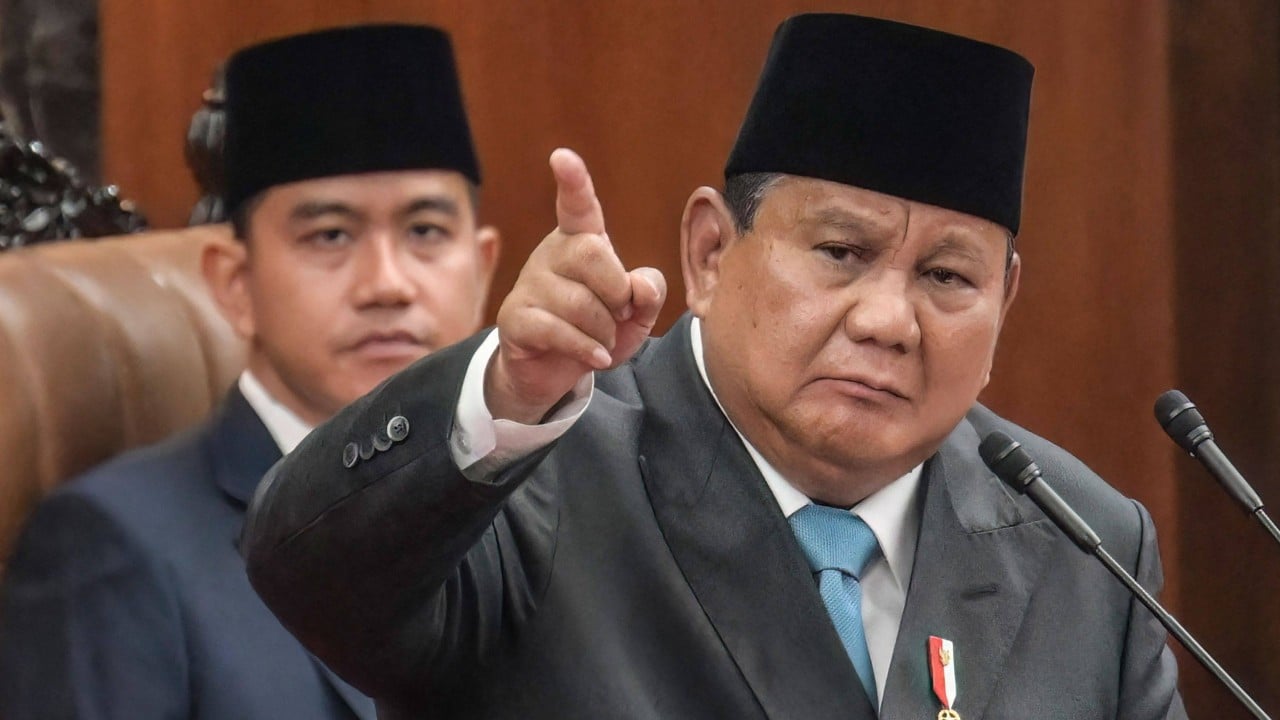
Thousands of miles away in Jakarta, under the cool, vaulted ceilings of the presidential palace, ink is drying on decrees that will alter the destiny of every hand that cuts a oil palm bunch or shovels coal into a furnace. President Prabowo Subianto is rewriting the economic rules of Indonesia. To the global commodities trader looking at a Bloomberg terminal, it reads as a standard macroeconomic pivot—state-directed capitalism, a tightening of the leash on natural resources. But on the ground, where the soil is black and the calluses are deep, it feels like the slow closing of a massive fist.
We have a habit of viewing resources like coal and palm oil as abstractions. We see them as lines on a stock ticker or ingredients on the back of a shampoo bottle. They are not. They are the scaffolding of an entire nation’s daily life. When the state decides to swallow that scaffolding whole, the ground beneath millions of ordinary citizens begins to tremble.
The Vendor at the Gate
To understand what is happening to the world’s largest exporter of palm oil and a titan of thermal coal, you have to leave the policy analysts behind. You have to meet someone like Surya.
Surya is a hypothetical composite, but his reality is shared by millions across Sumatra and Kalimantan. He owns four hectares of oil palm trees. His hands are mapped with the scars of the egrek—the long, sickle-tipped pole used to harvest the heavy fruit clusters high in the canopy. For twenty years, Surya’s life was dictated by a chaotic, beautiful sort of freedom. He watched the global price of crude palm oil (CPO). If a independent local mill offered him a miserable price, he loaded his old truck and drove twenty miles further down the road to a competitor who treated him better.
That independent mill is gone now.
Under the guise of national security and economic sovereignty, the administration in Jakarta is consolidating power. The narrative spun from the capital is seductive: Indonesia’s wealth must belong to Indonesians. The country must stop exporting raw, unrefined materials to foreign buyers who reap the real profits. Instead, the state will oversee everything. It will dictate who can crush the fruit, who can burn the coal, and at what price.
It sounds patriotic. It sounds protective.
But when the state steps in to cure a monopoly, it often creates the ultimate monopolist: itself. For Surya, the tightening of the state grip means the independent middlemen—the messy, competitive buffer that kept prices fair through sheer rivalry—are being squeezed out. State-backed conglomerates and government-linked enterprises are moving in to fill the vacuum. Suddenly, Surya does not have three buyers to choose from. He has one. And when there is only one buyer in the jungle, you take the price you are given, or you let the fruit rot on the dirt.
The Fire Beneath the Floorboards
Move your gaze from the green oceans of palm trees to the jagged, grey craters of East Kalimantan. This is coal country.
For a long time, the relationship between the Indonesian government and the coal barons was a dance of mutual convenience. The barons grew fabulously wealthy, and the state collected its dues while letting the market run wild. It was a messy system, deeply flawed, and undeniably plagued by corruption. Yet, it functioned on a basic capitalistic truth: production followed demand.
The new doctrine under Prabowo upends the dance. The state is no longer a partner; it is the choreographer, the director, and the ticket collector.
The administration’s logic is rooted in a desire for self-sufficiency. Jakarta wants to power its own ambitious industrialization projects, to build domestic smelting plants, and to insulate its population from global energy shocks. To do this, the government is drastically increasing the domestic market obligation (DMO), forcing coal companies to sell a massive percentage of their yield to the state electricity monopoly, PLN, at capped, below-market rates.
Think of it as a mandatory tax paid in rock and fire.
If you talk to the engineers who work the night shifts at the Kalimantan mines, they will tell you about the subtle shift in the atmosphere. The anxiety isn't about whether there is coal in the ground—the archipelago is practically made of it. The anxiety is about who owns the future of that extraction. When the state controls both the price of the fuel and the license to dig it, the independent operator becomes an endangered species.
The danger here is not just economic; it is behavioral. When a government nationalizes the spirit of an industry, innovation stalls. Safety margins shrink because margins of profit disappear. The small, nimble operators who used to find efficiency in the cracks of the market are forced to sell out to giant, bureaucratic state-favored entities. The industry becomes a monolith. And monoliths are notoriously bad at listening to the people living at their base.
The Ghost of Interventions Past
It is easy to look at these moves and see them as entirely modern, a response to the volatile geopolitics of the late 2020s. But countries, much like people, are haunted by their own histories. Indonesia has walked this path before.
Decades ago, during the Suharto regime, the state attempted to control the distribution of essential goods through massive centralized boards. The intention was always the same: stabilize prices, protect the poor, curb corporate greed. The result, however, became a textbook lesson in unintended consequences. Centralization did not eliminate greed; it merely moved it to rooms without windows. It created a system where political loyalty, rather than market efficiency, determined economic survival.
The current tightening feels uncannily familiar to those with long memories.
When you look closely at the new regulations governing palm oil bio-fuels and coal allocation, the language is wrapped in the vocabulary of equity. But the mechanics tell a different story. By giving state enterprises first right of refusal and sweeping regulatory powers to penalize non-compliance, the government is effectively building a walled garden around the country’s two most lucrative exports.
Who gets the keys to the garden gate?
That is the question whispered in the coffee shops of Medan and the boardrooms of Jakarta. The fear is that "state control" is simply a euphemism for a new circle of well-connected insiders. It replaces the old, unpredictable corporate monopolies with a predictable, iron-clad state monopoly. For the global consumer, this means supply chains that are less resilient, more prone to sudden regulatory export bans, and vulnerable to political whims. For the local worker, it means their livelihood is no longer dependent on how hard they work, but on how well a bureaucrat in a distant city manages a spreadsheet.
The Cost of the Capped Price
Let us look at the mechanics of this control without the clinical language of economics. Consider what happens next when a government caps a price.
Imagine you run a medium-sized coal operation. The global price for coal spikes due to a harsh winter in the northern hemisphere. Under normal circumstances, you would sell your surplus abroad, bring that foreign capital back into the country, hire another fifty excavators from the local township, and raise wages to keep your best workers.
Instead, the state steps in. They inform you that your surplus must stay home to feed a local power plant. Furthermore, they fix the price at a fraction of what a buyer in Tokyo or Seoul would pay.
On paper, the city dwellers in Jakarta get cheap electricity. The policy looks like a victory for the common man on the evening news. But look closer at the mining town. The fifty extra jobs vanish. The wage increases are canceled. The local equipment supplier misses his quarterly targets and lays off his nephew. The capital that should have flowed into the regional economy stays locked in the vaults of the central bank or evaporates entirely.
The wealth has not been redistributed; it has been suppressed.
The same mechanism is grinding away in the palm oil sectors. By forcing producers to prioritize domestic cooking oil quotas and biodiesel mandates at state-mandated prices, the government is squeezing the very margins that allowed smallholders to survive downturns. The big, state-tied conglomerates can absorb these losses. They have deep pockets, diversified portfolios, and the political capital to negotiate subsidies behind closed doors.
The independent farmer owning a few acres of trees possesses none of these luxuries.
The Quiet at the Edge of the Forest
There is a distinct silence that falls over a community when people realize they are no longer the authors of their own economic lives. It is the silence of resignation.
The true stake of Indonesia’s grand economic experiment under Prabowo is not a shift in GDP figures or a reallocation of sovereign wealth. It is the erosion of economic agency for the ordinary citizen. When the state becomes the buyer, the seller, the regulator, and the judge, the space for human ambition shrinks to the size of a government permit.
The sun begins to drop over the palm groves of Sumatra, casting long, distorted shadows across the orange earth. The fruit bunches harvested today will be loaded onto trucks tonight. Where they go, who buys them, and what they will be worth tomorrow is no longer a matter of supply, demand, or the quality of Surya’s labor.
It is a matter of state decree.
The state has tightened its grip, convinced that a controlled market is a safe market. But a fist that holds a country's wealth too tightly risks crushing the very life that brought that wealth out of the ground in the first place. The archipelago continues to smolder, rich in coal, rich in oil, but waiting to see if it will be allowed to burn with its own fire, or only by the light the palace permits.