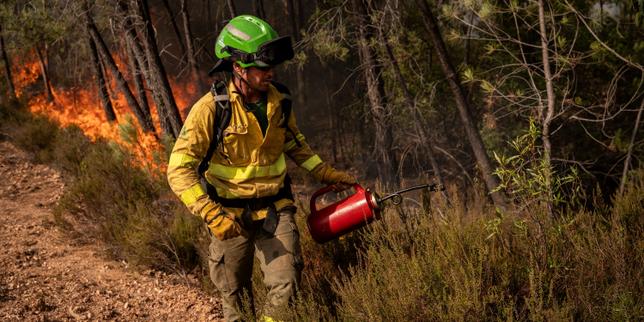
The air tasted of burnt pine and old ash long before the flames became visible over the ridge. Standing on the balcony of a modest stone farmhouse in southwestern Spain, Mateo wet his thumb and held it up to the wind. East-northeast. The direction of the shift. That breeze was the only thing standing between the village and a wall of incandescent fury that had consumed thousands of acres of forest over the past forty-eight hours.
Heat shimmered off the terracotta tiles. Down in the valley, the cicadas had stopped singing hours ago—a sudden, unnatural silence that locals know better than any radar.
Forest fires in the Iberian Peninsula are rarely just physical events; they are psychological tests. They test the patience of rural communities, the resilience of aging infrastructure, and the quiet, desperate courage of firefighters who spend days on end staring down walls of carbon. For weeks, the southwestern provinces had baked under an unforgiving sun, the soil cracked open like old porcelain, waiting for a spark. It arrived. And once it caught, the dry timber of the regional forests fed an appetite that seemed impossible to satisfy.
For days, the official bulletins had read like medical charts of a critical patient. Active. Uncontained. Threatening. Helicopters buzzed overhead like giant dragonflies, dipping buckets into murky reservoir waters and dumping them back onto the blazing canopy. On the ground, hoses snaked through dry brush, heavy boots crushed brittle scrub, and sweat carved clean white channels through soot-stained faces.
Yet, as the sun began its descent on the latest harrowing shift, a subtle shift occurred in the command tent.
Optimism.
It is a fragile word in the mouth of a fire chief. It does not mean victory. It certainly does not mean the danger has passed. Instead, it means the wind has slowed its frantic pace. It means the containment lines hewed into the earth by bulldozers and hand tools are holding against the pressure.
Consider what happens next: the containment phase is where exhaustion sets in. The flames may recede, but the threat of reignition from hidden embers buried deep in the root systems remains a silent predator.
Mateo watched a tired crew of local firefighters walk back toward their trucks, their shoulders slumped beneath heavy yellow jackets. They didn't cheer. They didn't celebrate. They simply unclipped their helmets, drank greedily from dented canteens, and looked toward the western horizon where the orange glow was finally beginning to yield to a bruised, smoky twilight. The fire was still there, breathing quietly in the dark, but the grip had loosened just enough for the valley to draw its breath once more.


