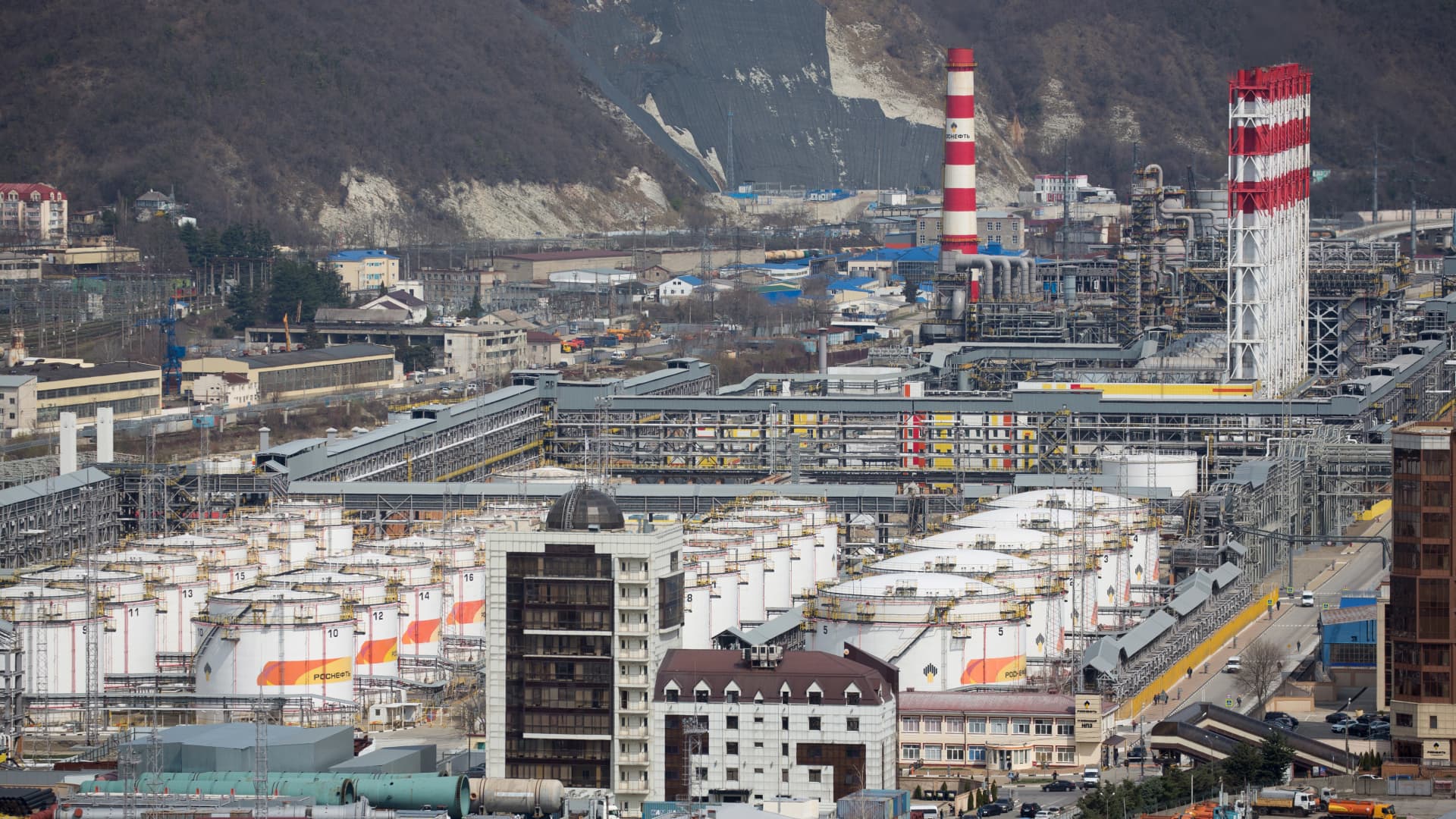
The air inside the Port of Ningbo-Zhoushan doesn't smell like the ocean. It smells like hot rubber, ozone, and the faint, metallic tang of galvanized steel. If you stand near the edge of the pier, the sound isn't a roar; it’s a rhythmic, mechanical heartbeat. Thump. Whir. Click. Somewhere inside one of those steel rectangles—perhaps a crimson one branded with the logo of a state-owned shipping giant—is a stack of lithium-ion batteries destined for a grid in Brazil. In another, a thousand high-precision circuit boards wait for a factory in Vietnam. For months, the global whispers suggested this heartbeat was skipping. We were told the demand was drying up, the trade wars had finally drawn blood, and the world’s factory was finally heading for a long, quiet nap.
The data just arrived. The whispers were wrong.
During the first two months of the year, China’s exports didn't just crawl forward; they leaped. A 7.1% increase in dollar terms compared to a year earlier. That is not the movement of a dying giant. It is the sound of a pivot so massive and so coordinated that we are only just beginning to feel the floor shift beneath our feet.
The Ghost in the Supply Chain
To understand why this matters, you have to look past the spreadsheets and into the life of someone like "Lao Chen." He isn't a real person, but he is a composite of a dozen factory managers I’ve spoken with in the Pearl River Delta.
Five years ago, Chen’s business was simple. He made plastic components for American vacuum cleaners. His margins were thin, but the volume was endless. Then came the tariffs. Then came the "de-risking" memos from Washington. Then came the silence. For a moment, Chen’s warehouse was a graveyard of unfulfilled potential.
But Chen didn't close his doors. He changed the locks.
He swapped the plastic molds for high-density aluminum casting. He stopped looking at the Port of Long Beach and started looking at Jakarta, Riyadh, and Mexico City. The surge we are seeing in Jan-Feb isn't driven by the old guard of consumer electronics heading to American malls. It is driven by the "New Three": electric vehicles, lithium batteries, and solar products.
China has stopped being the world’s cheap assembly line. It has become the world’s laboratory and power plant.
The Great Decoupling Myth
There is a persistent narrative that the world is breaking up with Chinese manufacturing. The headlines scream about "friend-shoring" and the rise of India or Vietnam as the new manufacturing hubs.
Consider the reality of a smartphone assembled in Hanoi. The glass comes from a factory in Suzhou. The motherboard is etched in Shenzhen. The battery is refined in Ningbo. When China’s exports to the West appear to dip, they often just reappear as exports to "intermediary" nations. We aren't seeing a divorce. We are seeing a rebranding.
The trade surplus for the first two months hit $125 billion. That is a staggering number. It tells us that despite the geopolitical friction, the global appetite for what China builds is not just resilient—it is addictive.
The friction with the US is real, certainly. Shipments to the States have been stuttering, hampered by a cocktail of political frost and shifting consumer habits. But while one door is being pulled shut, China has kicked open three others. Trade with the Association of Southeast Asian Nations (ASEAN) is booming. The "Belt and Road" partners are no longer just infrastructure projects; they are primary customers.
The Weight of the Surplus
It isn't all celebratory banquets and rising stocks. There is a tension in this growth that feels like a wire stretched too thin.
When a country exports this much, it means its internal engines—the people buying cars and clothes and meals at home—aren't consuming enough to keep the gears turning. China is forced to export its overcapacity. It is sending its deflationary pressure abroad.
For the rest of the world, this is a double-edged sword. If you are a developer building a solar farm in Spain, Chinese exports are a godsend. They are the reason the transition to green energy is even remotely affordable. But if you are a steelworker in Pennsylvania or a car manufacturer in Germany, those same exports look like an existential threat.
The stakes are invisible until they aren't. They are hidden in the price of a kilowatt-hour and the closing of a local foundry.
The Pulse of the Machine
Why did the numbers beat the expectations of every major analyst from Bloomberg to Reuters?
Because the analysts were looking at the old world. They were measuring the demand for iPhones and sneakers. They weren't measuring the desperate, global hunger for the infrastructure of the future.
In the first 60 days of the year, the export of integrated circuits jumped by 24%. Finished automobiles? Up nearly 13%. This isn't just "stuff." These are the building blocks of the 21st century. China has positioned itself as the sole provider of the hardware required for the green revolution and the AI era, and they are doing it at a price point that makes "de-coupling" feel like a luxury most nations can't afford.
The logic is cold and undeniable. You can dislike the politics, but you cannot ignore the price tag.
The Human Toll of the Pivot
Behind the 7.1% growth lies a frantic, exhausting effort.
In the dormitories of Dongguan, the lights don't go out. The shift from "low-end" to "high-tech" manufacturing requires a different kind of worker. It requires a level of precision that the old assembly lines never demanded. There is a quiet anxiety among the older generation of workers who can't keep up with the software-driven machinery now dominating the floor.
The growth is a victory, yes. But it is a victory bought with the sweat of a workforce that is being asked to reinvent itself in real-time.
We often talk about trade in terms of "flows" and "currents," as if it were water. It isn't. It is people. It is the truck driver navigating the mountain passes into Central Asia because the sea lanes are too crowded. It is the software engineer in Shanghai debugging the firmware for an export-bound EV at 3:00 AM.
The surge in exports is the result of a nation that decided it would rather overproduce and undersell than face the social instability of a slowing economy. It is a gamble of breathtaking proportions.
The Invisible Stakes
If this trend continues, we are heading toward a global reckoning.
Europe is already launching anti-subsidy probes. The US is tightening the screws on semiconductor tech. The world is watching the Chinese export machine with a mix of awe and terror. They see a country that can out-build, out-ship, and out-price almost anyone, even when the world’s largest economy is actively trying to turn down the volume.
But the real story isn't the friction. It's the persistence.
It's the container ships that keep leaving the docks, even when the destination on the manifest changes. It's the realization that the global economy is not a series of Lego bricks that can be easily snapped apart and rearranged. It is an organic, tangled root system. You can try to cut one branch, but the nutrients will simply find another way to reach the leaves.
The heartbeat at the Port of Ningbo-Zhoushan continues. Thump. Whir. Click. As the sun sets over the East China Sea, the cranes don't stop. They pivot. They swing. They lower another box into the hold of a ship destined for a port you’ve never heard of, carrying technology you haven't yet realized you need. The world is changing, not by choice, but by the sheer, overwhelming momentum of what is being built in the dark.
The dragon isn't waiting for permission to grow. It’s already shipped the parts.