The rain in Hungary’s Danube valley doesn’t fall so much as it drifts, a grey mist that blurs the outline of the sunflower fields and turns the construction crane cabins into distant, floating ghosts. For twenty years, Stefan has watched these fields from his kitchen window. He knows the precise rhythm of the local soil. He knows when the tractors will clog the two-lane highway, and he knows the quiet that usually follows the autumn harvest.
But lately, the quiet is gone.
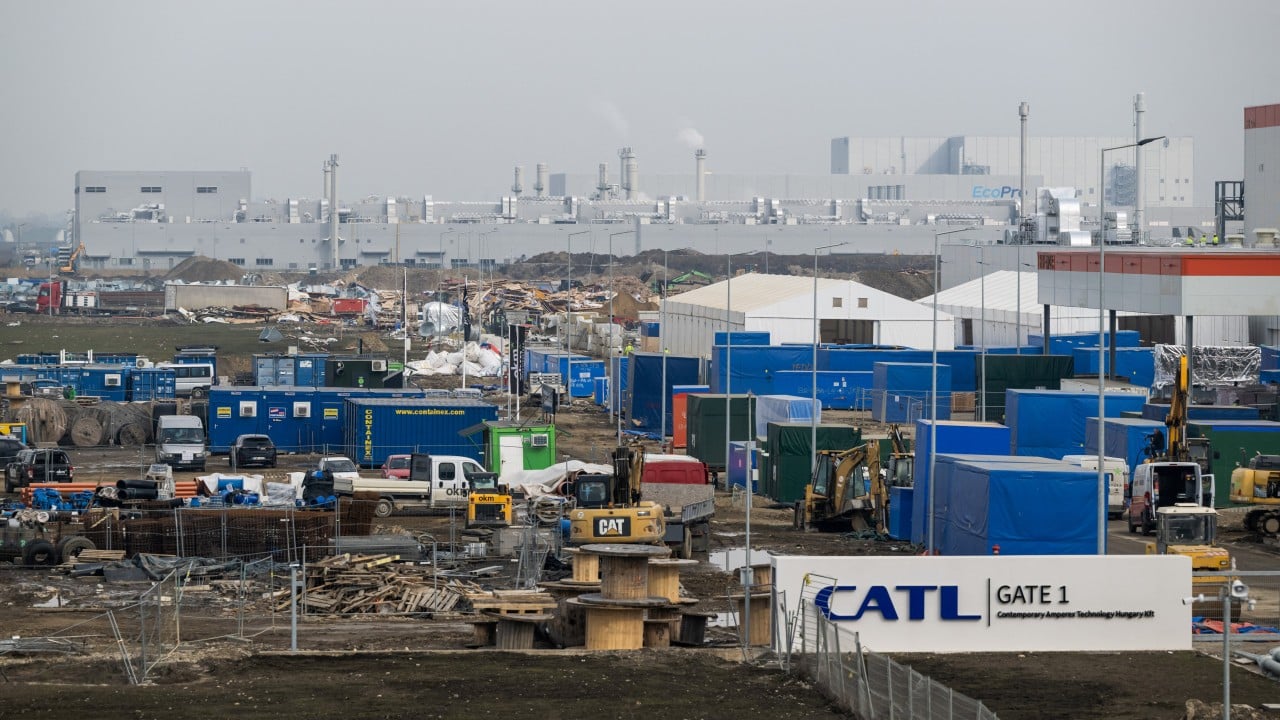
Instead, there is a low, rhythmic thudding that vibrates through the floorboards of his cottage. It is the sound of hydraulic pile drivers hammering steel columns into the earth. A Chinese electric vehicle giant is building a multi-billion-dollar manufacturing hub just three miles from his porch.
On paper, this is a data point. If you skim the financial pages, you will find it filed under a dry headline: Chinese direct investment in Europe hits a seven-year high. You will read about capital flows, regulatory hurdles, and trade friction.
But figures on a ledger do not tell you what happens when a continent changes its economic dependency in real-time. They do not describe the smell of fresh asphalt mixing with damp earth, or the hushed conversations in Brussels cafés where officials realize that the walls they built to keep foreign competition out have accidentally invited them to move in next door.
The Wall That Became a Welcome Mat
To understand how we arrived at this rain-soaked field in Hungary, we have to look at a strange paradox of human behavior. When we feel threatened, our instinct is to build a fortress.
Over the past few years, the European Union grew deeply anxious about the flood of cheap, state-subsidized electric vehicles arriving from Chinese ports. The fear was simple: European carmakers, the historic backbone of the continent’s middle class, were about to be systematically underpriced and hollowed out.
The response was predictable. Tariffs.
Brussels raised import taxes, erecting a financial barrier designed to make foreign-made cars too expensive for the average European consumer. The logic seemed sound. Protect the perimeter, save the local factories.
Politicians celebrated. Analysts nodded. But they forgot that capital, like water, always finds the crack in the stone.
Consider what happens next. If you are a massive automotive conglomerate in Shenzhen or Shanghai, and you can no longer ship your completed vehicles across the ocean without facing a massive tax, you do not simply abandon a market of four hundred million affluent consumers. You do not pack up your tents.
You buy a plane ticket to Budapest. You buy hundreds of acres of Hungarian farmland. You hire local contractors, and you build the factories inside the fortress walls.
This is not a loophole. It is a total reinvention of the strategy. By shifting from exporting finished goods to investing directly in European soil—what economists call greenfield investment—these companies have rendered the tariffs entirely obsolete. The cars rolling off these new assembly lines will not be imports. They will be made in Europe.
The data confirms this shift with startling clarity. While overall global venture capital has chilled, Chinese greenfield investment in Europe has surged to levels not seen since 2017. The nature of the money has changed too. A decade ago, Chinese firms were buying up historic European brands, luxury hotels, and iconic football clubs. It was trophy hunting. Today, the money is utilitarian, targeted, and massive. It is going straight into the ground. It is going into lithium-ion battery gigafactories, recycling plants, and automotive assembly lines.
The View from the Assembly Line
Let us step inside the fence.
Imagine a young engineer named Elena. She spent a decade working for a traditional German automotive supplier, specializing in the intricate, greasy mechanics of internal combustion engines. She knew the weight of a crankshaft. She understood the precise tolerances of a fuel injector.
Last year, her division was downsized. The transition to electric transport had rendered her specific, hard-won expertise less relevant by the day.
Today, Elena wears a crisp, lint-free uniform in a facility funded entirely by capital from across the globe. The environment is different. It is quieter. The air lacks the heavy scent of petroleum and cutting fluid, replaced instead by the sterile, slightly ozone-tinged scent of electronics manufacturing.
She speaks to her supervisors through a translation app on her phone. It is a clunky, imperfect bridge. Nuances get lost. Polite corporate phrasing turns into blunt directives. Yet, every month, the salary clears into her bank account. Her mortgage gets paid. Her kids do not have to move to a different province for school.
Elena’s reality exposes the deep vulnerability at the heart of this geopolitical chess match. It is easy to talk about economic decoupling and strategic autonomy when you are sitting in an air-conditioned auditorium in Paris or Berlin. It is much harder when your town’s primary employer just closed its casting plant.
When a local mayor is offered a choice between a desolate industrial park or a three-billion-euro investment that promises three thousand jobs, the theoretical risks of foreign influence fade into the background. The immediate need for survival wins. Every single time.
This creates a fascinating, fractured reality across the European continent. While Western European capitals warn of over-reliance and economic coercion, Eastern and Southern European nations are actively competing against one another to offer the most lucrative tax incentives to foreign boardrooms. They are rolling out the red carpet because they cannot afford to look at the teeth of the gift horse.
The Hidden Wired Network
The transformation goes far deeper than just the metal shells of cars. The real shift is happening in the invisible infrastructure that powers them.
A modern electric vehicle is less of a car and more of a rolling supercomputer attached to a massive chemical cell. Whoever controls the battery supply chain controls the future of transportation. For the past decade, European leaders have tried to foster a homegrown battery industry. They launched alliances, offered subsidies, and backed local startups.
The results have been sobering. Manufacturing batteries at scale is an incredibly brutal, capital-intensive endeavor that requires decades of refined operational knowledge. You cannot simply build a factory and expect it to work perfectly on day one. The chemistry is temperamental. The scrap rates can be ruinous.
While European startups struggled with production delays and funding shortfalls, foreign entities arrived with fully mature blueprints. They didn't need to experiment; they had already mastered the process in Ningbo and Hefei five years ago.
The result is an intricate, interdependent web. Even when a European consumer buys a vehicle from a historic, domestic brand, there is a high probability that the cells under the floorboards were manufactured in a facility built with foreign capital, using technology developed thousands of miles away.
The illusion of independence is maintained, but the underlying reality has shifted. We have traded our old dependency on foreign oil for a new dependency on foreign electrons.
It is a confusing, unsettling landscape for anyone trying to map out where national sovereignty ends and global commerce begins. We want clean air. We want quiet cities. We want to meet our climate targets. But we are realizing, with a collective sense of unease, that the tools required to achieve that green future are held in hands other than our own.
The Rhythm of the New Normal
Back in the Danube valley, the shift is no longer abstract. It has a face, a sound, and a daily routine.
The local bakery now carries signs printed in Mandarin alongside Hungarian. The regional technical college has overhauled its curriculum, dropping traditional metallurgy courses to teach automated robotics and chemical processing. The local real estate market is booming, driven by an influx of engineers, project managers, and executives who have relocated across continents to ensure the factory opens on schedule.
Stefan stands on his porch as the evening shift changes. The headlights of hundreds of cars snake down the country lane, a long, glowing ribbon of light cutting through the Hungarian dark.
Many of his neighbors are angry. They worry about the strain on the local water table, the transformation of their rural haven into an industrial hub, and the sense that decisions about their homeland are being made in distant boardrooms where their names will never be spoken.
Others are relieved. They see a future for their grandchildren that doesn't involve migrating to Western Europe to work as seasonal laborers. They see money flowing into a region that history had largely left behind.
There is no easy moral to this story. There is no villain to point at, nor a hero to cheer for. There is only the relentless, indifferent momentum of global capital finding the path of least resistance.
The walls we build rarely keep the world out. They simply force the world to buy the land beneath our feet, build a house next to ours, and ask us to help them build the future. Stefan turns off his porch light, but the distant, rhythmic hum of the machinery continues into the night, keeping time for a continent that is changing while it sleeps.