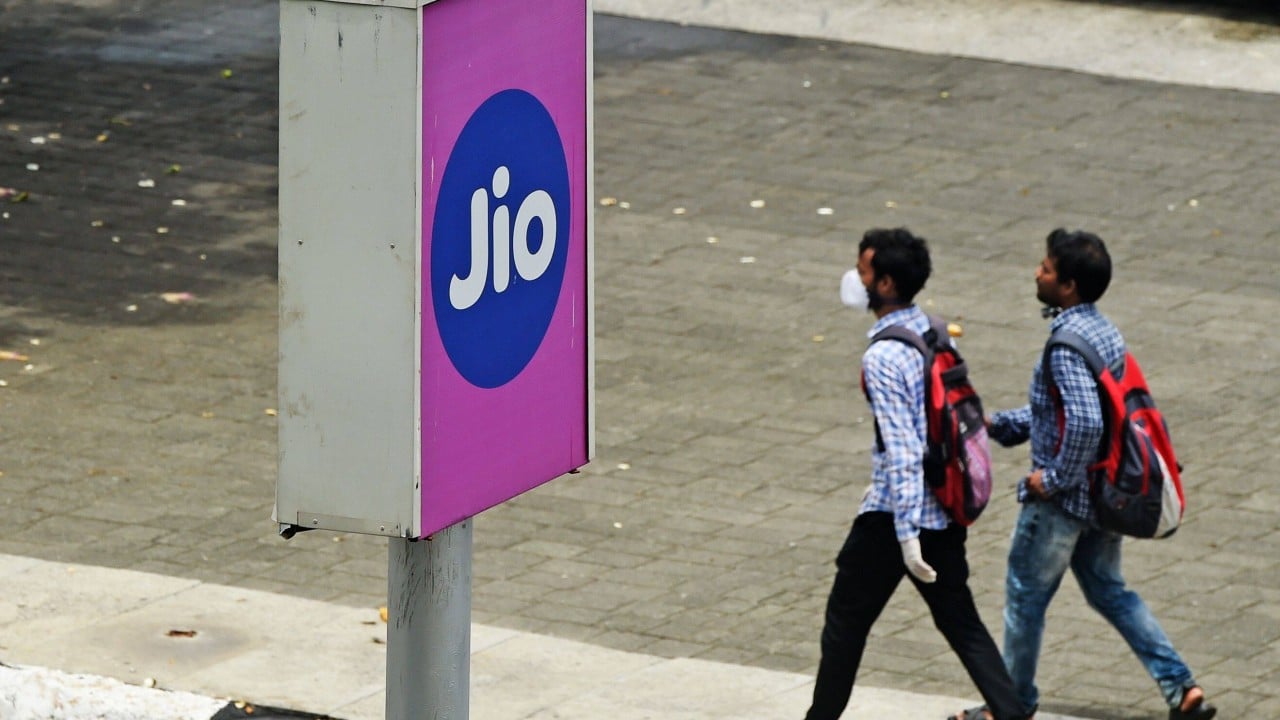
Every evening in a small residential lane just outside Bhopal, Ramesh Chawla goes through the same silent calculations. He is a retired railway clerk, living on a fixed pension, but his true occupation these days is navigating the invisible tax of modern life. He looks at his smartphone screen, where three separate prepaid accounts are due for renewal. One for himself, one for his wife, and one for his daughter, who is trying to complete an online degree.
A few years ago, keeping these three screens glowing with life was an afterthought. Today, it feels like a second rent.
The numbers on Ramesh’s screen are not just random digits; they are the exact byproduct of a corporate chess game being played at the highest levels of global finance. When Reliance Jio filed its draft prospectus with the market regulator on June 19, 2026, internal memos at the corporate headquarters code-named the effort Project Jupiter. It was an apt title for an initial public offering estimated to value the digital giant between $120 billion and $180 billion. If the public listing goes through as planned later this autumn, it will be the largest public market debut in India's history.
For Wall Street and Mumbai’s Dalal Street, this is a moment of triumph. It represents the ultimate unlocking of value for a business that built a digital empire from scratch. But for Ramesh, and the 1.4 billion people living alongside him, the filing of that paperwork marks the formal closing of an era. The era of cheap data is dead. The duopoly has arrived, and it is settling in for the long haul.
To understand how a retired clerk’s household budget connects to a billion-dollar stock market listing, we have to look at the wreckage of the past decade.
Ten years ago, India’s telecom sector was a chaotic, hyper-competitive bazaar. More than a dozen operators fought tooth and nail for every single subscriber. They undercut each other by fractions of a paisa. Voice calls were charged by the minute; data was a luxury item sold in stingy, megabyte-sized increments. It was a messy, inefficient ecosystem, but it was cheap.
Then came the disruption.
When Jio entered the arena, it did not just compete; it rewrote the physics of the market. It gave away high-speed data for free for months. It turned voice calls into a permanent zero-cost utility. It was a breathtaking act of capital warfare that forced hundreds of millions of people into the digital age almost overnight.
But scorched-earth strategies leave real casualties.
One by one, the smaller players bled out. Some went bankrupt. Others merged in desperate, late-night rescue deals. The state-owned provider faded into administrative irrelevance. Today, the crowd has cleared. Only two true giants remain standing in the center of the ring: Reliance Jio, controlling roughly 39.2% of the wireless market, and Bharti Airtel, holding 37.7%.
Consider the sheer scale of this consolidation. Together, these two entities command over 80% of all mobile revenue in the country. By 2028, analysts expect that figure to squeeze closer to 85%. It is a textbook duopoly, functioning with the quiet, synchronized efficiency of an exclusive club.
The consequences of this two-horse race are playing out right now on your monthly bill. In mid-2024, the giants executed a massive, coordinated tariff hike. By mid-2026, another 15% increase began rolling through the networks.
Why? Because the nature of the game has fundamentally changed.
For the last decade, the corporate mandate was simple: capture the human being. Build the pipeline. It did not matter if the margins were razor-thin, or if the average revenue per user was embarrassingly low by global standards. The goal was sheer volume. Jio chased scale, building a staggering empire of over 524 million subscribers. Airtel pursued quality, curating a premium base of 400 million users who were willing to pay a premium for consistent service.
But as Project Jupiter moves from a secret boardroom blueprint to a public stock ticker, the metrics of success have pivoted. Public markets do not reward charity. Institutional investors do not buy shares based on how many free gigabytes a company hands out to rural villages. They demand margins. They demand return on capital. They demand a predictable, upward-trending path for average revenue per user.
Airtel’s revenue per user sits at roughly ₹259, while Jio is chasing hard at ₹213.7. Across half a billion users, that ₹45 gap represents billions of dollars in unrealized profit. To bridge that gap, and to justify a $150 billion valuation to global funds tracking the MSCI and FTSE indices, the price of entry into the digital world must rise.
This is where the abstract world of corporate finance collides directly with human survival.
In modern India, a smartphone is not a luxury device used for doom-scrolling or streaming videos in high definition. It is the infrastructure of daily existence. It is the digital storefront for a roadside vegetable vendor using a QR code to accept payments. It is the classroom for a child in a village whose local school lacks textbooks. It is the primary banking tool for a migrant laborer sending money back home to his parents.
When the price of data increases by 15%, it acts as a regressive tax on those who can least afford it. The vegetable vendor must sell more produce just to keep his payment terminal active. The student must ration her lecture hours. The laborer faces a choice between checking on his family or saving those few extra rupees for a meal.
The corporate justification for these hikes is always the same: infrastructure is expensive. And to be completely fair, that argument is rooted in a hard, undeniable truth. Building a national 5G network across a subcontinent requires an eye-watering amount of capital. Jio has already migrated 268 million of its users onto its 5G network, laying down thousands of miles of fiber and erecting towers in places that previously struggled to receive a basic voice signal.
That infrastructure must be paid for. The spectrum auctions organized by the government require massive outlays. The advanced routers, the cloud storage, the investments into artificial intelligence hubs—all of it demands a continuous, unrelenting torrent of cash.
The central tension of our time is that the capital required to build the future is being extracted directly from the pockets of those who are just trying to survive the present.
The impending IPO is structured entirely as a fresh issue of shares, meaning that every single rupee raised from public investors will go directly into the company’s treasury to repay debt and fund further network expansion. There is no major exit for early venture capitalists or sovereign wealth funds. The machine is hungry, and it needs to be fed.
But as the financial structures become more robust, the competitive friction that once protected the consumer is evaporating. When there are only two dominant players in a market, they no longer need to engage in destructive price wars. They do not need to innovate to survive. Instead, they can engage in a polite, unspoken dance of mutual profitability.
If Airtel raises its prices, Jio can follow suit a few weeks later without fearing a mass exodus of subscribers. Where would the subscribers go? The third option is structurally marginal, buried under debt and unable to offer a comparable 5G experience. The consumer is trapped in a room with only two doors, and both doors charge the same escalating price for admission.
This is the hidden cost of the digital revolution. We built a society that requires constant connectivity to function, but we left the keys to that connectivity in the hands of an exclusive pair of gatekeepers.
Back in Bhopal, Ramesh Chawla decides to renew his daughter’s data plan for the full three months, pulling the money from his dwindling discretionary savings. He chooses to put his own phone on a basic, text-only plan for the next few weeks. He will rely on the intermittent Wi-Fi at a local library when he needs to check his bank balance or read the morning news.
His daughter needs the bandwidth more than he does. Her future depends on it.
The financial pages will continue to track Project Jupiter with breathless excitement. The tickers will flash green, the investment bankers will collect their historic fees, and the valuation models will project double-digit compound annual growth rates well into the next decade. It will be celebrated as a milestone of national progress, a sign that the country's corporate giants can stand shoulder-to-shoulder with the largest enterprises on earth.
But the true measure of that progress will not be found in the closing bell on the Mumbai stock exchange. It will be found in the quiet calculation of a father wondering how much longer he can afford to keep his family connected to the world.