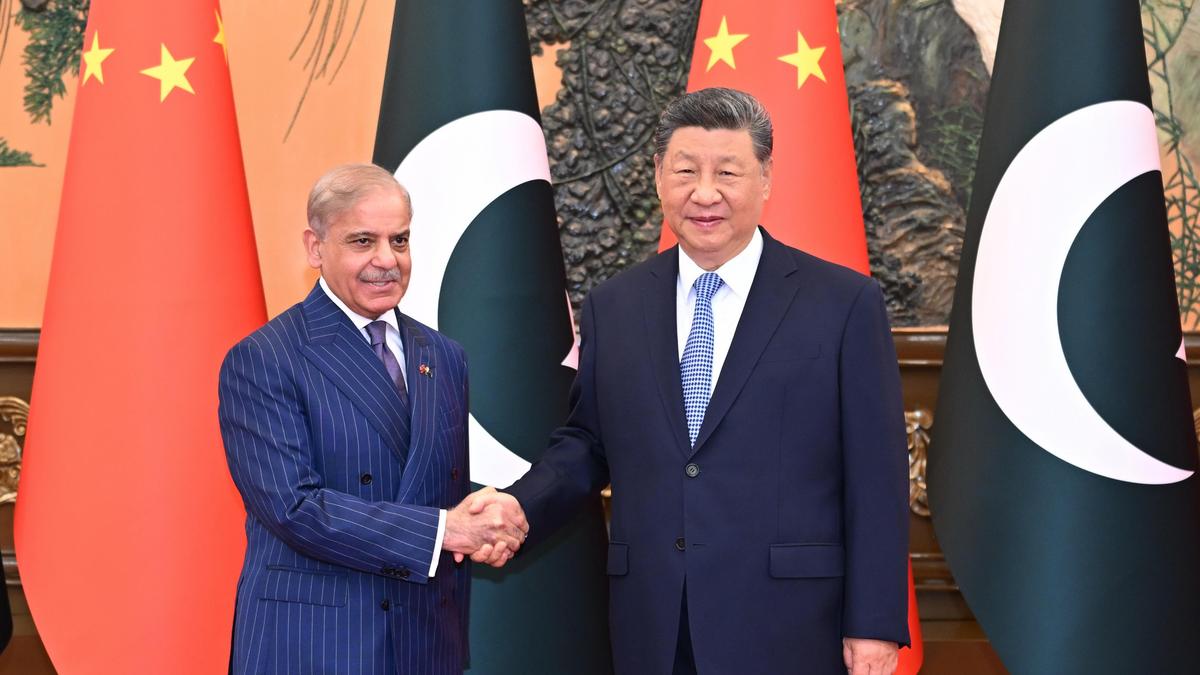
Diplomatic press releases are theater. When state-run media broadcasts that Beijing and Islamabad have agreed to "unswervingly safeguard bilateral ties," the average observer nods at the narrative of an ironclad brotherhood. They look at the multi-billion-dollar investments of the China-Pakistan Economic Corridor (CPEC) and see a masterclass in geopolitical strategy.
They are looking at a mirage.
The lazy consensus in mainstream foreign policy circles positions CPEC as a triumph of Chinese infrastructure diplomacy and a shortcut to Pakistani prosperity. In reality, the partnership is buckling under the weight of incompatible economic realities, security liabilities, and misaligned strategic goals. Having analyzed regional trade flows and infrastructure financing for over a decade, I can tell you that the official rhetoric hides a brutal truth. This isn't a symbiotic alliance. It is a transactional relationship where both sides are trapped in a cycle of diminishing returns.
The Myth of the Strategic Shortcut
The foundational premise of CPEC is that Gwadar Port offers China a vital alternative to the Malacca Strait. The theory goes that by landing oil and goods at Gwadar and moving them overland through Pakistan to Xinjiang, Beijing secures a blockade-proof trade route.
This argument crumbles under basic logistical scrutiny.
The distance from Gwadar to Kashgar is roughly 3,000 kilometers, cutting through some of the most unforgiving, seismically active, and mountainous terrain on earth via the Karakoram Highway. To turn this route into a high-capacity energy corridor, China would need to construct massive pipeline networks and heavy rail links over passes exceeding 4,600 meters in altitude.
The physics of moving millions of barrels of oil uphill through freezing temperatures makes the project an economic absurdity. Maritime shipping remains exponentially cheaper and more efficient. A single standard supertanker carries roughly two million barrels of oil. To move that same volume overland via trucks or pipelines through the Karakoram would require astronomical energy expenditure just to pump and transport the cargo. Beijing knows this. Gwadar was never a viable commercial shortcut to Xinjiang; it was an ambitious naval footprint wrapped in the flag of an infrastructure project.
Pakistan’s Sovereign Debt Trap is Homegrown
Mainstream commentators love the "debt-trap diplomacy" narrative, accusing Beijing of predatory lending designed to seize Pakistani assets. This view gives Islamabad a pass for its own structural economic failures. China did not force Pakistan into a balance-of-payments crisis; Pakistan engineered it through decades of fiscal mismanagement.
The issue with CPEC financing is not a sinister Chinese plot, but rather Pakistan’s internal structural flaws:
- Guaranteed Sovereign Returns: Pakistan signed power purchase agreements that guaranteed Chinese independent power producers (IPPs) high returns on equity, dollar-indexed. This shielded foreign investors while dumping the currency risk entirely on the Pakistani public.
- The Circular Debt Crisis: Pakistan’s energy sector is a fiscal black hole. The state buys power from producers but fails to collect revenue from consumers due to poor infrastructure, line losses, and rampant theft. This "circular debt" now sits in the trillions of rupees.
- Import-Heavy Growth: CPEC triggered a massive influx of Chinese machinery and raw materials without creating a corresponding bump in Pakistani exports. It stimulated consumption, not production.
Instead of transforming Pakistan into a manufacturing hub, the initial phases of CPEC acted as a short-term adrenaline shot that left a long-term debt hangover. Pakistan ran out of foreign foreign exchange reserves trying to service the very machinery imported to build the corridor.
The Security Illusion
No amount of diplomatic handshaking can erase the reality on the ground: you cannot build a modern economic corridor in an active conflict zone.
The security architecture protecting Chinese interests in Pakistan is fracturing. Baloch separatist groups have systematically targeted Chinese engineers, convoys, and even cultural centers. The response from Islamabad has been to deploy a dedicated Special Security Division, effectively militarizing economic zones.
This creates a paradox. An economic corridor requires open borders, regional integration, and ease of movement to thrive. Instead, CPEC projects have become heavily fortified enclaves. Local populations in Balochistan look at Gwadar and see a colonial outpost rather than an engine of local growth, fueling the very insurgency that threatens the investments. Beijing is discovering that security cannot be permanently outsourced to a host nation facing deep internal instability.
Why Special Economic Zones are Ghost Towns
The second phase of CPEC promised industrial relocation. The narrative claimed Chinese factories, facing rising labor costs at home, would move wholesale to Special Economic Zones (SEZs) in Pakistan, turning the country into an export powerhouse like Vietnam or Bangladesh.
It did not happen.
I have watched corporate boards evaluate regional relocation options. When a Chinese textile or electronics firm looks to move operations abroad, they prioritize regulatory predictability, stable electricity tariffs, and a skilled labor force. Pakistan’s SEZs, such as Rashakai or Dhabeji, have faced years of delays in basic utility provisioning like gas and electricity. Worse, Pakistan’s volatile tax regime and frequent regulatory flip-flops scare away serious manufacturing capital.
Chinese capital did not flow into Pakistani factories; it fled to Southeast Asia. Vietnam and Cambodia offered actual ease of doing business, while Pakistan offered empty plots of land and bureaucratic red tape.
The Wrong Questions About Bilateral Ties
Foreign policy analysts constantly ask: Will China bail out Pakistan again? or Can Pakistan balance its ties between Washington and Beijing?
These are the wrong questions. They assume that external patronage can substitute for internal reform. The real issue is that the current model of the bilateral relationship insulates Pakistan from making the hard, necessary choices required to fix its economy.
| Metric | The Official Narrative | The Cold Reality |
|---|---|---|
| Gwadar Port | A bustling regional shipping hub rivalling Dubai. | Negligible commercial cargo traffic; primarily used for state-subsidized bulk commodities. |
| Energy Generation | Solved Pakistan's load-shedding and powered industries. | Created excess capacity Pakistan cannot afford to pay for, worsening fiscal distress. |
| Industrialization | Thousands of Chinese factories relocating to Pakistan. | Minimal relocation; local industries crowded out by untaxed informal markets. |
The hard truth is that China's appetite for mega-projects under the Belt and Road Initiative has fundamentally shifted. Beijing is facing its own domestic economic headwinds, property sector defaults, and local government debt. The era of blank-check infrastructure diplomacy is over. China is pivoting to a "small is beautiful" approach, prioritizing high-yield, low-risk digital and green energy projects over massive transport corridors.
Deconstruct the Rhetoric
When you strip away the flowery language of "all-weather strategic cooperative partners," you are left with two nations stuck in a geopolitical sunk-cost fallacy. Pakistan cannot afford to alienate its largest creditor, and China cannot afford to let a nuclear-armed neighbor collapse entirely on its western border.
So, they continue the dance. They sign memorandums of understanding. They issue joint statements vowing to protect CPEC. But no amount of diplomatic solidarity can override the laws of economics. You cannot borrow your way to sustainable growth, and you cannot build a global trade hub on top of an unstable fiscal foundation.
Stop reading the communiqués. Watch the capital flows, look at the idle ports, and count the empty economic zones. The alliance isn't being unswervingly safeguarded; it is being aggressively managed for damage control.