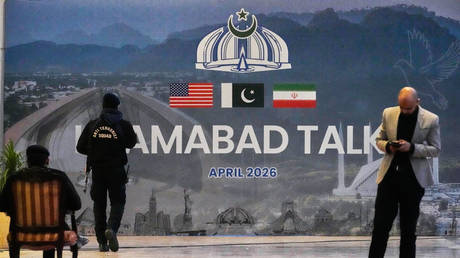
The foreign policy establishment is obsessed with a ghost. For decades, whenever tensions flare between Washington and Tehran, the same tired script gets dusted off: Pakistan, the supposed "bridge" between the Islamic world and the West, will step in to broker a grand bargain. It is a comforting narrative for think-tankers who enjoy drawing lines on maps, but it ignores a brutal reality. Pakistan is not a bridge. It is a country currently struggling to keep its own lights on, and its supposed "neutrality" is actually a paralysis born of conflicting dependencies.
The idea that Islamabad can deliver a US-Iran deal is a relic of 1970s diplomacy that has no business in 2026. If you are waiting for Pakistan to play the hero in this drama, you are watching the wrong stage.
The Proxy Trap
The fundamental flaw in the "Pakistan as mediator" argument is the assumption that Islamabad has the political capital to burn. To mediate, you must be able to offer guarantees. Pakistan can offer none.
Look at the border. The 900-kilometer stretch between Pakistan and Iran is a cauldron of insurgencies, from Jaish al-Adl to various Baluchi separatist groups. In early 2024, we saw both nations trade missile strikes—not at external enemies, but at each other’s territory. This wasn't a "misunderstanding" that a mediator fixes; it was a demonstration of a profound lack of trust. You do not ask your neighbor to mediate your divorce while you are actively throwing rocks through their kitchen window.
Furthermore, Pakistan’s strategic depth is a myth. The country is economically tethered to the Gulf monarchies—specifically Saudi Arabia and the UAE—who view Tehran with existential dread. At the same time, Islamabad is indebted to China, which has its own bilateral energy deals with Iran and prefers to manage regional stability on its own terms. Pakistan is not an independent actor in this equation; it is a stakeholder with too many bosses.
The Riyadh-Beijing Shadow
Everyone asks, "Can Pakistan deliver Iran?" while ignoring the fact that China already did. The 2023 Saudi-Iran normalization happened in Beijing, not Islamabad. This shifted the entire gravity of Middle Eastern diplomacy.
When China brokered that deal, they used real leverage: massive infrastructure investment and long-term oil contracts. What does Pakistan bring to the table?
- Financial Instability: A country perpetually on the brink of an IMF bailout cannot provide the economic incentives needed to grease a deal of this magnitude.
- Internal Fragmentation: The civilian government and the military establishment in Pakistan are rarely in total lockstep regarding regional pivots. Tehran knows this. Washington knows this.
- Security Vulnerability: Iran views Pakistan’s close military ties with the US as a threat, while the US views Pakistan’s inability to secure its western border as a liability.
The "People Also Ask" sections of the internet often focus on whether Pakistan's "brotherly" ties with Iran matter. They don't. In geopolitics, "brotherly ties" is code for "we have nothing else to offer but rhetoric." Interests, not identity, drive deals.
The Nuclear Paranoia
There is an elephant in the room that the "mediator" crowd refuses to acknowledge: the nuclear dimension.
The US-Iran friction is primarily about non-proliferation. Pakistan is the only Muslim-majority country with a nuclear arsenal. It is also the country associated with the A.Q. Khan network, which historically leaked nuclear secrets to... Iran. This history makes Pakistan the least qualified candidate to oversee a deal centered on Iranian enrichment limits.
Washington would never trust Islamabad to verify Iranian compliance, and Tehran would never trust a nuclear-armed neighbor to act as a neutral referee. The optics are a nightmare. The mechanics are impossible.
The Real Power Vacuum
If Pakistan isn't the leader, who is? The "lazy consensus" says Oman or Qatar. Those are better bets, but even they are just message-carriers.
The hard truth that no one wants to admit is that there will be no "deal" brokered by a third party. The US and Iran are locked in a direct, bilateral dance of escalation and exhaustion. Any breakthrough will come from direct, back-channel communication in Geneva or New York, not through a middleman in Islamabad who has to check with five different creditors before sending a telegram.
Stop Asking the Wrong Question
The question isn't "Can Pakistan deliver?" The question is "Why do we keep pretending they can?"
By propping up the Pakistan-as-mediator narrative, Western analysts give Islamabad a relevance it no longer possesses on the global stage. It allows Pakistani officials to pivot away from their domestic crises by playing "statesman" abroad. It is a performance.
If you want to understand the future of US-Iran relations, stop looking at the border at Taftan. Look at the balance of trade in the Strait of Hormuz and the interest rates set in Washington. Pakistan is a spectator to this conflict, just like everyone else. They just happen to have a front-row seat to the fallout.
The bridge is broken. Stop trying to walk across it.