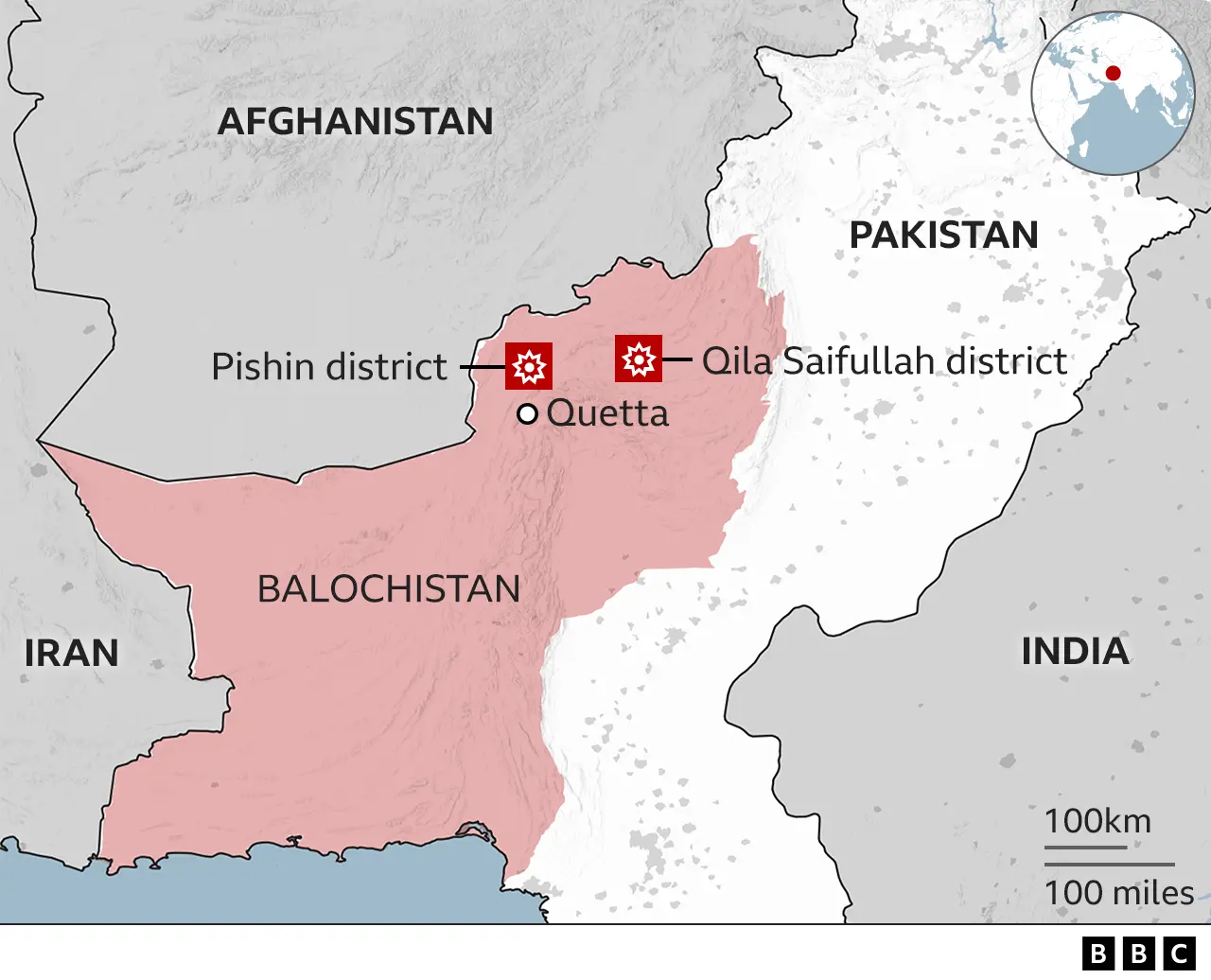
The narrative in Balochistan just took a dark, calculated turn. For years, the story was about men disappearing into thin air, leaving behind families who spent decades clutching faded photographs outside press clubs. But now, the Pakistani state has pivoted. They aren't just picking up activists anymore; they're rebranding them as suicide bombers. This isn't just a security measure. It’s a desperate attempt to dismantle a movement that has increasingly become female-led and remarkably effective.
When the Counter-Terrorism Department (CTD) recently presented a "missing" Baloch woman as a captured would-be bomber, it didn't just spark local outrage. It exposed a strategy designed to criminalize the very people who have been most vocal about human rights abuses. By slapping the "terrorist" label on women, the state is trying to strip them of their moral authority and their protection under social norms that usually shield women from the harshest forms of state violence.
The Strategy Behind the Label
For decades, Baloch women were the ones searching for the disappeared. They were seen as the victims, the mourners. But since leaders like Dr. Mahrang Baloch and Sammi Deen Baloch took the stage, that dynamic has flipped. These women aren't just mourning; they're mobilizing thousands. They’ve managed to do what the men couldn't: sustain a non-violent, grassroots resistance that the state can't simply shoot its way out of without looking like a monster on the global stage.
So, the state changed the script. If you can’t silence them for being activists, you call them "bombers." By framing these women as security threats, the authorities give themselves a "legal" pretext to bypass due process. It’s a classic move from the counter-insurgency playbook: if a group is gaining too much sympathy, make them look dangerous.
From Disappeared to Defendant
The pattern is becoming disturbingly predictable. A woman is abducted from her home or a protest. Her family spends days or weeks terrified, not knowing if she’s alive. Then, suddenly, she appears in a CTD press release, usually seated behind a table of confiscated explosives and maps. No lawyer was present during her "interrogation." No independent witnesses saw the arrest. It's a stage-managed reveal designed for domestic TV consumption.
The Human Rights Commission of Pakistan (HRCP) has repeatedly flagged these "encounters" and sudden "arrests" as highly suspicious. In 2025 alone, the numbers of these cases have surged. The Baloch Yakjehti Committee (BYC) documented over 750 new cases of enforced disappearance in just the first half of the year. When you see those numbers, you realize the "bomber" narrative is the exception used to justify the rule of mass abductions.
Why the World is Finally Watching
Pakistan’s tactics are running into a major problem: the internet. Despite frequent digital blackouts in Balochistan, the BYC and other groups have become masters of social media. When the state tries to frame a woman, her history—her school records, her medical degree, her years of peaceful protest—is online within minutes. The "terrorist" label doesn't stick like it used to because the counter-evidence is too strong.
UN experts and international bodies like Amnesty International have started calling out this gendered repression. They see it for what it is: a form of "necropolitics," where the state decides which lives are worth protecting and which can be erased or labeled as enemies of the state.
- Collective Punishment: Targeting women is a way to hurt the entire family unit.
- Dismantling Memory: These women are the keepers of their families' histories of loss. Silencing them silences the memory of the disappeared.
- Legal Black Holes: Using anti-terrorism laws allows the state to hold people indefinitely without a trial.
The Human Cost of False Accusations
Think about what this does to a community. When a woman is accused of being a suicide bomber, it doesn't just put her in jail. It puts a target on her entire tribe. It justifies "search operations" that involve harassing elders and traumatizing children. It creates a climate where anyone can be "disappeared" and then "discovered" as a criminal whenever the state needs a PR win.
Honestly, it’s a sign of weakness. A state that has to frame medical students and mothers as existential threats is a state that has lost the argument. They’ve run out of political solutions, so they’ve doubled down on coercion. But as Mahrang Baloch has pointed out, this kind of repression usually backfires. Instead of scaring people into submission, it’s forging a new, harder brand of Baloch identity.
What Happens Next
The immediate need is for independent judicial oversight. We can't keep letting the CTD be the judge, jury, and executioner. If the state has evidence, they need to present it in an open court with real legal representation—not in a curated press conference.
International pressure needs to move beyond "deep concern." There have to be consequences for using counter-terrorism tools as weapons of political suppression. You can't claim to be a partner in the global war on terror while using those same labels to kidnap and frame peaceful activists.
Keep an eye on the upcoming reports from the UN Special Rapporteurs. Their findings on the "gendered" nature of these disappearances will be crucial for holding the Pakistani security apparatus accountable. If you want to help, support organizations like the Baloch Yakjehti Committee and the HRCP, who are doing the dangerous work of documenting these cases on the ground. They are the only ones keeping the facts from being buried under state propaganda.