Political theater has a high price tag. The recent victory lap taken by Prime Minister Mark Carney and British Columbia Premier David Eby over the "Canada-British Columbia Cooperative Prosperity Agreement" is a masterclass in economic misdirection. By loudly proclaiming that Ottawa will fully maintain the northern oil tanker ban, both leaders managed to earn cheap environmental applause while fundamentally undermining Canada’s long-term fiscal stability.
The mainstream consensus loves this narrative. It protects a fragile ecosystem. It honors historical advocacy. It creates a cleaner future.
This narrative is completely wrong.
Maintaining the North Coast oil tanker ban does not eliminate environmental risk. It shifts it. It concentrates it in heavily populated urban areas while choking off the most efficient, modern logistical corridors Canada could build. The celebrate-the-ban crowd ignores basic geographic, economic, and maritime realities. This policy is an artificial chokehold masquerading as environmental stewardship.
The Burning Absurdity of the Urban Shifting Effect
The foundational flaw of the Oil Tanker Moratorium Act is the assumption that banning crude exports from northern British Columbia stops crude from touching the water. It does not. The global demand for energy does not vanish because a piece of legislation was signed in Ottawa.
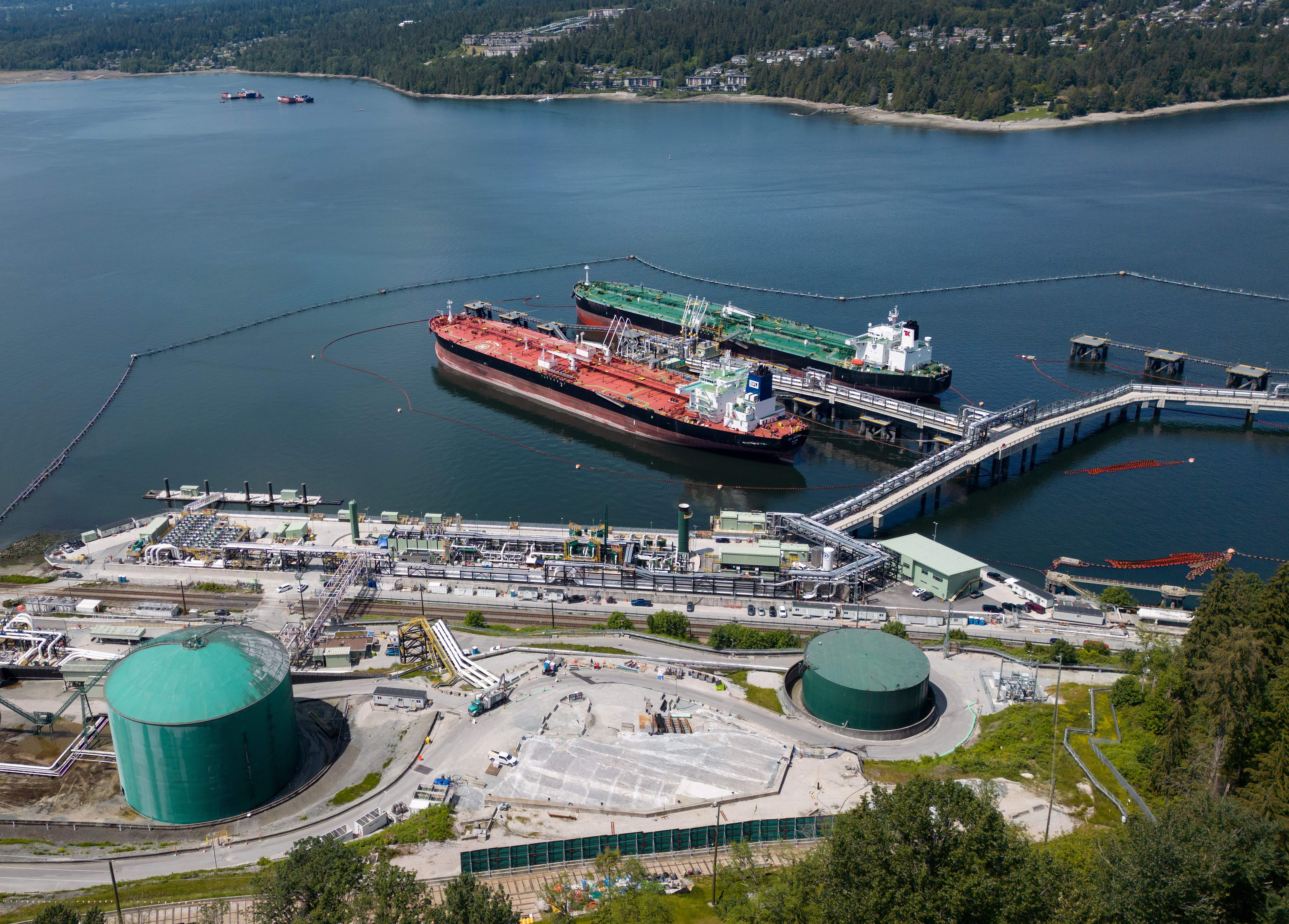
Instead of moving oil via the shortest, deepest, safest deep-water channels available in the north, Canadian energy assets are forced south. Look at the Trans Mountain pipeline expansion terminating in Burnaby. Look at the crowded waters of the Burrard Inlet and the Salish Sea.
Consider the physical geography of these two options:
- The Southern Corridor (Salish Sea): Tankers must navigate highly congested, narrow international waterways. They pass right by major metropolitan centers like Vancouver, Victoria, and Seattle. A single maritime mishap in this region threatens millions of residents, multi-billion-dollar real estate markets, and highly sensitive urban eco-tourism ecosystems.
- The Northern Corridor (Kitimat/Prince Rupert): These routes feature wide, deep-water fiords designed by nature for heavy industrial shipping. They offer direct, straight-line access to Asian markets, shaving days off transit times and drastically reducing the burning of marine bunker fuel per voyage.
By legally locking down the north, the federal government forces a concentration of risk in the south. I have spent decades analyzing infrastructure bottlenecks, and this is a classic case of political nimbyism elevated to federal law. It is safer to manage large-scale industrial shipping in isolated, deeply carved northern channels equipped with modern tug escorts than it is to squeeze increased tanker traffic through the urbanized passages of the South Coast.
The Port of Vancouver Hypocrisy
The cooperative prosperity agreement includes $10 billion from Ottawa to upgrade the Roberts Bank Terminal at the Port of Vancouver. The political spin tells us this will expand trade corridors for critical minerals, agriculture, and container freight.
This exposes the deep intellectual dishonesty at the center of the policy.
Under the current legal framework, a massive container ship carrying millions of liters of heavy bunker fuel for its own propulsion can freely navigate the North Coast. A vessel loaded with liquefied natural gas (LNG) can sail through northern waters without issue. A bulk carrier packed to the brim with metallurgical coal can move through the region freely.
Yet, a modern double-hulled crude tanker, outfitted with state-of-the-art navigational redundancy and escorted by two tractor tugs, is treated as an existential threat.
The risk profile of a massive container ship running aground with thousands of tons of unrefined bunker C fuel in its belly is remarkably similar to that of a crude carrier. If the northern waters are truly too treacherous, treacherous, and fragile for large-scale shipping, the ban should apply to all large commercial vessels.
It does not. The ban isolates a single commodity because doing so yields political capital in vote-rich urban ridings. This is not scientific risk management. It is commodity discrimination.
The Global Carbon Displacement Fallacy
The policy suffers from severe carbon leakage and environmental displacement. When Canadian heavy oil is blocked from accessing the global market via efficient northern ports, Asian refineries do not stop refining heavy oil. They simply buy it from alternative suppliers.
Let us evaluate the global alternatives:
| Source Region | Environmental Oversight | Shipping Distance to Asia | Marine Safety Standards |
|---|---|---|---|
| Western Canada (Potential North Coast) | Extreme (Federal/Provincial/First Nations oversight) | Short / Direct | Maximum (Double-hull mandates, mandatory escort tugs) |
| The Russian Far East | Minimal | Short | Variable / Shadow Fleet usage |
| The Middle East | Moderate to Low | Long / Strategic Chokepoints | Standard |
| Venezuela | Negligible | Extremely Long | Outdated infrastructure / High risk |
When Canada exits the northern shipping lanes, it cedes the market to jurisdictions with far lower environmental, safety, and human rights standards. The oil still moves across the ocean, but it moves on older ships, through riskier waters, managed by regimes that do not care about carbon footprints.
Shutting down northern Canadian access increases global marine shipping distances, which drives up global maritime emissions. The environment loses on a global scale so domestic politicians can claim a local victory.
Dissecting the Financial Compensation Myth
Premier David Eby noted that while British Columbia recognizes its constitutional inability to block an interprovincial pipeline, the province will be "fairly compensated" should a pipeline be approved.
This language reveals a profound misunderstanding of how infrastructure capital works.
Imagine a scenario where an international infrastructure consortium is looking to invest $20 billion into an export pipeline. They see a regulatory system where the land route is permitted under national interest clauses, but the marine terminal is choked by an unyielding tanker ban. The project is dead before the first shovel hits the dirt. No rational board of directors will finance a pipeline to a coast where the ships cannot load.
Lifting the tanker ban is the absolute baseline requirement for any private sector proponent. Without it, the talk of "compensation" for a pipeline is a fantasy. No project will move forward under these conditions.
What we are left with is a government dependency model. Ottawa gives B.C. $10 billion for southern port infrastructure and $3.5 billion for northern electricity lines to soften the blow of a structurally crippled resource economy. This is not wealth creation. It is wealth redistribution masked as a historic economic treaty.
The True Cost of Choking the Gateway
Canada’s standard of living is directly tied to its ability to export high-value assets to nations willing to pay top dollar. By bottlenecking oil exports to a singular, congested southern route, Canadian producers are subject to massive structural discounts.
We are forced to rely almost entirely on the American market, which buys our product at a steep discount, refines it, and sells it back to the global market at full price.
The North Coast tanker ban is a self-inflicted wound to Canada's productivity. It locks the nation into a colonial trade dynamic where we sell raw materials to our closest neighbor at fire-sale prices because we lack the political courage to build our own direct access to global buyers.
The "prosperity partnership" announced by Carney and Eby is a political shield designed to defer a long-overdue economic reckoning. True economic leadership requires telling the public the truth: you cannot build a first-class economy on a foundation of symbolic bans and regional infrastructure trade-offs. The northern tanker ban does not protect the coast. It bankrupts the future.