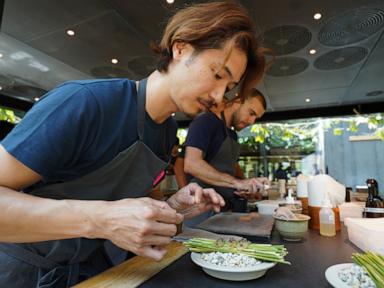
The Cult of Personality is Killing Great Restaurants
Media outlets are currently hyperventilating over the news that Noma is transitioning to a future where René Redzepi is not chained to the pass. The consensus narrative reads like a tragedy written by a publicist: Can the greatest restaurant in the world survive without its tortured genius maestro? Is a kitchen without its creator just an expensive incubator for corporate stagnation?
This is pure, unadulterated nonsense.
I have watched brilliant hospitality groups bleed capital and talent because they built their entire operational identity around a single human being. I have seen founders exhaust themselves into early graves while investors panic at the mere rumor of a vacation. The lazy assumption in food media is that a chef-owner equals the soul of an establishment.
Drop that premise right now. It is bankrupt.
Noma stepping back from Redzepi the daily taskmaster is not the end of an era. It is the only mathematical way the brand survives the decade without imploding under its own mythological weight.
The Myth of the Omnipresent Chef
Let us look at the mechanics of modern gastronomy. When a restaurant achieves three Michelin stars and tops every global list, it stops being a kitchen. It becomes a religious cult.
The media loves the narrative of the lone genius tasting every single plate, tweaking pine needles at midnight, and screaming at staging interns. It makes for great magazine profiles. It is an absolute disaster for business scalability, quality control, and human psychology.
When a restaurant's reputation hinges on one guy standing behind the pass, three terrible things happen immediately:
- Bottlenecking: Every single creative decision, procurement choice, and operational pivot must flow through a single tired brain.
- Vulnerability: If the founder gets sick, burns out, or loses interest, the asset value drops to zero overnight.
- Toxic Culture: The martyrdom of the leader trickles down. It creates an environment where abuse is normalized because "genius requires suffering."
When Noma announced its shift toward a permanent food laboratory and intermittent pop-up model, industry commentators acted like a museum was closing. They missed the pivot entirely. Redzepi is moving away from the daily grind because he figured out what most restaurant founders refuse to admit: running a nightly a la carte or tasting menu service at the absolute bleeding edge destroys human beings.
Decentralizing Creativity
Critics argue that without Redzepi calling the shots every night, the food will lose its edge. This assumes that culinary innovation is a singular lightning strike rather than an institutional system.
Look at high-end tech or industrial design. Apple did not die the day Steve Jobs passed away because they built a pipeline of taste that outlived any single individual. Why should fine dining be stuck in the Middle Ages of guild-style master-and-apprentice worship?
When you institutionalize R&D, you stop relying on inspiration and start relying on infrastructure. Noma’s fermentation lab, its foraging networks, and its obsessive cataloging of Nordic flora do not live in Redzepi's head. They live in databases, fermenting chambers, and institutional memory.
Imagine a scenario where a restaurant group treats its kitchen like a research university rather than an artisanal bakery. The output stops being about a single man's mood on a Tuesday evening and starts being about rigorous, repeatable culinary engineering.
That is not selling out. That is growing up.
The Brutal Economics of the Three Star Trap
Let us talk about the dirty secret nobody in food journalism wants to print: running a maximum-acclaim fine dining restaurant is a terrible financial model.
For years, Noma operated on a knife-edge of thin margins, grueling labor standards, and an unsustainable social contract where young cooks worked for free or pennies in exchange to put a stamp on their resume. That model is dead. Society will no longer subsidize elite ego projects with unpaid labor.
When the labor model shifted to paid stages and fair compensation, the old math stopped working. You cannot charge enough for fermented lichen and reindeer heart to cover proper wages, hyper-local sourcing, and a massive brigade of staff unless you are backed by a sovereign wealth fund or charging five thousand dollars a head.
By stepping away from the traditional daily restaurant treadmill, Noma is escaping the trap. They are transforming from a physical eatery into a global intellectual property powerhouse. They are trading the grueling stress of nightly service for product development, consulting, pop-ups, and media.
It is the smartest pivot in the history of modern gastronomy.
What the PAA Queries Get Wrong
People typing questions into search engines about Noma's future are asking the wrong things.
- Can Noma succeed without René Redzepi? The question assumes success means duplicating the exact same nightly dining room experience. Success now means escaping the physical dining room altogether.
- Who is taking over Noma? Asking for a single successor misses the point. The entire structure is moving toward a collective of specialized directors rather than a single dictator-chef.
- Is Noma closing permanently? No. It is evolving into something far more dangerous to the status quo: a self-sustaining culinary engine that doesn't need a single human being to sacrifice their mental health to keep the lights on.
The Real Lesson for Founders
If you are running a business that cannot function without you in the room every single day, you do not own a business. You own a very stressful job that you happened to create for yourself.
Redzepi spent two decades building the most famous restaurant on earth, only to realize that the ultimate luxury is the freedom to walk away from the stove without the whole enterprise burning down.
The chefs waiting for Noma to fail in his absence are missing the plot. They are clutching their tweezers, hoping the old world order holds together because the alternative means they have to learn how to build actual systems instead of riding the wave of their own personal charisma.
Let the purists cry over an empty pass. The future belongs to institutions that outlive their makers.