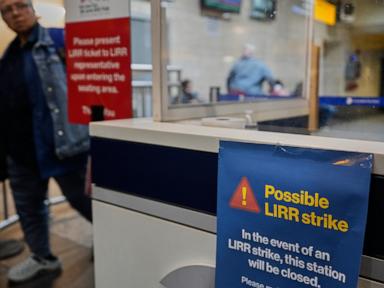
The clock is ticking for 250,000 daily riders who rely on NJ Transit to get into Manhattan. If you’re one of them, you’re probably already looking at your calendar with a sense of dread. A massive labor dispute between the agency and the Brotherhood of Locomotive Engineers and Trainmen (BLET) has reached a boiling point. We aren't just talking about a few delays or "mechanical issues" this time. We’re looking at a full-scale shutdown of the nation's largest statewide public transportation system.
It’s a mess. Honestly, it's a mess that’s been years in the making.
The core of the issue is simple: money and parity. The engineers haven't had a new contract since 2019. They’re looking at their peers over at Amtrak and LIRR and seeing significantly higher paychecks for doing the exact same job. Meanwhile, NJ Transit is staring down a massive budget deficit. It’s a classic standoff where the people caught in the middle are the ones paying $400 a month for a pass that might soon be worthless.
Why this strike is different from past threats
Most of the time, these labor disputes end with a late-night handshake and a press release. This feels different. The legal process governing rail strikes is governed by the Railway Labor Act, which is designed to be slow and tedious to prevent exactly what we're facing. We've moved through the mediation phases. We've seen the Presidential Emergency Board (PEB) step in.
The BLET is frustrated. They feel like they've been treated as second-class operators compared to other regional rail workers. When you talk to the people who actually run the trains, they'll tell you they're overworked and underpaid for the level of responsibility they carry. Navigating a multi-ton vehicle through some of the most congested rail corridors in the world isn't a walk in the park.
NJ Transit leadership is in a bind. They’re dealing with a "fiscal cliff" that has been looming since pandemic-era federal funding started drying up. They’ve already approved double-digit fare hikes to stay afloat. Giving in to every union demand could mean even more pain for your wallet at the ticket machine, but failing to reach a deal means nobody goes anywhere.
The actual impact on your morning commute
Let’s be real about what a shutdown looks like. It isn't just "take the bus instead."
If 250,000 people suddenly can't take the train, the Lincoln and Holland Tunnels become parking lots. The PATH trains will be packed to a dangerous degree. The bus system, which is already strained, can't possibly absorb that many displaced rail riders. You’re looking at commute times doubling or tripling.
- Midtown Direct riders will be the hardest hit. There’s no easy pivot when you’re coming from deep in Morris or Essex County.
- The Northeast Corridor is the backbone of the region. A stoppage there ripples out to Amtrak, even if Amtrak workers aren't the ones on strike, because they share the same tracks and power systems in many spots.
- Park and Rides will be overflowing by 6:00 AM.
If you think you'll just hop in an Uber, good luck. Surge pricing during a transit strike is legendary. You could easily see a $200 fare for a trip that usually costs $40. It's a logistical nightmare that threatens the economic heartbeat of the entire tri-state area.
Where the negotiations stand right now
The two sides are currently in a mandatory "cooling-off" period. This is the final gate. Once this timer hits zero, the union is legally allowed to walk off the job, and the agency is allowed to lock them out.
The union wants a deal that matches the raises seen at other agencies—roughly 20% to 25% over the life of the contract. NJ Transit has offered less, citing their precarious financial situation. They’ve argued that their benefits package is superior to Amtrak’s, which should offset the lower hourly wage. The workers aren't buying it. You can't pay your mortgage with "superior benefits" when the cost of living in North Jersey is skyrocketing.
Congress could technically intervene. They’ve done it before with national freight rail disputes to prevent an economic collapse. But local commuter rail is a different beast politically. There’s no guarantee that Washington will swoop in to save the day for New Jersey commuters.
What NJ Transit hasn't told you
The agency is playing hardball because they know they have zero margin for error in their budget. They’re already facing a $100 million gap for the next fiscal year. Every percentage point they give the engineers is a percentage point they have to find somewhere else—likely through service cuts or more fare increases.
But there’s a hidden cost to not settling. Engineers are leaving. When the pay gap between NJ Transit and Amtrak gets too wide, the most experienced operators just walk across the platform and take a job with the "blue and white." This leads to the very "crew shortages" that cause your evening train to be canceled at the last minute. By refusing to pay a competitive wage now, the agency is ensuring that service reliability will stay in the gutter for years.
Your survival plan for a rail shutdown
You can't wait for the 11:00 PM news the night before to make a plan. You need to act now.
First, check with your employer about remote work. Most New York City firms became very good at this during the pandemic. If there was ever a time to cash in those "work from home" chips, this is it. Don't wait for the strike to be official. Get that permission in writing today.
If you absolutely must go into the city, look into private ferry options. They’re more expensive than the train, but they won't be as crippled as the buses. NY Waterway often adds capacity during these crises, but those tickets sell out fast.
Consider "reverse commuting" to a different hub. If you usually take the Morris & Essex line, maybe driving to a PATH station like Harrison is a viable alternative, though you should expect the parking lots there to be a war zone.
The politics of the tunnel
Governor Phil Murphy is in a tough spot. He’s positioned himself as a pro-labor governor, but he also can't afford to have the state's economy grind to a halt on his watch. He’s been relatively quiet on the specifics of the negotiations, which usually suggests that behind-the-scenes pressure is being applied to both sides.
The state recently enacted a new corporate transit tax to help fund NJ Transit, but that money hasn't fully hit the accounts yet. The union knows this. They know there's a new revenue stream coming, and they want their piece of it before it gets swallowed up by other departmental needs.
It’s a game of chicken played with 250,000 lives.
What happens if a deal isn't reached
If the deadline passes without a signature, the strike starts at 12:01 AM. You will see "Service Suspended" across every board from Trenton to Suffern.
NJ Transit will likely implement a "contingency plan," which usually involves a limited number of shuttle buses from major hubs like Ramsey Route 17 or Metropark to the Port Authority Bus Terminal. These plans are notoriously inadequate. They typically only handle about 10% of the normal rail capacity. It's a band-aid on a gunshot wound.
The long-term damage is even worse. Every time the rail system fails, more people switch to driving. More cars on the road means more wear and tear on the infrastructure and more carbon emissions. It undermines years of work trying to get people out of their SUVs and onto public transit.
Immediate steps you should take
- Download every transit app you can find. NJ Transit, PATH, NY Waterway, and even the MTA. You need real-time data from every possible angle.
- Top up your E-ZPass. If you end up driving, you don't want to be the person stuck in the "cash" lane or dealing with a depleted account while traffic is backed up five miles.
- Coordinate a carpool. Talk to your neighbors who take the same train. If the trains stop, four people in one car is better than four separate cars trying to get into the Holland Tunnel.
- Watch the BLET Twitter/X feed. Often, the union will post updates or "strike prep" notices before the official agency channels admit there’s a problem.
The reality is that these negotiations are going down to the wire. The "cooling-off" period is supposed to encourage settlement, but often it just gives both sides more time to dig in their heels. Don't assume a deal will be reached just because it’s the logical thing to happen. In Jersey politics, logic often takes a backseat to ego and optics.
If the trains stop, the region stops. Prepare for the worst-case scenario and hope that a mediator finds a way to bridge the gap. But keep your car keys handy and your laptop charged. You’re going to need them.


