The silence in Havana is different when the power goes out. It isn’t the peaceful quiet of a countryside evening. It is a heavy, pressurized stillness. You can hear the collective exhale of a city that has just lost its pulse. In the darkened apartments of Vedado and the crumbling colonial beauties of Old Havana, the hum of ancient refrigerators dies instantly. Fans stutter to a halt. Then, the heat moves in—a thick, uninvited guest that settles over everything.
Maria lives on the fourth floor of a walk-up where the salt air has chewed the rebar out of the balcony railings. When the grid fails, her world shrinks to the radius of a single beeswax candle. She doesn't reach for the light switch; muscle memory has already taught her that it’s useless. Instead, she reaches for a hand-held fan made of dried palm fronds.
This is the energy crisis. It isn't a headline or a set of statistics about barrels per day. It is the smell of spoiling milk in a kitchen where every gram of food is a victory. It is the sound of a grandmother’s labored breathing because the nebulizer won’t run without a battery that died months ago. It is a life measured in four-hour windows of "on" and indefinite stretches of "off."
The numbers tell a story of geopolitics, but the streets tell a story of survival. Cuba’s energy infrastructure is a patchwork quilt of Soviet-era thermal plants that are essentially breathing their last breaths. To keep them running, they need fuel. Not just any fuel, but the specific grades of crude and diesel that have become increasingly impossible to acquire.
The logic of the blockade is often presented in Washington as a surgical tool, a way to pressure a government by restricting its lifelines. On the ground, surgery feels more like a blunt instrument. When oil tankers are deterred from docking through the threat of secondary sanctions, the impact doesn't stop at the gates of a government ministry. It travels down the wire. It stops the water pumps. It freezes the bread lines. It turns the simple act of charging a phone into a logistical mission that requires scouting the neighborhood for a house connected to a "priority" circuit—usually near a hospital or a hotel.
The Mathematics of a Shadow
To understand why a single flotilla of aid makes such waves, you have to look at the math of the deficit. Cuba needs roughly 8 million tons of fuel annually to function at a baseline of modern decency. In recent years, that supply has been squeezed from every side. Venezuela, once the reliable partner, is grappling with its own internal production nightmares. Russia provides sporadic relief, but the shipping lanes are long and the costs are soaring.
When the US tightened the screws on shipping companies—effectively blacklisting vessels that touch Cuban ports—the "risk premium" for delivering oil to the island became a wall. Shipping brokers started saying no. Insurance companies followed suit.
Consider the "dark ship" phenomenon. This isn't a spy novel trope; it is a necessity for a country trying to keep its lights on. Tankers sometimes turn off their transponders to avoid detection, weaving through the Caribbean like ghosts. But ghosts can't carry enough to power a nation of 11 million people. The gap between what is needed and what arrives is filled by the apagón—the blackout.
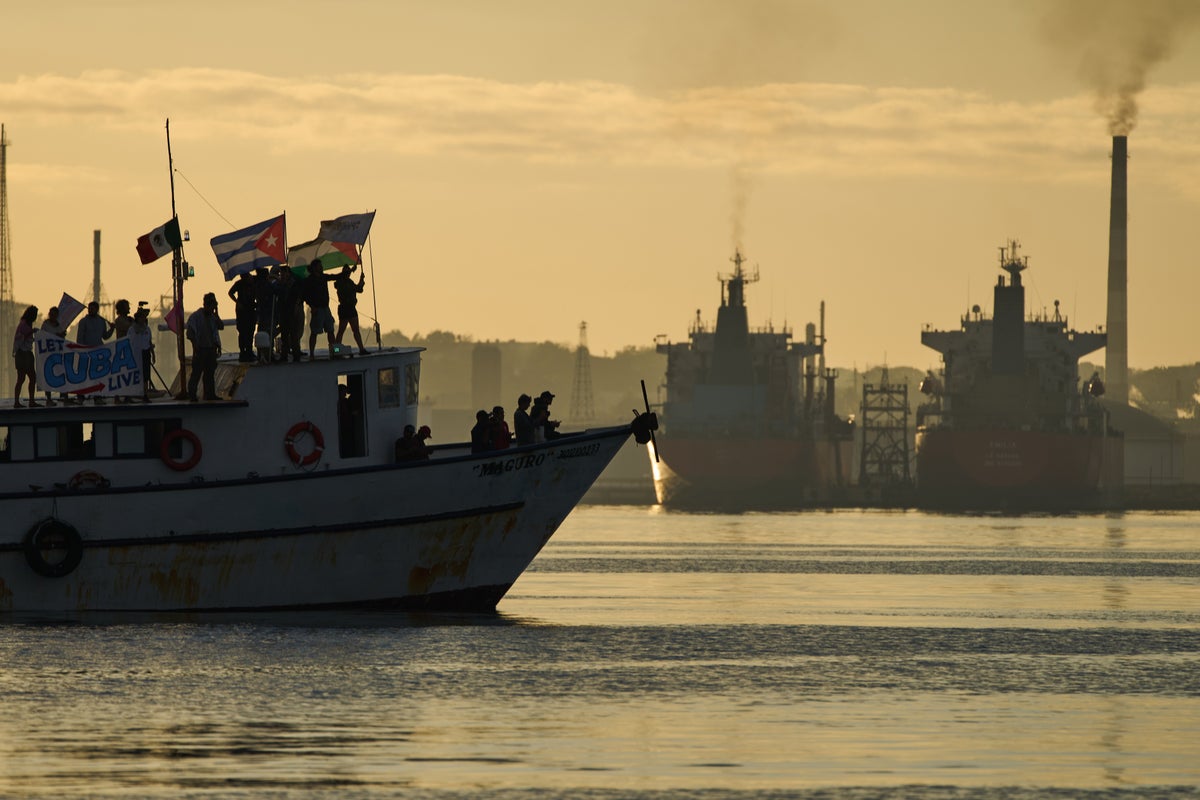
Last week, a change in the wind arrived in the form of a small fleet. An aid flotilla, carrying not just fuel but the hope of a temporary reprieve, broke the horizon. For the people on the Malecón watching the silhouettes of these ships grow larger, it wasn't about politics. It was about the possibility of a fan running through the night. It was about the hope that the local bakery might actually have the power to fire the ovens at 4:00 AM.
The Invisible Stakes of a Cold Stove
The crisis is a thief of time. In a functional economy, you spend money to buy time. In an energy-starved one, you spend time to save your life.
Think about the charcoal. As LPG (liquefied petroleum gas) becomes a luxury, more families are reverting to cooking over coal. This isn't a trendy weekend barbecue. This is a daily ritual of soot and smoke in small, unventilated kitchens. It is a regression. A decade of progress in domestic health and environmental standards can be erased by three months of fuel shortages.
The emotional toll is harder to quantify than the megawatts lost. There is a specific kind of exhaustion that comes from never knowing if the water will be running when you wake up. In high-rise buildings, the lack of electricity means the pumps can't push water to the roof tanks. No power means no thirst quenched. No power means no dignity in the bathroom.
The youth of Havana feel this the most. They are connected to a global world through the flickering glass of their smartphones, yet they are tethered to a physical reality that feels stuck in the mid-20th century. They watch influencers in Miami or Madrid while sitting in the dark, using the last 4% of their battery to send a voice note to a friend.
"Is it back on at your place?"
"No. Maybe at midnight."
"I'll wait."
The Anatomy of the Blockade
The argument for the blockade is usually framed around the idea of "denying resources to the regime." But resources are fungible, and pain is not. When a shipment of fuel is blocked, the "regime" doesn't go without air conditioning. The elite don't sit in the dark.
The weight falls on the schoolteacher who has to grade papers by the light of a kerosene lamp. It falls on the surgeon who has to pray the hospital’s aging diesel generator doesn't seize up mid-incision. It falls on the taxi driver who spends eighteen hours in a line at the Cupet station, sleeping in his car, just for the chance to buy twenty liters of fuel.
This is the "energy crisis" stripped of its sterile academic phrasing. It is a slow-motion strangulation of the mundane. The US policy, which has remained largely stagnant through successive administrations, operates on the theory that if life becomes hard enough, something will break.
Something is breaking. But it isn't always the political structure. Sometimes it is just the spirit of a mother who can't keep her baby's fever down because the ice she bought yesterday has melted into a warm puddle in a dead freezer.
The Arrival
The aid flotilla that recently docked is a drop in a very large, very dry bucket. It brought fuel, medical supplies, and food. More importantly, it brought a psychological break in the isolation.
When the ships arrived, the news spread through the paquete—the offline internet of thumb drives that circulates through the island. People talked about the tonnage. They speculated on which province would get the first distribution. They hoped.
But even as the fuel is pumped into the thirsty tanks of the Matanzas terminal, the structural problem remains. One flotilla cannot fix a grid that requires billions in investment. It cannot undo the reality that Cuba is an island being treated like a pariah in its own backyard.
The energy crisis is a symptom of a much deeper, older wound. It is the friction between two nations that have forgotten how to speak to each other, leaving the people in between to live in the sparks.
The lights will come back on tonight for some. Maria will plug in her small television and catch the end of a soap opera. She will charge her phone. She will take a deep breath of cooler air as the fan finally oscillates across her bed. She knows, however, that the reprieve is temporary. Somewhere out at sea, another tanker is being turned away. Somewhere in a boardroom, a lawyer is signing a document that ensures the next blackout is already on its way.
The sun sets over the Caribbean, orange and indifferent. For a few hours, the hum of the city returns. It is a fragile sound, a borrowed heartbeat that everyone knows could stop at any second. They live their lives in the "on" position, moving faster, cooking quicker, and talking louder, trying to get everything done before the silence returns.
When it does, they will go back to the balconies. They will wait for the wind. They will watch the horizon for the next ship.
And they will remember what it feels like to be forgotten in the dark.