Walk down Hennessy Road at dusk, and the city hits you as a wall of sensory overload. The smell of roasted goose mixes with the humid, heavy air of the South China Sea. Double-decker buses hiss to a halt, their brakes crying out against the pavement. Above it all, the iconic neon signs—though fewer now than a decade ago—bleed crimson and emerald into the twilight.
For generations, Hong Kong built its wealth on things you could touch, see, and trade. Containers stacked like Lego bricks at the Kwai Tsing terminal. Tall, glinting towers of steel and glass where billions changed hands in the blink of an eye. Money here was physical. It was a tangible, breathless hustle.
But beneath the surface of this financial fortress, a quiet shift is happening. The city is betting its entire future on something completely invisible. Lines of code. Neural networks. Synthetic intelligence.
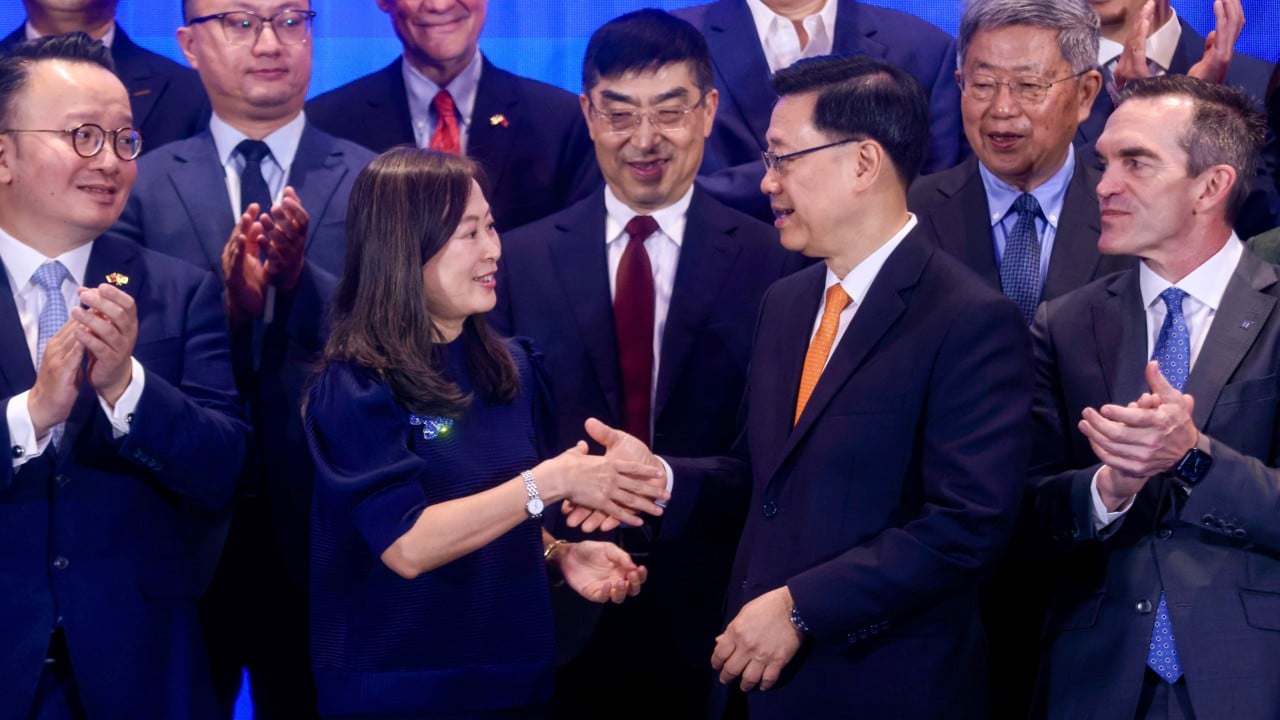
Chief Executive John Lee recently made it clear that this isn't just a minor upgrade to the city's infrastructure. It is the central plank of Hong Kong’s economic survival. To understand what that actually means, you have to look away from the government press releases and step into a small, cramped workshop in Sham Shui Po.
The Watchmaker and the Algorithm
Consider a hypothetical artisan named Mr. Lam. For forty years, he has repaired mechanical timepieces in a space no larger than a walk-in closet. His hands are stained with oil. His eyes are permanently squinted from decades of peering through a loupe. To Mr. Lam, logic is mechanical. If a gear is broken, you replace it. If the mainspring loses tension, you wind it.
When we talk about artificial intelligence overtaking an economy, we often think of robots replacing assembly line workers. But the reality is far more subtle, and far more disruptive.
The financial institutions three miles away from Mr. Lam’s shop are deploying algorithms that can predict market fluctuations based on the emotional tone of millions of social media posts across Asia. They are doing this in milliseconds. They do not sleep. They do not take lunch breaks at the local cha chaan teng.
This creates a profound friction. On one side of the harbor sits an older generation that built the city on grit, physical labor, and face-to-face relationships. On the other side sits a new mandate from the highest levels of government demanding a pivot toward a digital, automated reality.
How does a city bridge that gap without losing its soul?
The answer lies in necessity. Hong Kong’s traditional engines of growth—logistics, real estate, and classic retail banking—are facing fierce competition from regional rivals like Singapore and Shenzhen. Standing still is the equivalent of moving backward. The push for technological transformation isn't born out of a sudden love for silicon; it is born out of survival instinct.
The Invisible Infrastructure
When a government declares a technology to be its central economic pillar, it triggers a massive reallocation of human capital. Money floods the market. Venture capital firms spring up overnight in Cyberport and the Science Park. Universities shift their curricula, churning out data scientists instead of traditional accountants.
But this rapid evolution creates a strange kind of vertigo for the people living through it.
Imagine being a mid-level compliance officer at a traditional bank in Central. You have spent fifteen years mastering the intricate regulations of cross-border trade. Then, almost overnight, your firm integrates a machine-learning system that processes compliance checks in under four seconds—a task that used to take your team an entire week.
You aren't necessarily fired. Instead, your job changes into something unrecognizable. You become a handler. An editor. A supervisor of a ghost in the machine.
This is where the true anxiety of the modern workforce takes root. It is not the fear of immediate unemployment, but the lingering suspicion that your hard-earned expertise is becoming obsolete in real-time. The subject is intimidating, fast-moving, and deeply uncertain. Even the engineers building these models admit they cannot always trace the exact pathways the data takes to arrive at a conclusion. We are trusting our collective financial future to black boxes.
The Regional Chessboard
Hong Kong occupies a unique, precarious geographic and political space. It is the gateway between mainland China’s massive tech manufacturing ecosystem and the global financial market. This positioning is its greatest strength, but also its most complicated challenge.
To the north, Shenzhen functions as a powerhouse of hardware production and tech giants. Hong Kong’s goal is to act as the sophisticated brain to that muscle, providing the legal framework, international capital, and research institutions required to scale these innovations globally.
John Lee’s administration is banking on this synthesis. By embedding automated systems into the city's core logistics, wealth management, and public administration sectors, they hope to create an unassailable economic moat.
Yet, data requires openness to thrive. The true test of this economic strategy will be whether Hong Kong can maintain its historic role as a free-flowing hub of information while navigating the increasingly strict regulatory environments of the modern era. If the data dries up, the algorithms starve.
A City Re-coded
The transition is already visible if you know where to look. It is in the smart sensors monitoring traffic flow through the Cross-Harbor Tunnel. It is in the automated credit-scoring apps used by small businesses seeking loans in Mong Kok. It is in the silent, air-conditioned server rooms humming beneath the old industrial buildings in Kwun Tong.
The neon signs will continue to fade, replaced by energy-efficient LEDs and digital screens. That is the nature of this place. It discards the old to make room for the profitable.
As the sun dips below the Victoria Peak skyline, the lights of the skyscrapers flicker on, looking less like buildings and more like giant, vertical circuit boards drawing power from the harbor. The city is no longer just a place of concrete and ambition. It is a living, breathing program, updating itself line by line, while the people below watch the screen, waiting to see what the next version of their lives will look like.