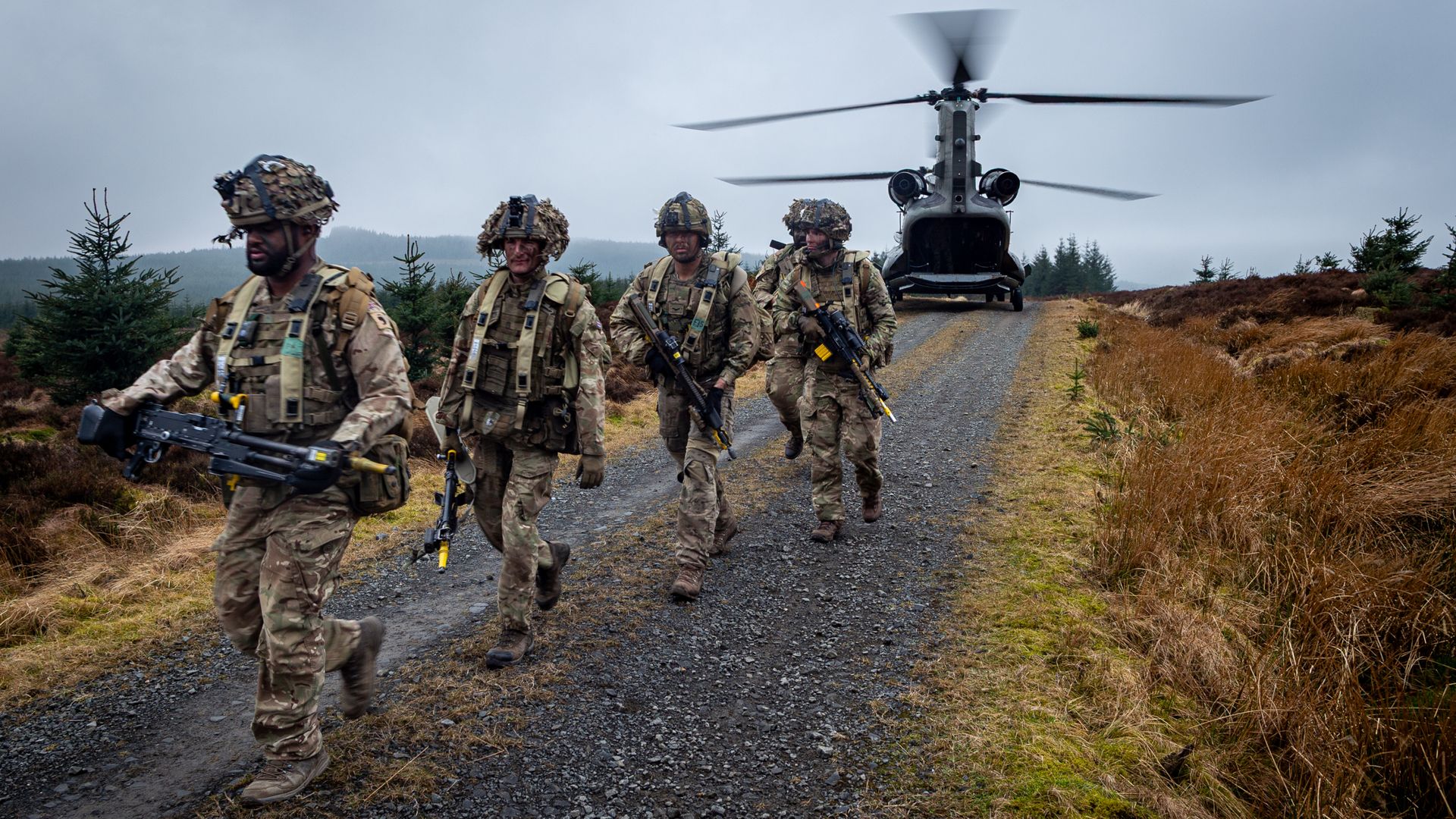
The shadow of the Suwalki Gap has never felt longer. As NATO battalions rotate toward the high-stakes friction points of the Baltics and Poland, the training regime has shifted from the open plains of the Cold War to the suffocating density of the modern city. The alliance is no longer just practicing how to hold a line against a conventional armored thrust. They are learning how to bleed for every floor, every basement, and every sewer line in a environment where high-tech advantages evaporate into the dust of shattered masonry.
This isn't a drill for the sake of appearances. It is a fundamental admission that the next conflict on Europe’s eastern flank will be won or lost in the "grey zones" of urban centers. When thousands of troops from the US, UK, Germany, and local defense forces converge on mock-up cities just miles from the Russian border, they are confronting the reality that modern warfare is becoming increasingly claustrophobic.
The Death of Distance
For decades, Western military doctrine relied on the "stand-off" advantage. The idea was simple: see the enemy first, hit them from a distance they cannot reach, and use superior optics and air power to dismantle their formations before they ever see a friendly soldier. In the forests and marshes of the borderlands, that logic still holds some weight. But once the fight enters an apartment block or an industrial park, the math changes.
Urban combat is the great equalizer. It turns a billion-dollar jet into a spectator and a million-dollar tank into a vulnerable target for a teenager with a cheap anti-tank rocket. NATO’s current emphasis on urban drills near the Russian border is a direct response to the tactical lessons being hammered out in the Donbas. They have watched as mid-sized cities are turned into fortresses that take months, or even years, to clear.
The tactical shift is jarring. Soldiers who spent their careers training for long-range engagements are now being taught the brutal, intimate art of room clearing. It is a slow, methodical, and terrifyingly lethal process. Every doorway is a potential fatal funnel. Every window is a sniper’s nest. In these mock-up cities, the "why" is clear: if the alliance cannot hold its urban centers, it cannot hold its territory.
Infrastructure as a Weapon
We often think of cities as the victims of war, but in the current geopolitical climate, the city is the weapon itself. NATO planners are increasingly focused on the "contested environment" where civilian infrastructure—power grids, water treatment plants, and communication hubs—becomes the primary objective.
Russian doctrine has long emphasized the concept of "active defense," which involves using deep fires and electronic warfare to paralyze an opponent. By moving the fight into the city, NATO forces hope to mitigate some of that advantage. Buildings provide cover from thermal imaging. Thick concrete walls can interfere with the electronic jamming that would otherwise leave a unit blind and deaf on an open battlefield.
However, this reliance on the city creates a massive logistical and ethical burden. An army that fights in a city is an army that must manage a civilian population. The drills currently taking place are not just about shooting; they are about civil-military cooperation. How do you keep the lights on while an enemy is trying to blow up the transformer? How do you evacuate ten thousand people while a mechanized brigade is moving in the opposite direction? These are the questions that keep colonels awake at night.
The Electronic Blackout
Perhaps the most overlooked factor in these urban drills is the total collapse of reliable communication. In the woods, a satellite link is easy to maintain. In a city, surrounded by rebar and high-rise structures, signals bounce, fade, and disappear.
NATO is practicing for the "dark" fight. This means reverting to low-tech solutions: hand signals, runners, and wired field phones. It is a regression that feels out of place in an era of drones and AI, but it is a necessary one. If the Russian military manages to successfully deploy its high-end electronic warfare (EW) suites, the high-tech "digital soldier" becomes a guy with a heavy backpack and a dead radio.
The Drone Factor in Narrow Alleys
The rise of the First Person View (FPV) drone has changed the geometry of the urban battlefield. During these drills, soldiers are being taught that the sky is no longer safe, even when they are under cover. A drone can fly through a window, navigate a hallway, and detonate in a room that was previously thought to be secure.
The counter-measure to this isn't just better technology; it's better grit. Soldiers are learning to live under constant surveillance, moving only under the cover of smoke or darkness, and treating every open space as a kill zone. The psychological toll of this kind of warfare is immense. It is constant, low-level dread.
The Logistics of the Siege
War is often described as a series of movements, but urban war is a series of pauses. It is remarkably resource-intensive. A unit fighting in a city will consume three to four times the amount of ammunition it would in open terrain. They will burn through batteries, water, and medical supplies at an alarming rate.
NATO’s recent exercises have put a heavy emphasis on the "last mile" of logistics. It’s one thing to get a convoy of trucks to a depot; it’s another thing to get a pallet of mortar rounds across a street that is being swept by heavy machine-gun fire. The alliance is experimenting with autonomous ground vehicles—small, rugged robots that can carry supplies to the front line—but for now, the bulk of that work still falls on the backs of exhausted infantrymen.
The Suwalki Dilemma
The geographic focus of these drills cannot be ignored. The Suwalki Gap, a 60-mile strip of land along the Polish-Lithuanian border, is the only land link between NATO's Baltic members and the rest of the alliance. To the west is the Russian exclave of Kaliningrad; to the east is Belarus.
If this gap were closed, the Baltics would effectively be an island. The cities within and near this gap are not just points on a map; they are the anchors of the entire regional defense strategy. By training in urban environments specifically in this region, NATO is sending a clear signal: any attempt to close the gap will result in a prolonged, grinding war in the streets.
This is a deterrent based on the "poison pill" principle. The goal is to make the cost of seizing a city so high—in terms of casualties, time, and international condemnation—that the adversary decides the objective isn't worth the price.
The Human Cost of High-Intensity Drills
There is a grim reality to these exercises that rarely makes it into the official press releases. The soldiers participating in these drills are being prepared for a high-attrition environment. In urban combat, casualty rates are astronomical. During the clearing of a single fortified building, a platoon can lose half its strength in minutes.
The training is designed to build a level of muscle memory that can override the instinct to flee when a building starts collapsing around you. It is about building "resilience," a word that has become a buzzword in military circles but carries a heavy weight for the person holding the rifle. They are being told, in no uncertain terms, that the next war will not be a clinical, surgical strike. It will be a meat grinder.
The Role of Local Defense Forces
One of the most effective elements of these drills is the integration of local territorial defense forces. These are often part-time soldiers—teachers, mechanics, and clerks—who live in the cities being defended. They know the shortcuts, the basements that flood, and the roofs that offer the best vantage points.
For NATO, these local forces are a force multiplier. They provide the human intelligence that a satellite cannot capture. They are the ones who will stay behind if a city is occupied, forming the core of an insurgency that makes holding the territory as difficult as taking it. The drills are increasingly focusing on how professional "expeditionary" forces from the US or UK can plug into these local networks seamlessly.
The Shifting Paradigm of Deterrence
We are moving away from an era of "deterrence by punishment"—where the threat was a massive retaliatory strike—to an era of "deterrence by denial." This means convincing the enemy that they simply cannot achieve their objectives, no matter how hard they try.
Urban combat drills are the physical manifestation of this denial. By showing that NATO forces are prepared to fight house-to-house, the alliance is removing the possibility of a "fait accompli"—a quick land grab that is over before the international community can react. If every village is a fortress, there is no such thing as a quick victory.
The Fragility of the Urban Shield
Despite the intensity of the training, there is a glaring weakness in the urban defense strategy: the vulnerability of the civilians caught in the middle. Modern cities are fragile ecosystems. They require a constant inflow of food, water, and electricity to remain habitable.
In a high-intensity conflict, these systems fail almost immediately. NATO’s training includes "stability operations," but the reality is that no military in the world is truly equipped to handle the humanitarian catastrophe of a besieged modern city. The drills can simulate the shooting, but they can’t truly simulate the stench of broken sewers, the cries of trapped civilians, or the total breakdown of social order that occurs when the food runs out.
The alliance is betting that the threat of this chaos will be enough to prevent it from ever happening. They are turning their soldiers into urban specialists not because they want to fight in the streets, but because they want to make the prospect of street fighting so terrifying that the border remains quiet.
The concrete walls of these training centers are soaked in the sweat of men and women who are learning that the future of European security may not be decided by a missile fired from a thousand miles away, but by a grenade tossed into a dark room at three in the morning.
Prepare for the worst to ensure it remains a simulation.