The fluorescent lights of the late-night diner hummed, a low, buzzing baseline to the sound of rain tapping against the glass. Across the booth sat David. His fingers traced the rim of a ceramic coffee mug, his knuckles white. David is a copywriter at a mid-sized marketing firm, or at least, he was until three months ago when his company integrated its first suite of generative artificial intelligence tools. He hadn't been fired. Not yet. But he was terrified.
"It feels like waiting for an execution," he whispered, looking not at me, but at the dark reflection of the street outside. "Every time the software updates, I feel like my expiration date gets moved up."
David’s fear is not an anomaly. It is the defining anxiety of our generation. For the past few years, a singular narrative has gripped the global consciousness: a looming, catastrophic "jobs apocalypse." We have been told, in increasingly breathless headlines, that the algorithms are coming for the desks, the creative studios, the coding bays, and the trading floors. We envision a near future of silent, empty offices, populated only by the hum of servers and the ghost of human productivity.
But we have gotten the story completely backward.
The panic assumes that history is a straight line leading toward human obsolescence. It ignores a fundamental truth about technology, economics, and human nature. The real shift coming down the track is not the elimination of work, but its radical, sometimes painful, translation.
The Lessons of the Loom
To understand why the empty desk is a myth, we have to look backward. Fear of the machine is as old as the machine itself.
In the early nineteenth century, the Luddites smashed mechanical weaving looms in Nottinghamshire. They weren't fighting progress because they hated technology; they were fighting for their lives, convinced the automated loom would relegate them to permanent poverty. The looms stayed. The jobs changed.
Decades later, the introduction of the electronic spreadsheet in the late 1970s—software like VisiCalc and Lotus 1-2-3—sent shockwaves through corporate America. Bookkeepers and accounting clerks panicked. The machine could calculate thousands of cells in seconds, a task that previously took a human days with a pencil and a ledger.
If the apocalypse theorists were right, the accounting profession should have vanished by 1985.
Instead, something extraordinary happened. The cost of running financial scenarios plummeted. Suddenly, businesses could afford to run dozens of projections instead of just one. They needed people to analyze those projections, to strategize, to advise. The number of traditional bookkeepers did drop, but the number of management analysts and accountants skyrocketed. The machine didn't eliminate the worker; it elevated the demand for the worker’s highest-value skill: judgment.
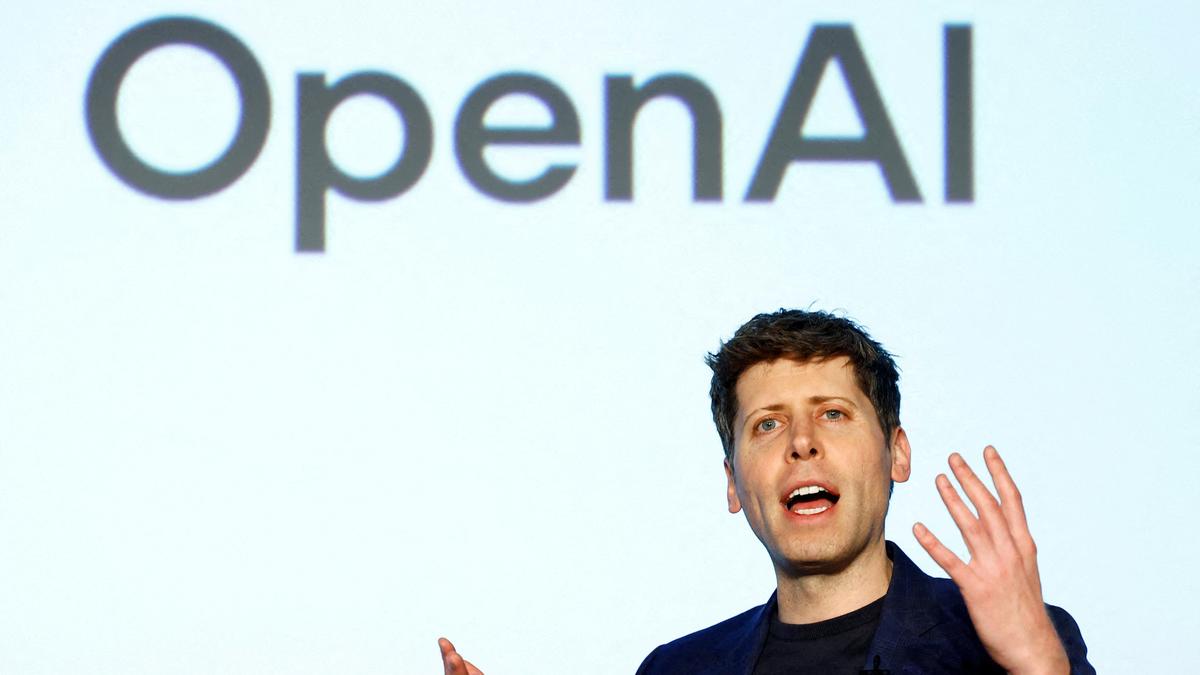
Sam Altman, the chief executive of OpenAI, touched on this exact historical rhythm during a recent conversation about the trajectory of artificial intelligence. He noted that while the transition will undoubtedly cause friction, the fear of a total collapse in human employment misreads how society actually scales.
We do not reach a point where we simply say, "We have enough things, we can stop working now." Human desire for progress, for better services, for deeper analysis, and for richer storytelling is fundamentally insatiable.
The Illusion of the Perfect Algorithm
Consider what happens next when a company adopts a high-powered AI system. Let’s look at a hypothetical engineering team led by a woman named Sarah.
Before the integration, Sarah’s team spent roughly sixty percent of their week writing boilerplate code, debugging syntax errors, and hunting for misplaced semicolons. It was grueling, unglamorous work. When the company deployed an AI pair-programmer, that sixty percent dropped to nearly zero. The algorithm spat out clean code in seconds.
Under the apocalypse narrative, Sarah should now lay off more than half her staff.
But she didn't. She couldn't.
Because the moment code became cheap and abundant, the company’s ambitions multiplied. Instead of building one product feature a month, the executive team wanted ten. The AI could write the code, but it couldn't talk to the clients to understand their frustrations. It couldn't dream up the architecture of a brand-new system. It couldn't navigate the complex, emotionally fraught political landscape of a multi-million-dollar corporate pivot.
Sarah’s engineers stopped being mere typists of code; they became architects of systems.
The machine takes over the execution of the task, but the human retains ownership of the problem. This distinction is crucial. AI is a spectacular engine for generating answers, but it remains utterly incapable of knowing which questions are worth asking.
The Friction of the In-Between
It is easy to paint this picture in broad, optimistic strokes, to speak of "elevation" and "transformation" from the safety of an analytical distance. But that does a profound disservice to the people sitting in the diner booths.
The transition is not seamless. It hurts.
Even if a economic system creates more jobs than it destroys, the person who loses a job in a customer call center on a Tuesday cannot easily become an AI data-labeling strategist or a prompt architect by Thursday. The skills gap is a chasm, and jumping across it causes immense psychological and financial vertigo.
I know this because I have felt that vertigo. Years ago, during an earlier wave of digital disruption in journalism, I watched older, brilliant reporters get squeezed out because they couldn't or wouldn't adapt to the relentless, metrics-driven demands of the internet era. Their institutional knowledge, their deep understanding of nuance, was temporarily discarded in favor of speed and search engine optimization. It was heartbreaking to watch.
The danger we face today is not a lack of work, but a lack of preparation for the kind of work that will remain.
If we spend all our time panicking about a blanket "jobs apocalypse," we miss the opportunity to build the safety nets and retraining pipelines that workers actually need. We worry about the wrong monster. The threat isn't a sentient machine taking your desk; it’s a human who has figured out how to use the machine taking your client.
The Insatiable Demand for Human Presence
What is it that we actually pay for when we buy a service, a piece of art, or a product?
If efficiency were the only metric that mattered, the global market for handmade goods would have died with the industrial revolution. Yet, a handmade ceramic mug sells for fifty dollars, while a factory-stamped one costs two. We pay for the flaw. We pay for the story. We pay for the human connection embedded in the object.
This applies directly to the knowledge economy.
Imagine a legal dispute. An AI can analyze millions of pages of case law in the time it takes to blink. It can draft a flawless, ironclad legal brief. But when a founder is being sued by their former partners, or when a family is navigating a complex estate battle, they do not want to look at a glowing terminal.
They want a lawyer who can look them in the eye. They want someone who can sense when a witness is nervous, someone who can steady a trembling hand, someone who understands that justice is not just a calculation, but an emotional reckoning.
The premium of the future will be placed squarely on empathy, intuition, and contextual awareness. These are not soft skills; they are the hard currency of a post-automation world.
The Shift in the Room
Back in the diner, the rain had stopped, leaving the pavement outside slick and reflective under the streetlights. David looked down at his phone, then back up at me.
"So, what do I do?" he asked. The edge of panic in his voice had softened into something resembling curiosity.
"You stop trying to compete with the machine at what it does best," I told him. "You can’t write faster than it. You can't analyze data sets bigger than it. So stop trying. Write the things it can't feel. Find the angles that require a pulse."
He nodded slowly. The concept wasn't a magic cure for his anxiety, but it gave him a foothold. A place to stand.
The future of work is not a sterile wasteland where humanity has been cast aside. It is a noisy, chaotic, crowded room where the tools have changed, but the stakes remain entirely our own. The desks will not be empty. But the people sitting at them will be doing things we have only just begun to imagine.