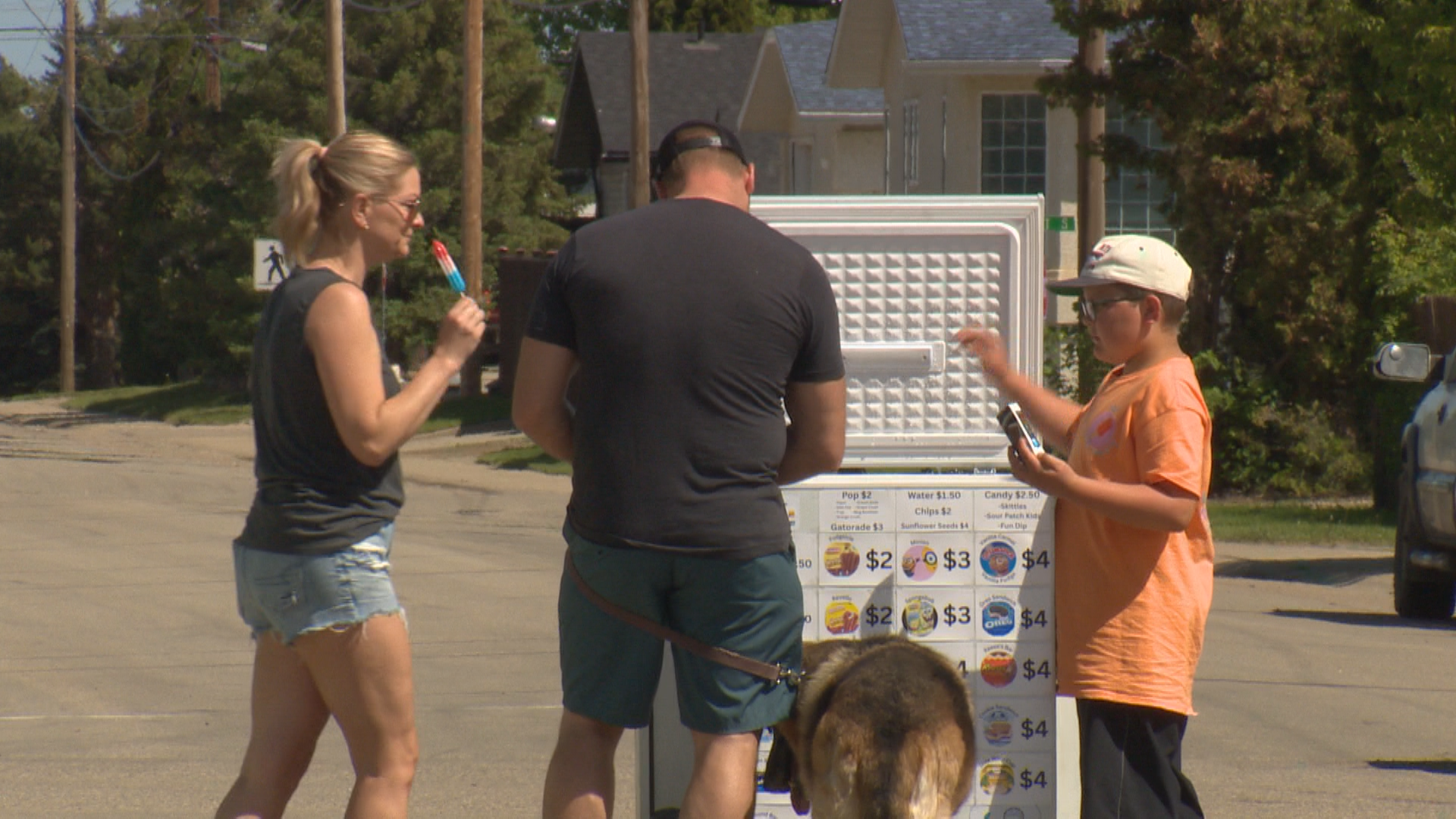
The asphalt in Martensville, Saskatchewan, has a specific way of radiating heat in July. It rises in shimmering waves, blurring the horizon where the prairie sky meets the edge of town. On days like this, most kids are trapped in the dull hum of air-conditioned basements, staring at screens, waiting for the sun to drop.
Then comes the squeak of a bicycle chain.
It is a steady, rhythmic sound. It competes with the drone of cicadas. Attached to that bicycle is a heavy, insulated cooler, and piloting the whole contraption is a ten-year-old boy with a cooler full of ice cream and a brain full of spreadsheets. While the adults talk about inflation, supply chains, and economic stagnation, this kid is out on the pavement, proving that the oldest rule of commerce still holds true: find a thirst and quench it.
We tend to look at kid entrepreneurs with a sort of patronizing fondness. We buy their lemonade because they look cute in oversized baseball caps, not because the lemonade is particularly good. We treat their ventures like science fair projects—temporary, adorable, and ultimately doomed to melt away when school starts up again.
But look closer at the kid pedaling through Martensville. This isn’t a hobby. It is a masterclass in localized logistics, micro-targeted marketing, and sheer grit.
The Cost of a Cold Treat
Starting a business when you cannot legally drive a car introduces a unique set of operational hurdles. Most business plans begin with a capital allocation strategy. For a ten-year-old, it begins with counting the crumpled five-dollar bills saved from birthdays and doing chores.
Consider the initial overhead. You need a vehicle. In this case, a standard bicycle. You need storage that can fight off the prairie heat for hours at a time. You need inventory that ruins itself if your supply chain breaks down for even thirty minutes. Ice cream does not wait for you to find a customer. It is a ticking clock in a wrapper.
The young founder had to solve the problem of thermodynamics with a limited budget. A standard cooler strapped to a bike rack changes the center of gravity. It makes steering sluggish. It turns every curb into a potential disaster. One sharp turn, one pothole missed on a dusty side street, and your entire inventory becomes a sticky, expensive soup at the bottom of a plastic box.
Yet, he figured it out. He balanced the weight. He calculated how many ice cream bars he could carry without compromising his ability to pedal up the slight inclines of the neighborhood. That is not just a cute story. That is physics meeting finance on two wheels.
The Psychology of the Sidewalk Sale
There is a common misconception that business is about product. It isn't. It is about friction. The easier you make it for someone to buy from you, the more successful you will be.
The standard brick-and-mortar convenience store requires effort. You have to put on shoes. You have to find your keys. You have to drive down the road, wait in line, and pay a premium. The ice cream bike eliminates every single one of those steps. It brings the solution directly to the problem.
Imagine a parent working from home, trying to balance a conference call while keeping two restless toddlers from tearing the living room apart. The temperature outside is climbing past thirty degrees. The energy in the house is tense. Suddenly, a bell rings outside the window.
It isn't a massive corporate delivery truck blocking the driveway. It is a local kid with a cooler. The parent can step out onto the front porch, hand over a few coins, and buy twenty minutes of absolute silence wrapped in chocolate and vanilla. That boy isn’t just selling frozen dairy. He is selling a momentary relief valve to stressed-out households. He understands his market better than the executives running multi-million dollar grocery chains down the highway.
He knows which parks are busy at 3:00 PM. He knows which construction crews are working on the new housing developments and might want a cold break. He maps the town not by street names, but by human density and sun exposure.
The Real Worth of a Dollar
We live in an era of digital transactions. Money has become abstract. It is a number on a banking app, a tap of a plastic card against a glowing terminal. Kids grow up seeing parents wave their phones over sensors to acquire goods, losing the tactile understanding of what value actually means.
When you pedal a bike through the heat to earn a loonie, the concept of value becomes intensely concrete.
Every dollar earned represents a specific amount of physical effort. It represents a certain number of pedal strokes, a certain amount of sweat, and the willingness to look a stranger in the eye and pitch a product. This kind of financial literacy cannot be taught in a classroom. You cannot learn it from a textbook or a simulation. It has to be absorbed through the palms of your hands and the ache in your calves.
People in Martensville aren't just buying ice cream because they want sugar. They are buying into the spectacle of effort. In a world that often feels like it is running on autopilot, seeing a ten-year-old actively hustling to build something of his own is a refreshing jolt of reality. It reminds the adults who buy from him of their own first jobs, their own early ambitions, and the simple beauty of an honest trade.
The Melting Point
Summer in Saskatchewan is notoriously short. By September, the wind will turn sharp, the leaves will drop, and the demand for ice cream bars on a bicycle will plummet to zero. The business has a hard expiration date.
But the expiration of the season does not mean the end of the venture. The inventory might disappear, but the infrastructure remains. The kid who conquered the Martensville streets this summer will enter his next school year with a completely different perspective than his peers. He will look at a retail store and see inventory turnover rates. He will look at a bicycle and see a delivery vehicle. He will look at a hot day and see a market spike.
The real profit of this summer enterprise won't be found in a piggy bank or a savings account. It will be found in the quiet confidence of a kid who looked at a hot summer afternoon, saw an opportunity, and decided to ride right into it.
The sun begins to dip below the tree line, casting long, dramatic shadows across the pavement. The heat is finally breaking. The bicycle chain gives one last, familiar squeak as the young operator turns corners, heading back home with an empty cooler and a pocket heavy with coins.