Elena always knew where her keys were. Until last October.
She stood in her kitchen, holding a bag of groceries, staring at the countertop with a sudden, freezing realization: she did not know if she had driven home or walked. The memory wasn't just misplaced; it was completely absent, a clean tear in the fabric of her afternoon. Elena is seventy-two, a retired history teacher who spent a lifetime chronicling the past, now terrified of losing her own.
For decades, the path toward answering that terror was a brutal marathon. If you suspected your mind was slipping, you entered a medical gauntlet. You waited months for a specialist. You faced an expensive PET scan that required radioactive dye, or you braced yourself for a lumbar puncture—a long needle driven between the vertebrae of your spine to draw out cerebrospinal fluid.
Most people simply avoided it. They hid their lapses, blamed normal aging, and waited until the darkness swallowed them completely.
But a quiet revolution is happening inside ordinary vials of blood.
The Ghost in the Machine
To understand why a simple blood draw is shifting the entire architecture of neurology, you have to look at what happens in the brain long before a person forgets their first name.
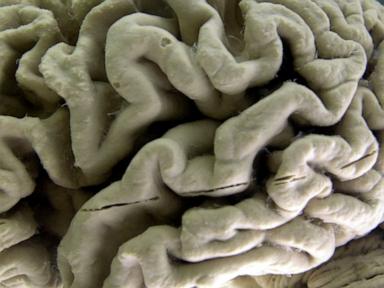
Alzheimer’s disease is a slow, silent arsonist. For ten, fifteen, or even twenty years before the first visible symptom emerges, microscopic changes are unfolding. Two specific proteins begin to misbehave. The first is amyloid-beta, which clumps together outside brain cells, forming sticky, disruptive plaques. The second is tau, a protein that normally stabilizes the internal skeleton of neurons. In Alzheimer's, tau becomes chemically altered—phosphorylated—and twists into toxic tangles inside the cells, choking them from the inside out.
For a long time, doctors believed these proteins were locked behind the blood-brain barrier, invisible to anything short of a direct spinal tap or an advanced brain scan.
They were wrong.
As these proteins accumulate and cause damage, tiny fragments escape the brain and leak into the bloodstream. Specifically, a form of tau known as p-tau217 acts as a cellular smoke alarm.
A landmark international study, led by researchers at the Mass General Brigham Neuroscience Institute and published in JAMA, tracked the predictive power of this single biomarker. Scientists followed cognitively healthy, symptom-free older adults across three continents. What they discovered fundamentally changes how we calculate the timeline of the human mind.
The Decades of Warning
Consider a hypothetical patient named Robert. He is sixty-five, runs five miles a week, and solves the Sunday crossword without looking up a word. By all outward appearances, his brain is pristine.
If Robert were to take this new blood test today and show very high levels of p-tau217, the statistics paint a sobering picture. The study revealed that cognitively unimpaired individuals with exceptionally high levels of this biomarker face an estimated 38% absolute risk of developing cognitive impairment within five years.
Expand that horizon to ten years, and the probability climbs steeply, with some data suggesting a risk of up to 78%.
The data tells us that the disease is not a sudden cliff. It is a slow incline, and for the first time, we can see the slope while we are still walking on flat ground.
Remarkably, the blood test often registers these shifts before a traditional amyloid PET scan even turns positive. In separate research out of the Harvard Aging Brain Study, investigators found that increases in p-tau217 frequently occurred before clear abnormalities appeared on brain imaging. If a person has low levels of this biomarker, they are highly unlikely to accumulate significant amyloid plaques for years to come.
It is the medical equivalent of detecting a tremor in the fault line years before the earthquake hits the surface.
The Real-World Shift
The implications of this extend far beyond the sterile confines of research laboratories. The true power of a blood test is its simplicity. It can be done anywhere there is a needle and a nurse.
In a massive real-world trial involving more than 1,300 patients across Sweden, researchers evaluated the impact of a specific blood test called PrecivityAD2. They wanted to see how the test performed not in elite research universities, but in everyday community clinics and specialist memory centers.
The results exposed a massive vulnerability in standard clinical practice.
When relying purely on traditional cognitive assessments, symptoms, and basic CT scans, primary care physicians correctly diagnosed Alzheimer's in just 61% of cases. Even dedicated dementia specialists only hit 73% accuracy. The brain is complex, and early dementia looks deceptively similar to depression, vitamin deficiencies, or normal age-related slowing.
Once clinicians were given the results of the blood test, everything changed.
The test identified Alzheimer’s pathology with roughly 90% accuracy. Equipped with that data, primary care doctors saw their diagnostic accuracy leap to 93%, while specialists rose to 94%.
Seeing the numbers on a page caused doctors to alter their diagnoses for about one-third of the patients. It forced them to change care plans for more than half. A negative result allowed a primary care doctor to confidently rule out Alzheimer’s and look for other culprits—perhaps a thyroid issue or a medication side effect—saving the patient from years of misdirected anxiety.
The Shadow of Knowing
Yet, this scientific triumph introduces a profound human dilemma.
If you are currently healthy, do you really want to know what your brain might look like in 2035?
Right now, senior neurologists do not recommend that asymptomatic individuals rush out to get these tests outside of formal clinical trials. The reason is simple and heartbreaking: our ability to detect the disease has outpaced our ability to cure it.
While the medical community has recently seen the introduction of the first disease-modifying therapies designed to clear amyloid from the brain, these treatments are approved for people already experiencing mild symptoms. We do not yet have an approved, preventive therapy that you can take like a statin to stop the damage before it starts.
If Elena takes the test today and learns her p-tau217 levels are high, her doctor's practical advice remains largely unchanged: exercise regularly, eat a Mediterranean diet, prioritize deep sleep, and manage cardiovascular health.
Knowing your risk without a definitive cure can feel like watching a slow-motion storm on the horizon with nowhere to run.
But there is a different way to view the data.
To find the drugs that will eventually cure Alzheimer's, scientists need to test them on people before their brains suffer irreversible structural damage. Historically, finding those people was like searching for a needle in a haystack of expensive scans and painful spinal taps. A cheap, accurate blood test changes the math entirely. It allows researchers to build prevention trials with precision, identifying the exact cohort of people who stand to benefit most from experimental therapies.
It turns a blind waiting game into an active strategy.
Elena eventually found her keys. They were in the pocket of her winter coat, a mundane explanation for a terrifying moment. She chose not to seek out a blood test just yet, deciding instead to focus on the daily rhythms of her life, her walks, and her books.
But the map is there, quietly waiting in her veins, and in the veins of millions like her. The blood, which long kept the secrets of the mind hidden in the dark, is finally beginning to speak.