The floorboards of a converted garage in Auckland, New Zealand, used to shake. It was 1968, long before fitness was an industry, long before neon spandex, and long before exercise was something people paid to do in boutique studios. If you walked past that garage on a rainy Tuesday evening, you would hear the rhythmic, heavy thud of iron hitting wood. You would smell the sharp, unmistakable tang of raw sweat and liniment.
Inside stood a giant of a man, orchestrating the chaos.
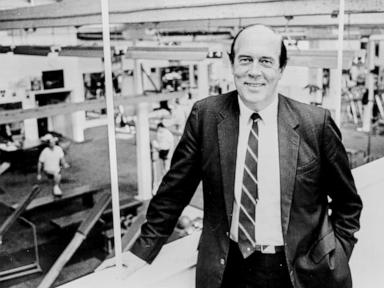
Leslie Roy Mills did not just build a gym. He built a secular church dedicated to the human body. When he passed away at the age of 91, the world lost more than an Olympian or a former mayor. It lost the architect of modern communal movement. To understand how a kid from a working-class New Zealand neighborhood changed the way millions of people move their bodies every single day, you have to look past the global franchise, past the flashing lights of choreographed group fitness classes, and look at the dirt.
The Weight of the World
Before he was a brand, Les Mills was a boy who found his identity in the trajectory of a heavy metal sphere.
Imagine the sheer physical isolation of being a shot-putter and discus thrower in the 1950s and 60s. Sports training back then lacked science. It lacked glamour. It was a lonely, agonizing pursuit of millimeters. You stood in a circle of chalk, gripped a cold iron ball against your neck, and exploded upward. You did this thousands of times. Alone.
Mills excelled at this solitary torment. He represented New Zealand at four Olympic Games, spanning from Melbourne in 1956 to Munich in 1972. He wore the silver fern on his chest with a fierce, quiet pride, even carrying the national flag at the 1971 Commonwealth Games. He knew exactly what it felt like to push a human frame to the absolute brink of failure.
But elite sports can be an isolating existence. The athlete lives inside their own head, analyzing the micro-angles of a hip turn or the release velocity of a discus. It is a world of metrics, pain, and self-absorption.
When Mills returned from the international stage, he brought back something more valuable than medals. He brought back an realization. The grueling, solitary joy of physical excellence should not be reserved for the genetically elite. The average person deserved to feel the intoxicating rush of physical strength.
He looked around his hometown and saw a society on the brink of becoming sedentary. Cars were becoming ubiquitous. Desk jobs were replacing manual labor. The human body, designed over millennia to run, lift, and throw, was beginning to rust.
So, he opened a door.
The Garage on Victoria Street
The first Les Mills gym was not a sanctuary of glass and steel. It was raw. It featured basic weight benches, a few sets of cast-iron dumbbells, and a culture built entirely on the personality of its founder.
In those early days, the concept of a "health club" was alien to most people. Gyms were the domain of eccentric bodybuilders or gritty prizefighters. Normal people, especially women, did not go to them. Mills wanted to dismantle that barrier. He believed that lifting weights was not an act of vanity; it was an act of life reclamation.
Consider the courage it took for a housewife in 1970 to step into that environment. The air was thick with masculinity. But there was Les, with his Olympian stature and a smile that could disarm a skeptic, welcoming them in. He began to introduce circuit training, moving people from one station to the next, turning a solitary act into a collective experience.
This was the spark.
People did not just come for the equipment; they came for each other. They came to be part of a tribe that valued effort over perfection. Mills watched as the shared suffering of a hard workout transformed strangers into friends. The isolation of modern life dissolved, if only for an hour, in the heat of collective exertion.
His son, Phillip Mills, watched this transformation happen from the sidelines. While Les provided the athletic credibility and the foundational brick-and-mortar energy, the younger Mills saw a way to scale this human connection. The son realized that if you added a heavy, driving beat to the movement, people forgot their fatigue. They became part of a single, breathing organism.
That insight eventually birthed BodyPump and a dozen other synchronized fitness programs that expanded across the globe. But every single one of those packed, music-blasting classes in London, New York, or Tokyo traces its lineage directly back to the sweat-stained floorboards of Auckland, where an old Olympian decided that exercise should be a shared human ritual.
Beyond the Iron
To view Les Mills solely through the lens of fitness is to miss the true scale of the man. He was possessed by a restless civic energy. He understood that a community needs more than strong muscles; it needs a functioning soul.
In 1990, he took his formidable drive into the arena of local politics, serving as the Mayor of Auckland for eight years.
Political commentators often wonder how a gym owner managed to navigate the notoriously fractured world of municipal governance. The answer lies in the circle. A shot-putter knows that success requires absolute focus, a stable base, and a precise execution of power. Mills ran the city with the same disciplined, no-nonsense approach he applied to his training. He wanted Auckland to be active, vibrant, and forward-looking.
He was not a politician who hid behind jargon. He spoke plainly. He walked the streets. He remained, until his final days, remarkably accessible.
Even as his name became a corporate trademark stamped onto gym walls across dozens of countries, he could still be found in the Auckland club, working out alongside twenty-something fitness fanatics. He did not retreat to a boardroom. He stayed where the people were.
The Final Metaphor
There is a profound loneliness that often accompanies great age. As the years pass, your contemporaries vanish, the world changes its language, and the body that once defined you begins to lose its grip.
Yet, those who saw Mills in his eighties and nineties describe a man who refused to surrender to the slow decline. He remained upright. He remained engaged. His mind stayed as sharp as the edge of a discus.
When he died at 91, it was not a tragedy; it was the completion of a massive, well-executed lift. He had pushed the weight as far as it could possibly go.
The true monument to Les Mills is not a statue or a corporate annual report. It is found at 6:00 AM in thousands of darkened rooms across the earth. It is the moment the lights come up, the bass drops, and a group of strangers lift a loaded barbell into the air at the exact same time. They do not know the history of the man whose name is printed on their weights. They do not know about the rainy nights in Auckland or the Olympic circles of the 1950s.
They do not need to.
They are living his thesis. They are proving, with every heartbeat and every drop of sweat, that we are infinitely stronger when we move together.