The rain in The Hague does not fall; it mists, a cold, persistent damp that sticks to the wool of your coat and blurs the edges of the brick buildings. It is a quiet city. It smells of wet pavement, old stone, and the faint, salty breath of the North Sea just a few kilometers away. For decades, this Dutch landscape has served as the world’s designated stage for the closing acts of human tragedies. It is where history brings its monsters when it is finally done with them.
Come November, the crisp autumn air inside the International Criminal Court will carry a different kind of weight.
For years, the names spoken in these corridors belonged to the battlefields of the Balkans or the dusty plains of East Africa. But the upcoming trial of former Philippine President Rodrigo Duterte shifts the coordinates of global justice squarely to the neon-lit, blood-slicked streets of Manila.
To understand what is at stake when the gavel falls in November, you have to leave the sterile, bulletproof glass of the courtroom behind. You have to travel back to 2016, to the suffocating heat of a tropical midnight, where the air smells of exhaust, open sewers, and copper.
The Anatomy of a Midnight Knock
Imagine a composite face. Let us call him Arturo. He is not a statistic, though his life would eventually be reduced to a number in a human rights report. Arturo lived in Tondo, one of Manila’s most densely populated districts, where families live stacked in corrugated iron shacks above black, stagnant water. He made a living driving a tricycle, his back aching from twelve-hour shifts in the suffocating humidity.
Arturo smoked a little methamphetamine—locally called shabu—to stay awake on those long night shifts. It was a common vice among the city's underclass, a cheap chemical engine to keep the poverty at bay for a few more hours.
Then came the announcement. A new president had taken the oath of office, promising a harvest of blood.
"Hitler massacred three million Jews," the new leader said, his voice a gravelly monotone that transfixed a frustrated nation. "Now, there is three million drug addicts. I’d be happy to slaughter them."
The words were not metaphorical. They were a green light.
One night, Arturo is sitting on his wooden bench. The electricity has cut out, a frequent occurrence in the slums. The only illumination comes from the flickering screen of a neighbor's television. Suddenly, the barking of the neighborhood stray dogs cuts short. Footprints crunch on gravel. Men in civilian clothes, their faces masked by motorcycle helmets or bandanas, kick open the door.
There are no badges. There are no warrants. There is only the flash of a cheap chrome pistol and the deafening roar of three close-range shots.
The next morning, Arturo’s body lies face down in a gutter. A crude cardboard sign is pinned to his back with a rusty nail: I am a pusher. Do not be like me. The police arrival is a formality. They write the same words in their ledger that they wrote ten thousand times over the next six years: Nanlaban. He fought back.
The state took his life, and then it took his dignity, framing his corpse to justify its own executioners.
The Machinery of Absolute Denial
When the International Criminal Court first began sniffing around these graves, the official response from Manila was a mix of theatrical defiance and legal gymnastics. The defense mechanism of a populist regime is a fascinating thing to watch up close. It relies entirely on rewriting the definitions of reality.
The core argument from Duterte’s camp was simple: the ICC has no jurisdiction.
In 2019, the Philippines officially withdrew from the Rome Statute, the treaty that created the court. The logic was childishly cynical—if we tear up the membership card, the rules no longer apply to us. But international law, slow and lumbering as it is, possesses a memory that cannot be wiped by executive decree. The court’s judges ruled that crimes committed while the country was a member remain firmly within their purview. The clock cannot be turned back to erase the blood already spilled.
Consider the scale of what is being examined. The official government tally admits to around 6,000 deaths during these police operations. Independent investigative journalists and human rights organizations place the number closer to 30,000.
The difference between those two numbers is not just a statistical discrepancy. It is a chasm filled with thousands of Arturos whose deaths were never registered, whose bodies were dumped in unmarked graves or classified as "deaths under investigation" to keep the official ledgers clean.
For a long time, it seemed the international community would look the away. Geopolitics usually trumps justice. The Philippines is a crucial piece on the global chessboard, a vital buffer zone in the escalating tension between Washington and Beijing. For years, Western leaders smiled, shook hands, and signed trade deals, preferring to ignore the stench of the morgues in favor of maritime alliances.
But the ICC is designed to be insulated from the immediate winds of geopolitical convenience. It moves with the terrifying, glacial momentum of an institution that knows it is the court of last resort.
The Architecture of Sovereignty
The defense will inevitably lean heavily on the concept of sovereignty. It is a grand, noble-sounding word that has shielded tyrants for centuries. The argument goes that a sovereign nation has its own courts, its own judges, and its own constitution. To allow foreign judges in silk robes to pass judgment on a domestic policy is, they claim, a form of legal colonialism.
It is a seductive argument for a public fiercely proud of its independence. But it ignores the foundational principle of the ICC: complementarity.
The international court does not step in because it wants to override local laws. It steps in only when domestic legal systems are proven to be either unable or entirely unwilling to prosecute their own.
Step inside a provincial court in the Philippines. The dockets are swollen with cases that have languished for a decade. The judges are underfunded, overworked, and acutely aware of the local power dynamics. To expect a local magistrate in a provincial outpost to sign an arrest warrant for a sitting or recently departed president who still commands the loyalty of the police force is not just unrealistic; it is a death sentence for the judge.
The system was not broken; it was functioning exactly as intended to ensure absolute impunity for those at the top. The local channels for justice were not just blocked; they were cemented shut.
The Silence of the Survivors
The true weight of the November trial does not belong to the lawyers or the diplomats. It belongs to the women left behind in the slums.
In the culture of the Philippine working class, the men are the primary providers. When you kill a young father in Tondo or Caloocan, you do not just end a life; you condemn an entire family to a slow, generational starvation.
Think of the mothers who had to scrape together pesos for a plywood coffin while neighbors avoided them on the street, terrified that the taint of the "drug addict" label might rub off on their own children. Think of the daughters who grew up watching the men who killed their fathers walk the same beat every afternoon, twirling their batons with absolute confidence.
For six years, these families lived in a state of enforced silence. To complain was to invite another midnight visit. To seek justice was to put a target on your remaining children. They buried their dead, wiped away their tears, and learned to look at the ground whenever a police cruiser passed.
The announcement of the November trial date has broken that silence, replacing it with a fragile, terrifying hope.
It is a dangerous hope. The current administration in Manila, led by Ferdinand Marcos Jr., has played a delicate double game. On one hand, they have distanced themselves from the cruder excesses of the previous regime. On the other, they are part of the same political ecosystem that allowed those excesses to happen in the first place. They will not actively assist the ICC, but they have signaled they will not stand in the way of history either.
The Long Shadow over the Velvet Bench
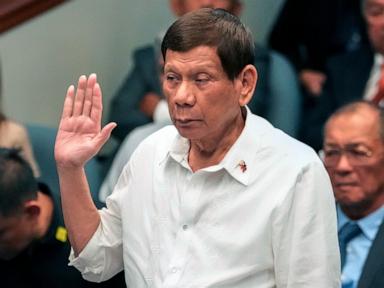
When the trial opens, Rodrigo Duterte will no longer be the terrifying figure who commanded the absolute loyalty of an entire archipelago from the Malacañang Palace. He will be an old man sitting in a climate-controlled room in Europe, forced to listen to the dry, methodical recitation of his own speeches, his own directives, and the bloody consequences of his words.
The defense will try to compartmentalize the violence. They will argue that the excesses were the work of rogue cops, bad apples operating without orders. They will present stacks of bureaucratic memos urging police to follow due process.
But the prosecution’s case relies on a concept known as command responsibility. You cannot spend years on national television telling your men you will pardon them if they kill suspects, and then claim shock when they take you at your word. A leader's words are not mere rhetoric; they are orders. When spoken from the highest office in the land, they become the law of the land, regardless of what is written in the statute books.
The trial is not just a judgment on one man. It is a referendum on a specific brand of politics that has gained ground across the globe over the last decade. It is the politics that promises safety at the expense of liberty, that offers simple, violent solutions to complex societal ills, and that classifies an entire segment of the population as subhuman to justify their elimination.
The judges in The Hague will be looking at Manila, but the rest of the world will be looking at the judges. They will be watching to see if international law is a real, living shield for the vulnerable, or merely an expensive piece of theater played out by elites in a quiet Dutch city.
Outside the courtroom, the mist will continue to fall on the cobblestones. Inside, a clerk will call the court to order. A folder will be opened. And the names of those who died in the dark, thousands of miles away, will finally be spoken into the record, loud enough for the world to hear.