The air in Edison, New Jersey, often smells like a complex blend of diesel from the nearby turnpike and the sharp, comforting scent of toasted cumin seeds. It is a place where the American Dream doesn't just speak English; it speaks Gujarati, Mandarin, Spanish, and Hindi. But recently, a simple flyer printed in the Devanagari script sent a tremor through the pavement of suburban politics, proving that while we all share the same zip code, we don't always share the same vocabulary for belonging.
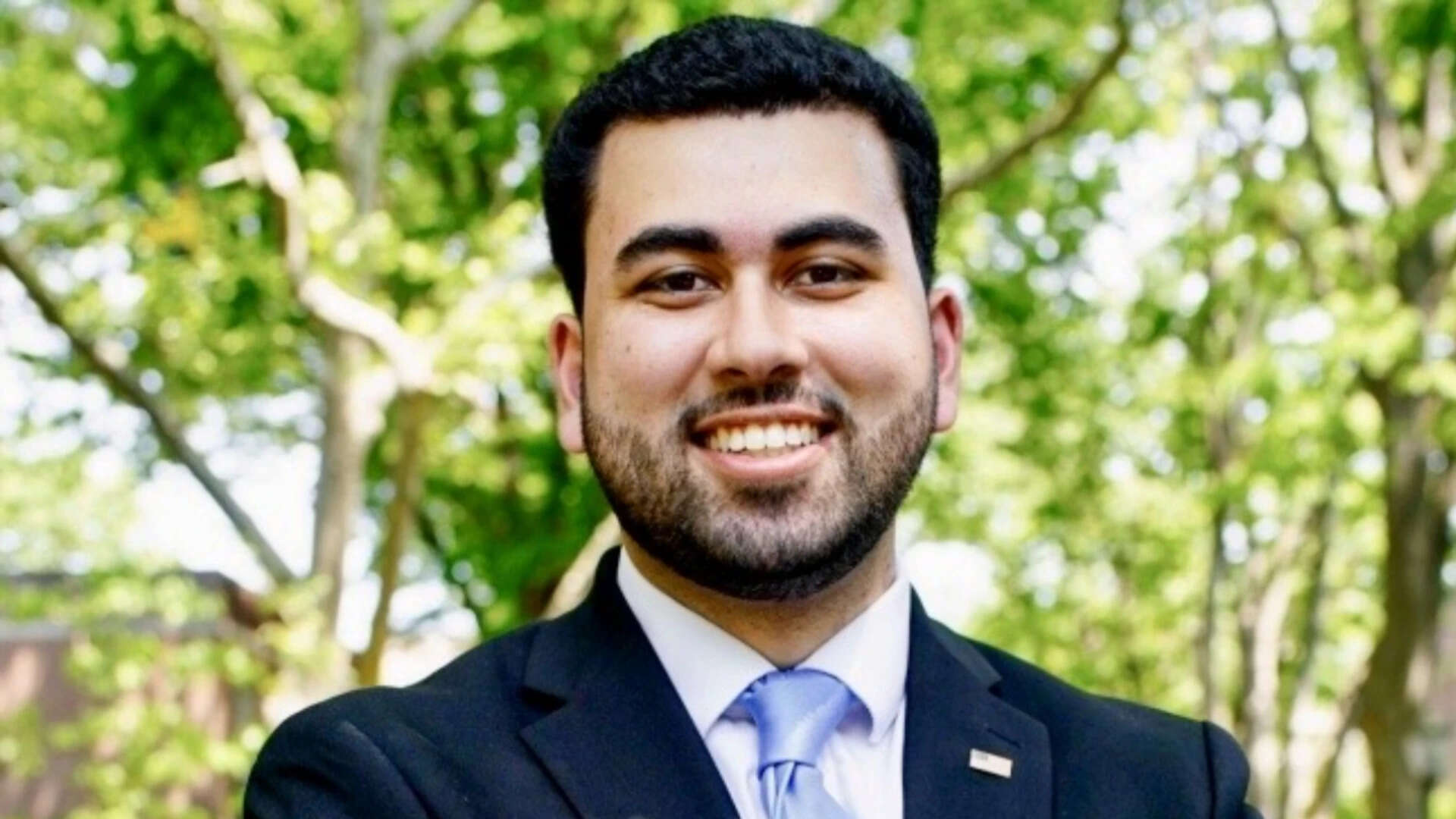
Jay Vaingakar, a candidate for the Edison Township Council, stepped into a storm he likely didn't see coming—or perhaps he saw it all too clearly. He didn't just knock on doors. He communicated in the language of the dinner tables he was trying to reach. A campaign flyer, written entirely in Hindi, began circulating among the township’s massive Indian-American population. To some, it was a gesture of profound respect and accessibility. To others, it was an act of linguistic secession.
The friction didn't take long to ignite. Critics looked at the flyer and saw a wall. Supporters looked at it and saw a bridge.
The Silence of the Second Generation
Consider a woman we’ll call Sunita. She has lived in Edison for thirty years. She paid her taxes, raised two engineers, and kept a garden that would make a botanist weep with envy. Sunita speaks English well enough to navigate a grocery store or a doctor’s appointment, but when it comes to the dense, bureaucratic jargon of municipal zoning or property tax assessments, the nuances get lost in translation. She is a citizen, but she is an unheard one.
When a candidate reaches out to Sunita in Hindi, the power dynamic shifts. Suddenly, the "system" isn't a monolith of English-only rules. It’s a conversation. Vaingakar’s choice to use Hindi wasn't just a tactical move; it was a recognition of the emotional weight of a mother tongue. For a community that makes up nearly half of Edison’s population, the flyer was a signal: I see you where you are, not where the system demands you be.
But the backlash arrived with a sharp, familiar edge. The "Not a word of English" headline wasn't just a critique of a piece of paper; it was an interrogation of identity. The argument usually goes like this: if you want to represent an American town, you must use the American tongue. It’s a binary view of loyalty. If you speak to them in their language, are you still one of "us"? Or are you building a separate "them"?
The Ghost of the Melting Pot
We have long been obsessed with the metaphor of the melting pot, an image that suggests we should all be boiled down until the individual flavors disappear into a uniform broth. It’s a tidy idea, but it’s a lie. Real communities are more like a stew, where the carrots remain carrots and the beef remains beef, and the broth is better because of the distinctness of the parts.
The controversy in New Jersey isn't actually about Hindi. It’s about the fear of the unknown. When a neighbor sees a flyer they cannot read, they feel excluded from the conversation. That feeling of exclusion is exactly what non-English speakers feel every single day of their lives. The irony is thick enough to choke on. The very people who demand "English only" to ensure they aren't left out of the loop are often the ones most comfortable leaving their non-English speaking neighbors in the dark.
Vaingakar found himself at the center of this paradox. By including a specific group, he inadvertently triggered a sense of exclusion in another. This is the tightrope of modern representation. In a town like Edison, where the diversity is the primary feature, not a bug, the "desi community" isn't just a demographic. It’s the backbone of the economy.
Beyond the Script
The legal reality is quite simple. There is no official language of the United States. Federal law, specifically the Voting Rights Act, actually mandates that certain jurisdictions provide ballots and voting materials in languages other than English if the population of a specific language group is high enough. New Jersey is no stranger to this. It is a legal acknowledgement that the right to vote is meaningless if you cannot understand what you are voting for.
However, the court of public opinion doesn't care much for the Voting Rights Act. It cares about symbols. To the vocal critics on social media and in town halls, the Hindi flyer was a symbol of "tribalism." They argued that by campaigning in a foreign language, a candidate is signaling that they only care about their "own people."
But this logic is flawed. Candidates target specific demographics all the time. They go to diners to talk to seniors about Social Security. They go to campuses to talk to students about debt. They go to construction sites to talk to unions about labor laws. Why is talking to a specific cultural group in their primary language seen as an act of division, while talking to a specific age group about their bank accounts is seen as "good retail politics"?
The stakes are invisible but massive. If we decide that reaching out to immigrants in their native tongue is a political sin, we effectively disenfranchise a massive portion of the American public. We tell them that their participation is conditional on their assimilation. We tell them that their voice only counts if it sounds like ours.
The Weight of the Word
Imagine the local post office on a Tuesday morning. A man stands at the counter, holding the Hindi flyer. His name is Jay, but not the candidate Jay. This Jay moved here from Pune in the nineties. He sees the script—the familiar curves of the vowels, the straight line of the header—and for the first time in an election cycle, he doesn't feel like a guest. He feels like a stakeholder.
Then, imagine his neighbor, a man whose family has been in Edison for four generations. He sees the same flyer in the trash or on a porch. He sees characters he doesn't recognize. He feels a pang of anxiety. He thinks, I don't know what they are saying. Are they talking about me? Are they changing my town behind my back?
Both emotions are real. Both are valid. But only one of those men is currently being served by the status quo.
The row over Jay Vaingakar’s campaigning isn't a "scandal." it’s a growing pain. It’s the sound of a democracy trying to stretch into a shape that actually fits the people living in it. We are moving away from the era where "English Only" was the price of admission. We are entering an era where the conversation is messy, polyglot, and complicated.
If a candidate wants to win, they have to communicate. If the audience speaks Hindi, the candidate speaks Hindi. That isn't a betrayal of American values; it is the ultimate expression of them. It is the relentless, exhausting, and beautiful pursuit of a more perfect union—one where no one is left staring at a ballot they cannot read, wondering if their home still recognizes their voice.
The flyer eventually stops being a piece of paper. It becomes a mirror. When we look at it, we don't just see a candidate’s platform. We see our own fears and our own hopes about what it means to be a neighbor. The controversy will fade, the election will pass, and the flyers will eventually be recycled into something else. But the question remains, vibrating in the humid Jersey air.
Do we want a community that looks the same, or a community that listens to everyone?
The answer isn't written in English or Hindi. It’s written in the way we choose to look at the person living next door.