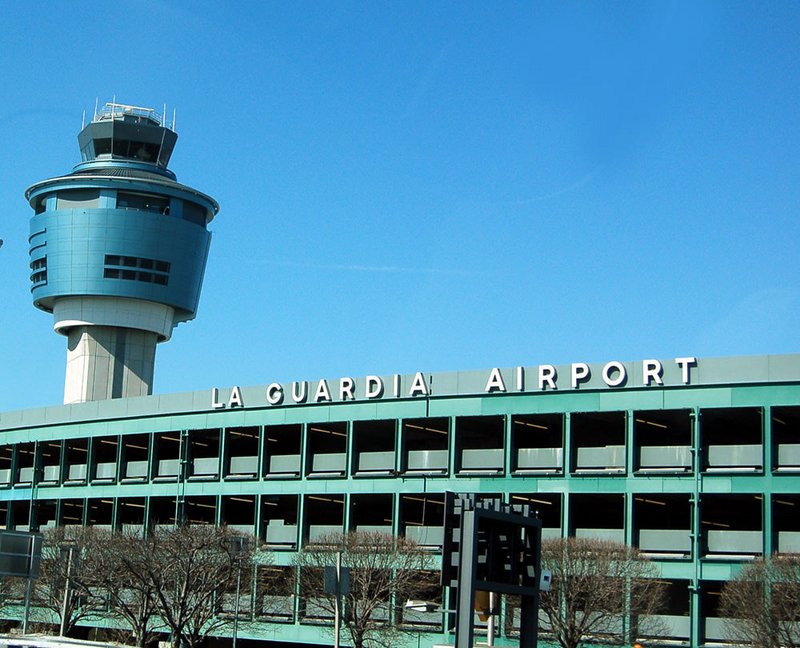
A standard New York media panic erupted when a small sinkhole opened on a taxiway at LaGuardia Airport, pausing flights and sending the Port Authority into damage control. Cable news anchors pointed to crumbling concrete, pundits screamed about underfunded American infrastructure, and stranded passengers took to social media to vent about a third-world travel experience.
They are all looking at the wrong problem.
The obsession with treating every minor pavement failure as a symptom of national decline misses the mechanical reality of aviation engineering. Dirt shifts. Water moves. Concrete, under the immense dynamic load of a 170,000-pound commercial airliner landing at 140 miles per hour, occasionally yields. The sensationalized panic over a localized taxiway depression obscures a much harsher truth about modern aviation: our real vulnerability is not the physical asphalt, but the rigid, fragile operational systems that turn a minor maintenance patch into a multi-state logistical collapse.
The Myth of the Eternal Runway
Every time a gap appears in airport pavement, the public demands to know why the engineering failed. This question betrays a fundamental ignorance of civil engineering.
Runways and taxiways are not static monuments. They are highly stressed, flexible systems designed to absorb catastrophic amounts of kinetic energy and disperse it into the underlying subgrade. LaGuardia Airport happens to sit on filled land over Flushing Bay. It is built on a geological sponge.
When you combine a high water table, tidal fluctuations, and the relentless pounding of heavy aircraft, subsurface erosion is an inevitability, not an anomaly. Water infiltrates the subbase, washes away fines, creates a void, and the top layer settles. Civil engineers call this a localized structural failure. The media calls it a crisis.
The Port Authority of New York and New Jersey spends billions on airport modernization, but no amount of money can rewrite the laws of soil mechanics. Pretending that a sinkhole represents a failure of oversight or funding is a lazy narrative for people who prefer outrage to physics. The engineering worked exactly as it should have; the defect was detected, traffic was halted, and repairs were initiated immediately. The pavement did not fail the system. The system failed the pavement.
Why Redundancy is a Corporate Illusion
The true culprit behind the cascading delays that rippled across the East Coast during the LaGuardia incident is a obsession with hyper-efficiency.
In a perfectly optimized aviation network, every single asset runs at near-maximum capacity. Airlines pack schedules into tight blocks to maximize aircraft utilization and boost quarterly margins. The Federal Aviation Administration squeezes as many arrivals and departures into an hour as humanly possible.
This works beautifully on a sunny Tuesday when every component functions flawlessly. But when you eliminate all slack from a system to chase peak profitability, you eliminate resilience.
Consider how major hubs handle a single runway closure:
| Airport Component | Peak Operation Mode | Reaction to Minor Failure |
|---|---|---|
| Runway/Taxiway Net | 98% Capacity Utilization | Instantaneous bottlenecking of inbound flights |
| Airline Turn Times | 35-45 Minutes | Crew timeouts and rolling cancellations |
| Ground Support | Minimal staffing for lean operations | Inability to re-route baggage and planes efficiently |
When LaGuardia lost a segment of its taxiway, the airport did not have the operational buffer to absorb the diversion of traffic. Because airlines operate with razor-thin margins of time, a two-hour repair window causes a twelve-hour backup. Planes cannot land, which means they cannot take off for their next leg, which means flight crews hit their federally mandated duty limits in entirely different cities.
I have watched airlines blow millions of dollars in vouchers and hotel rooms during these disruptions, all while blaming "infrastructure failure." It is a convenient scapegoat. If they admitted that their own hyper-optimized scheduling models made them helpless against a standard piece of cracked concrete, passengers might start demanding realistic flight timetables instead of cheaper tickets.
The Flawed Premise of Airport Performance
People frequently ask: "Why can't American airports fix these issues without shutting down the entire facility?"
The premise of the question is deeply flawed. It assumes that an airport can maintain full operational velocity while conducting heavy civil engineering work in an active movement area. It trades safety for convenience.
Aviation safety is built on absolute predictability. The moment a piece of pavement compromises the integrity of a taxiway, the risk calculation shifts. Foreign Object Debris (FOD) sucked into a jet engine can cause an uncontained failure. A tire catching the edge of a shifting concrete slab can rupture a landing gear assembly.
The Port Authority did not shut down traffic because they were incompetent; they shut it down because their risk tolerance is, correctly, zero. The real failure lies in the complete lack of secondary routing capability within the regional airspace architecture. New York's airspace is a crowded, tangled web where JFK, Newark, and LaGuardia constantly compete for the same arrival corridors. A hiccup at one immediately chokes the others. We do not need thicker concrete at LaGuardia; we need an entirely restructured approach to regional air traffic management that stops treating these three massive hubs as independent entities.
The Cost of the Wrong Fix
The conventional solution proposed by politicians after these incidents is always the same: throw more money at pavement procurement.
This approach is actively harmful because it misallocates capital. If we spend hundreds of millions trying to build an indestructible, impervious runway surface on top of a swamp, we are wasting resources that should be spent on digital infrastructure, automated air traffic control upgrades, and high-speed rail alternatives that take the pressure off short-haul regional flights.
A significant portion of LaGuardia’s traffic consists of short-range flights to destinations like Boston and Washington, D.C. These flights clog the runways, stress the pavement, and maximize the operational chaos when something goes wrong. If the Northeast Corridor possessed a genuinely competitive, high-speed rail alternative, a taxiway closure at LaGuardia would be a minor local inconvenience, not a national news story.
Instead, we pour money into pouring concrete, pretending that if we just make the asphalt thick enough, the tides of Flushing Bay will stop moving.
Stop looking at the hole in the ground. Start looking at the structural fragility of the schedule. The next time your flight is delayed for an infrastructure issue, understand that the pavement is just the trigger. The bullet was loaded by the airline's scheduling department months ago.