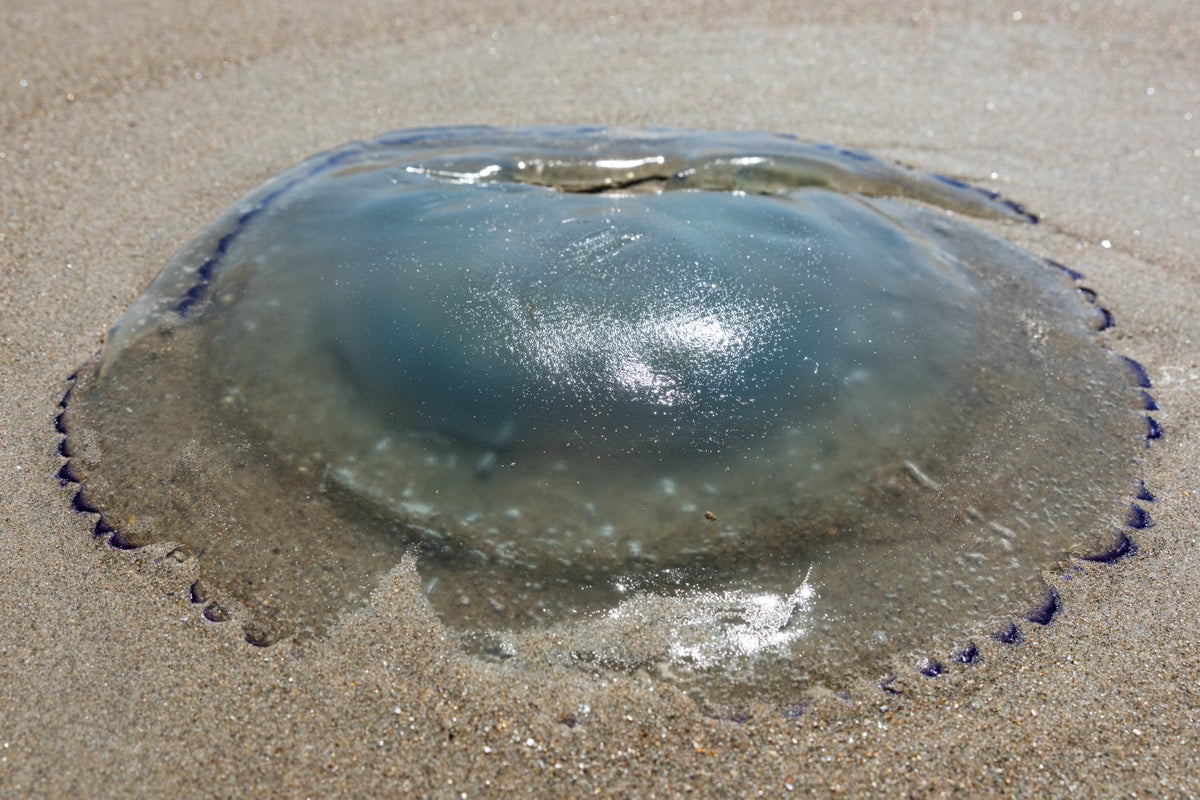
Coastal nuclear power plants operate under a constant thermodynamic constraint: they require an immense, uninterrupted volume of cooling water to maintain safe operating margins. When marine biomass blooms intersect with structural intake designs, the resulting mass-entrainment events expose a critical vulnerability in thermal plant architecture. A sudden influx of scyphozoan jellyfish acts not merely as biological debris, but as a dense, viscous plug that fundamentally alters fluid dynamics across intake screens, diminishes vacuum pressure in condensers, and triggers automated reactor trips. Understanding why these biological phenomena routinely bypass baseline screening protocols requires analyzing the fluid mechanics of intake structures, the physiology of gelatinous aggregations, and the operational limits of nuclear safety logic.
The Fluid Dynamics of Biomass Entrainment
Nuclear reactors situated on coastal or estuarine sites rely on once-through cooling systems. These systems pull millions of gallons of seawater per minute through subterranean or offshore tunnels to absorb waste heat from the condenser circuit before discharging it back to the source body at an elevated temperature.
Water velocity at the mouth of an intake structure is carefully managed to prevent excessive marine life entrapment, typically maintained below specific feet-per-second thresholds to allow mobile fish species to escape the suction zone. However, jellyfish possess negligible swimming capabilities relative to current velocity vectors. They are passive drifters. When a high-density aggregation, colloquially termed a bloom or swarm, drifts into the capture zone of an intake velocity cap, the individual organisms lose structural integrity under shear stress.
As millions of medusae enter the intake velocity field, they compress against traveling water screens. These mechanical barriers, typically comprising rotating mesh panels designed to catch particulate matter and macro-debris, face an immediate hydraulic challenge. Unlike rigid debris such as timber or plastic, jellyfish are composed of up to ninety-five percent water and possess a high internal tensile elasticity. When pressed against a mesh screen under high differential pressure, they deform, extrude through openings, and form an impermeable, gelatinous cake.
This surface matting immediately restricts the cross-sectional area available for fluid flow. The reduction in effective flow area creates a severe pressure drop across the screen face. To maintain cooling water delivery, pumps must work against rising dynamic resistance, driving cavitation risks and vibrational stress through the intake pumps. If differential pressure across the traveling screens exceeds structural design limits, operators face a stark operational choice: manually derate the reactor to reduce thermal load requirements or allow automated safety systems to initiate a reactor trip.
Systemic Failure Points Across the Cooling Infrastructure
The cascade from an open-water bloom to a total plant shutdown involves multiple distinct engineering failure points. Each stage of the cooling water path introduces specific vulnerabilities when exposed to high-volume biomass ingestion.
The Offshore Velocity Cap and Tunnel Inflow
Most coastal facilities utilize offshore intake structures featuring velocity caps that redirect flow horizontally to minimize the entrainment of bottom-dwelling organisms and surface-level debris. While effective against uniform particulate loads, these caps exert a continuous suction radius. When a dense swarm occupies the water column from surface to seabed, the directional redirection fails to protect the system. The sheer volume of biomass overwhelms the volumetric carrying capacity of the intake tunnel, creating a subsurface bottleneck.
Traveling Screens and Mechanical Clearing Limitations
The primary defense mechanism is the traveling water screen system, backed by high-pressure spray washes designed to blast debris off the mesh and into a collection trough. Under normal operating conditions, these systems handle variable seaweed and fish loads with ease.
Scyphozoan swarms invalidate standard clearing assumptions in two ways:
- Massive Volume Overload: The arrival rate of biomass vastly exceeds the mechanical clearance rate of the rotating screens. The debris troughs fill instantly, causing overflow back into the clean-water side of the intake channel.
- Tissue Fragmentation: High-pressure spray washes often pulverize the soft bodies of the jellyfish rather than lifting them cleanly off the mesh. These suspended gelatinous fragments pass through the primary screens and migrate downstream into the condenser water boxes.
Condenser Tube Blockage and Thermal Efficiency Loss
Fragments that bypass the traveling screens travel directly into the main condensers, where thousands of thin-walled titanium or stainless-steel tubes facilitate heat transfer from the steam cycle to the cooling water. Jellyfish fragments adhere to the tube sheets, occluding individual tubes.
This partial or complete blockage disrupts turbulent flow within the tubes, drastically reducing heat transfer efficiency. The immediate operational symptom is a loss of condenser vacuum, which compromises turbine efficiency. Left unchecked, rising condenser backpressure triggers automatic turbine trips to prevent mechanical stress and overspeed conditions, which instantly forces a reactor scram.
Regulatory Mandates and Safety Interlocks
Nuclear safety architecture operates on the principle of defense-in-depth, where multiple redundant systems prevent core damage. Cooling water availability is classified as a safety-related function, particularly for ultimate heat sinks required to remove decay heat after a shutdown.
When intake pressure differentials spike or cooling water flow drops below specified technical specification limits, control room operators do not rely on discretion alone. Automated protection logic initiates rapid power reductions or full reactor scrams to align the plant with reduced cooling capabilities. A reactor operating at full thermal power requires maximum cooling water flow; a stripped-down cooling capacity cannot safely dissipate that heat load without violating core thermal limits. Consequently, the safety system prioritizes reactivity shutdown over continuous power generation, converting a biological nuisance into an immediate grid supply disruption.
Environmental Drivers of Swarm Density
The proliferation of jellyfish blooms near coastal industrial sites is rarely random. Industrial cooling facilities alter local littoral ecologies through thermal discharge plumes and habitat modification, while broader macro-environmental shifts accelerate the frequency of high-density aggregation events.
Coastal power plants discharge warmed water back into the environment, creating localized thermal anomalies. Certain thermophilic or resilient jellyfish species are attracted to these stable thermal gradients, accelerating reproductive cycles within the immediate vicinity of the plant.
Furthermore, overfishing of apex predators that compete with jellyfish for planktonic prey, combined with nutrient runoff causing localized eutrophication and oxygen depletion, creates optimal survival conditions for gelatinous zooplankton. These ecological dynamics transform coastal waters into high-density breeding grounds, increasing the statistical probability that an intake structure will intersect a massive biomass front during seasonal shifts in wind and tidal currents.
Strategic Mitigations for Intake Resilience
Mitigating the risk of biological fouling requires moving beyond reactive mechanical clearing toward predictive ecological monitoring and engineered diversion. Plant operators deploy several structural countermeasures to harden intake systems against mass entrainment:
- Acoustic Deterrence Arrays: Deploying high-intensity, low-frequency sound generators near offshore intake structures to disorient or drive away pelagic species before they enter the suction zone.
- Bubble Curtains: Installing compressed air manifolds along the seabed around the intake perimeter. The rising curtain of air bubbles creates a physical and acoustic barrier that deflects neutrally buoyant organisms away from the intake velocity cap.
- Advanced Biometric Monitoring: Integrating optical and sonar-based biomass detection systems further upstream in the intake channel. Early detection allows operators to initiate proactive plant derating hours before a dense swarm reaches the traveling screens, preventing emergency trips and thermal shock.
- Fine-Mesh Fine-Tuning and Dual-Speed Screening: Upgrading from single-stage coarse screens to multi-tiered screening systems that separate macro-debris capture from fine-tissue filtration, paired with variable-speed drives that adjust screen rotation velocity dynamically based on real-time differential pressure telemetry.
Integrating these predictive layers transforms a facility's defense posture from a passive victim of pelagic variability into an actively managed fluid system capable of absorbing high-density biological loads without compromising baseline energy output.