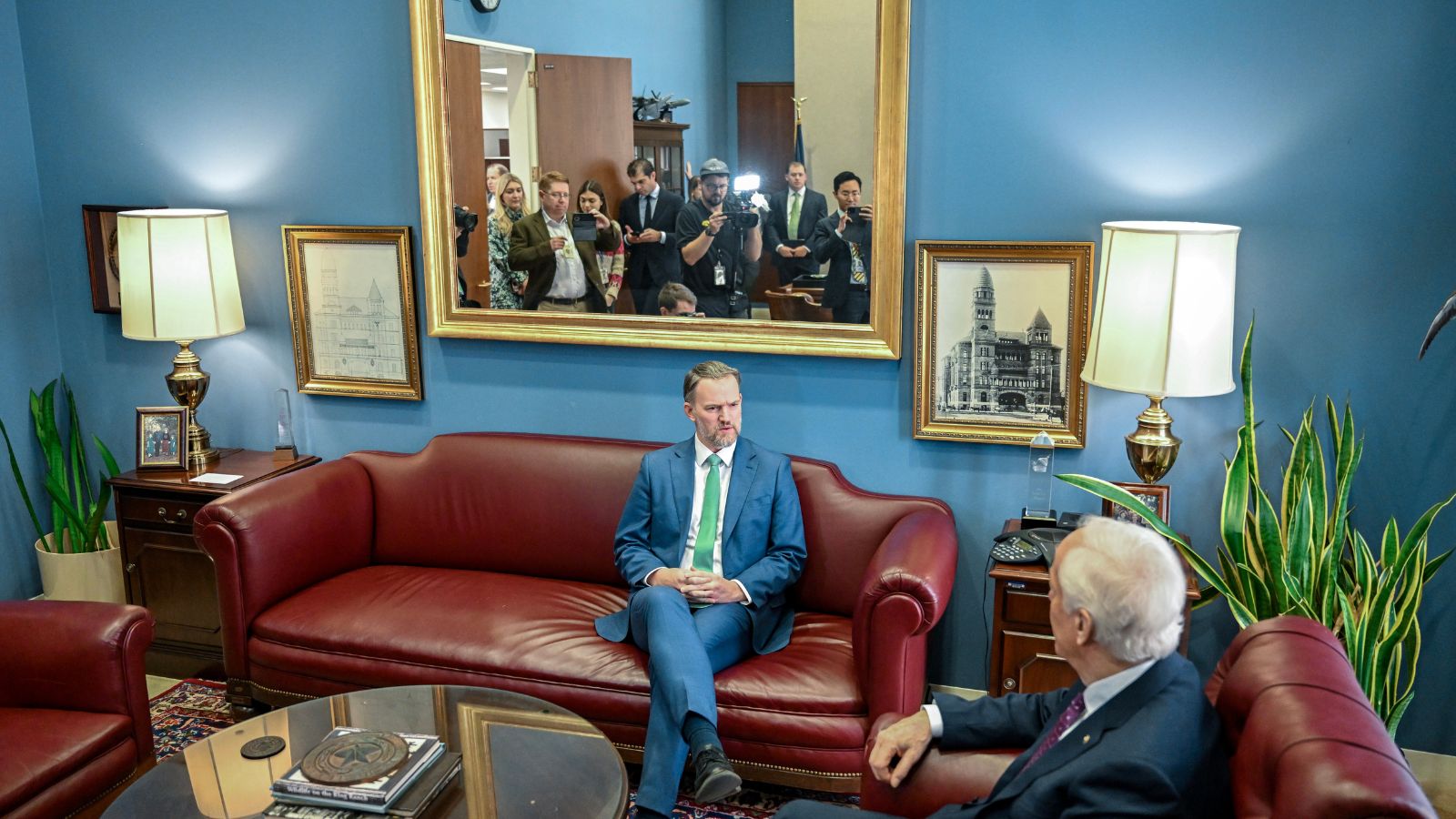
While the world watches the 47th President’s social media feed for the next tariff bombshell, the true seismic shifts in the global economy are being engineered by a man who rarely raises his voice. Jamieson Greer, the United States Trade Representative, is not a household name. He does not seek the cameras, nor does he engage in the performative bellicosity that defines modern Washington. Yet, Greer is the primary architect of a strategy that has moved from the fringes of protectionist theory to the very center of American economic statecraft.
Greer’s ascent marks the moment the "America First" trade agenda transitioned from a chaotic political impulse into a disciplined, legalistic, and permanent weapon of the state. He is the protégé of Robert Lighthizer, the veteran trade warrior of the first Trump term, but Greer has brought a distinct, surgical precision to the job that his predecessor lacked. If Lighthizer was the visionary who broke the old consensus, Greer is the engineer building the new one, brick by methodical brick.
The Quiet Shift from Chaos to Order
In the early months of 2025, the global markets were in a state of whiplash. The administration had announced sweeping "Liberation Day" tariffs on April 2, only to see the Supreme Court eventually strike down the use of the International Emergency Economic Powers Act (IEEPA) for such broad duties in February 2026. To the casual observer, it looked like a catastrophic legal defeat for the White House.
But Greer was already ten steps ahead.
While the IEEPA battle raged in the courts, Greer was quietly reviving Section 122 of the Trade Act of 1974. This obscure provision allows for a temporary 150-day import surcharge to address "fundamental international payments problems." It was the same tool Richard Nixon used in 1971 to end the gold standard. By the time the Supreme Court ruled against the administration’s previous maneuvers, Greer had the new paperwork ready. The 10% global tariff announced on February 20, 2026, wasn't an angry reaction; it was a pre-planned pivot.
The Architect's Background
Greer’s world view was forged in the wreckage of the American industrial heartland. Raised in Paradise, California—a town that would later be physically erased by wildfire—and having served as an Air Force officer, he possesses a visceral understanding of what happens when communities lose their economic foundations. His legal career at firms like Skadden and King & Spalding was spent in the trenches of trade litigation, representing American steel manufacturers against what he viewed as predatory Chinese subsidies.
This isn't academic for him. He views the global trading system not as a "rules-based order," but as a theater of war where the United States has been voluntarily disarming for forty years. His time as Lighthizer’s Chief of Staff during the first Trump administration was an apprenticeship in institutional destruction. They learned where the levers of power were hidden, and more importantly, how to pull them without breaking the machine entirely.
Asymmetric Diplomacy and the "Stick"
The Greer doctrine is defined by a ruthless asymmetry. Unlike the trade deals of the past—which focused on mutual concessions and lowering barriers—the new agreements emerging from the USTR look more like terms of surrender.
Take the 2026 Indonesia deal. In a traditional negotiation, the U.S. might have offered market access in exchange for regulatory changes. Under Greer, the deal was purely transactional: Indonesia agreed to eliminate 99% of its non-tariff barriers and accept U.S. vehicle standards. In return, they weren't given a free pass. They were simply allowed to keep their tariff rate at 19% instead of the 32% baseline Trump had threatened.
The "carrot" is no longer a reward; the carrot is the absence of a harder stick.
The Decoupling of the Dollar
Beyond the tariffs, the most radical part of the Greer-Lighthizer playbook involves the U.S. dollar itself. For decades, a strong dollar was a point of American pride and a cornerstone of global stability. To Greer, it is a self-inflicted wound that makes American exports too expensive and foreign imports too cheap.
There is a concerted effort within the administration to devalue the dollar, effectively pursuing a "managed" currency strategy that would have been unthinkable five years ago. This is where the trade war meets the currency war. By making the dollar weaker, they aim to force a rebalancing of the trade deficit, regardless of what the World Trade Organization says.
The Durability of the New Normal
Critics argue that these moves are inflationary, regressive, and destined to spark a global recession. They point to the 1930s and the Smoot-Hawley Act as a warning of what happens when the world’s largest economy turns inward.
However, Greer’s strategy is designed to be "sticky." By embedding these changes into the legal code and using executive authorities that are difficult to unwind, he is ensuring that even a future administration would find it nearly impossible to return to the status quo. He has successfully shifted the burden of proof. It is no longer up to the protectionists to prove that tariffs work; it is now up to the free-traders to prove that the old system wasn't rigged.
The global trade war is no longer a series of skirmishes. It is a siege. And while the man at the top provides the theater, it is Jamieson Greer who is managing the logistics of the blockade. The world isn't just waiting for the next tweet; it is living in a landscape redesigned by a man who prefers the shadows of the law to the spotlight of the stage. The quiet architect has built a fortress, and he has no intention of opening the gates.
Would you like me to analyze the specific impact of the Section 122 surcharge on the semiconductor supply chain?