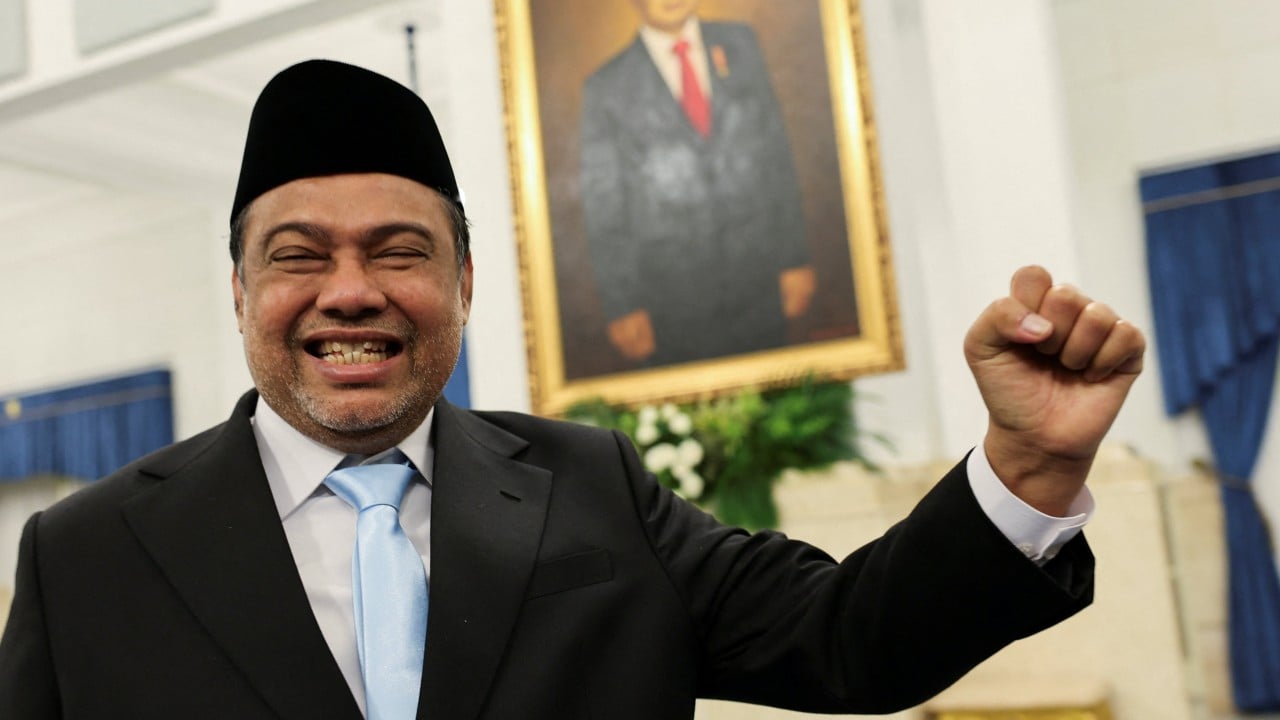
When the loudest voice against Indonesia's controversial Job Creation Law suddenly takes a seat at the government table, people notice. It turns heads. It makes grassroots activists incredibly angry.
That's exactly what happened when Said Iqbal, the fierce president of the Confederation of Indonesian Trade Unions (KSPI) and leader of the Labor Party, was sworn in as President Prabowo Subianto's special adviser for manpower and labor welfare at the Presidential Palace.
For years, Iqbal led millions of workers in massive street protests, shutting down industrial estates and demanding an end to exploitative corporate practices. Now, he's inside the palace. The move triggered immediate accusations of a sellout from parts of the labor movement. But Iqbal isn't hiding. He's actively defending the decision, arguing that shouting from the streets has hit a wall, and it's time to pull the levers of power from within.
Shifting From the Streets to the Palace
If you've followed Indonesian politics, you know the activist playbook. You organize a strike, march on Jakarta, demand a higher minimum wage, and hope the government blinks. Iqbal played that game for three decades. He's good at it. But after the Omnibus Law rammed through despite massive public backlash, the limits of that strategy became obvious.
Iqbal claims the decision to join the administration wasn't a sudden betrayal. It came after intense consultation with KSPI members and workers who are frankly exhausted by gridlock. According to Iqbal, Prabowo's administration has shown a genuine willingness to listen to the working class, farmers, and teachers—groups that often feel completely invisible to the Jakarta elite.
By taking the role of presidential adviser, Iqbal is betting that a direct line to Prabowo can achieve what years of burning tires on the streets couldn't. It's a high-stakes gamble. If he fails, his credibility is shot. If he succeeds, he rewrites the rules of Indonesian labor advocacy.
The Two Big Targets Outsourcing and Wages
Iqbal isn't planning to just sit in air-conditioned palace rooms and drink tea. Right after his inauguration, he laid out a highly specific, aggressive agenda focused on overhauling Indonesia's labor system. He knows he has to deliver concrete results fast to silence his critics.
His first target is outsourcing. Under current regulations, companies have massive leeway to hire contract workers indefinitely, stripping them of job security and benefits. Iqbal wants the upcoming manpower bill to completely abolish outsourcing. Recognizing the fierce corporate resistance this will face, he has a fallback position: restrict outsourcing to a maximum of four or five specific industries.
His second target hits the pockets of every working-class family: wages.
Said Iqbal's Legislative Roadmap:
1. Short-term: Restructure minimum wage formulas to boost immediate purchasing power.
2. Medium-term: Strip down outsourcing loopholes in the new manpower bill.
3. Long-term: Implement strict enforcement of the newly passed Domestic Workers Protection Law.
Prabowo wants an ambitious 8% economic growth rate for Indonesia. Iqbal's argument to the president is simple: you can't get there if workers are too broke to buy anything. Strengthening worker purchasing power through fair, decent wages is the engine that will drive that growth. He's leveraging Prabowo's own economic ambitions to push for wage hikes.
Fighting From Within Without Losing the Edge
The biggest fear among grassroots union members is co-optation. When activist leaders join the establishment, they usually get tamed. The radical rhetoric vanishes, replaced by sterile bureaucratic speak.
Iqbal insists that won't happen here. He openly stated that taking an official advisory role doesn't mean labor groups will stop criticizing or monitoring the government. In his view, the labor movement now has a dual-track strategy. The unions will keep pressure on the outside, while he pushes the buttons on the inside.
He points to recent policy wins as evidence that the administration can be influenced. For example, Presidential Regulation No. 27 of 2026 recently adjusted ride-hailing commission structures to favor drivers, and the long-delayed Domestic Workers Protection Law finally passed. To Iqbal, these aren't accidents; they're signs of a shifting political landscape where labor can actually win if it plays its cards right.
What This Means for Businesses and Workers
If you're running a business in Indonesia, expect the regulatory environment to tighten. With a prominent labor boss whispering directly into the president's ear, compliance on wages and contract labor is about to become a major priority. The era of exploiting Omnibus Law loopholes without consequence might be drawing to a close.
For workers, the next twelve months are critical. Watch the progress of the manpower bill closely. If Iqbal successfully limits outsourcing and secures a structured wage increase that outpaces inflation, his strategy of institutional infiltration will be vindicated. If the bill gets watered down by corporate lobbyists, it will prove his critics right: the palace didn't invite him in to give workers a voice; they invited him in to keep the streets quiet.
If you want to track how this political shift impacts your industry, your next step is clear. Monitor the upcoming draft revisions of the Manpower Law. Pay attention to the specific clauses on contract termination and minimum wage calculation formulas. That's where the real war will be fought, and now we know exactly who is sitting at the negotiating table.


