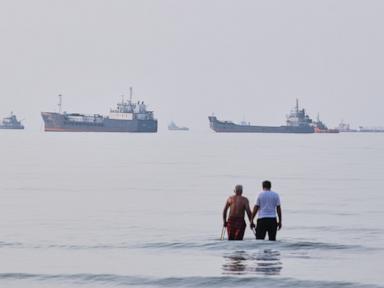
Gulf oil producers are spending tens of billions of dollars on overland pipelines to bypass the Strait of Hormuz. The strategy is fundamentally flawed. While national oil companies in Saudi Arabia, the United Arab Emirates, and Iraq race to lay thousands of miles of steel across desert sand to reach ports on the Red Sea, Gulf of Oman, and Mediterranean, these bypass routes create new strategic vulnerabilities rather than solving the old ones. Pumping crude around a naval chokepoint does not eliminate threat; it merely moves the target from open waters to fixed pumping stations and secondary maritime bottlenecks.
Geography remains unforgiving.
For decades, the Strait of Hormuz operated as the primary exit valve for Middle Eastern energy, handling upwards of twenty million barrels of crude and refined products every single day. When military escalation halted commercial tanker traffic, Gulf capitals dusted off long-shelved expansion plans to redirect those barrels overland. The underlying math, however, reveals a stark structural deficit that capital expenditure alone cannot overcome in the near term.
The Downstream Bottleneck at Yanbu
Saudi Arabia claims the centerpiece position in this infrastructure campaign through its existing East-West Pipeline. The five-hundred-mile steel artery snakes across the Arabian Peninsula, carrying crude from the Abqaiq processing hub in the east to the port of Yanbu on the Red Sea.
Riyadh has discussed pushing the line's nameplate capacity up toward nine million barrels per day. That ambition ignores a critical physical reality on the water.
Steel pipes in the ground mean nothing if you cannot load the ships at the other end.
The binding constraint for Saudi Arabia is not the internal pressure of the pipe itself, but the loading terminals sitting along the coast at Yanbu. Industry estimates place Yanbu's maximum sustainable loading capacity at approximately five million barrels per day between its main terminals. Pushing additional volume through the line simply creates a maritime traffic jam off the Red Sea coast, where supertankers wait for limited berth space. Expanding port infrastructure, building deep-water loading buoys, and constructing supporting storage farms takes years of dredging and heavy marine construction.
The Arabian Sea Trap and Fujairah
The United Arab Emirates has pursued its own overland escape hatch via the Habshan-Fujairah pipeline. The pipeline cuts through the Hajar Mountains to dump crude into Fujairah, a major bunkering port located safely outside the Persian Gulf on the Gulf of Oman.
Abu Dhabi state energy firms are fast-tracking a three-billion-dollar parallel line designed to double their bypass capability to over three million barrels daily.
Distance offers a false sense of security.
Fujairah sits barely one hundred miles south of the Strait. Pumping oil over a mountain range to a port within easy range of coastal anti-ship missiles and attack drones does not grant immunity. Storage tanks and single-point mooring buoys scattered along the Gulf of Oman present stationary, unarmored targets. A single coordinated strike on a critical pumping station can paralyze a multi-billion-dollar pipeline system just as effectively as a naval blockade stops a fleet of supertankers.
The Geopolitical Arithmetic of Asian Demand
The most persistent flaw in the bypass narrative involves trade economics and buyer geography.
Asian refiners consume the vast majority of Persian Gulf crude exports.
When Saudi Arabia redirects crude to Yanbu on the Red Sea, or when Iraq proposes pipeline corridors stretching northwest toward the Mediterranean ports of Turkey or Syria, the oil travels in the wrong direction for its primary customers. A tanker loading at Yanbu and bound for Ningbo or Tokyo must sail south through the Bab el-Mandeb Strait.
That maritime passage presents its own acute hazards.
The Bab el-Mandeb has become one of the most volatile stretches of water on earth due to persistent asymmetric threats operating along the Yemeni coastline. Shipowners forced to navigate out of the Red Sea toward Asia find themselves fleeing one blockade only to run directly into another.
If ships avoid the Red Sea entirely by heading north through the Suez Canal, they face massive canal transit fees and a crushing detour. The alternative for European-bound crude involves sending Very Large Crude Carriers all the way around the Cape of Good Hope at the southern tip of Africa. That detour adds three to four weeks of transit time, inflates bunker fuel expenses, and ties up global tanker capacity for months.
The Unresolved Gas Dilemma
Oil gets the headlines, but natural gas dictates energy security across Europe and Asia.
Roughly one-fifth of global liquefied natural gas flows out of the Persian Gulf, overwhelmingly sourced from Qatar's massive offshore fields.
Gas cannot be easily rerouted through overland crude pipelines.
Building cross-country cryogenic gas pipelines or mobile liquefaction systems outside the Gulf is economically prohibitive and technically impractical. While state-backed oil producers boast of engineering workarounds for heavy crude, Qatari LNG remains utterly locked inside the Strait of Hormuz. Power utilities in importing nations cannot substitute promised pipeline crude for missing natural gas feedstocks without triggering industrial power curtailments.
The Irony of Tehran's Own Pipeline
In an instructive twist of regional strategy, Iran recognized this structural vulnerability years ago.
Tehran spent close to two billion dollars building the Goreh-Jask pipeline, a six-hundred-mile line constructed specifically to transport Iranian crude outside the Strait to the port of Jask on the Sea of Oman.
The initiative stands as a warning to its neighbors.
Years after its high-profile announcement, technical bottlenecks, pump shortages, and sanctions have left the Goreh-Jask line operating at a fraction of its design capacity. Engineering complex steel networks across harsh desert terrain under tight deadlines routinely leads to delayed schedules and cost overruns.
Building overland bypasses creates a psychological comfort blanket for energy markets, but it does not erase geography. As long as export terminals, pumping stations, and alternative sea lanes remain exposed to disruption, the world remains tethered to the reality that true energy security cannot be built with pipelines alone.
To see a breakdown of how Saudi Arabia and the UAE are expanding these projects to bypass maritime points, watch this analysis on Saudi and UAE bypass pipelines. This video provides helpful visual context on the specific geography and pipeline infrastructure being deployed across the Arabian Peninsula.