Geopolitics is often a mask for market management. While the mainstream media shrieks about "shoot and kill" orders and imminent naval skirmishes in the Strait of Hormuz, they ignore the most obvious reality of the 21st century: nobody actually wants the oil to stop flowing. They just want the price to go up.
The standard narrative paints this as a high-stakes game of chicken between a volatile American administration and a desperate Iranian regime. It’s framed as an ideological collision course. That is a fundamental misreading of the mechanics of global power. Every missile launch, every aggressive tweet, and every naval maneuver is a carefully calibrated signal designed to inject volatility into crude markets.
We aren't watching the prelude to World War III. We are watching a high-stakes auction where the currency is fear.
The Myth of the Chokepoint
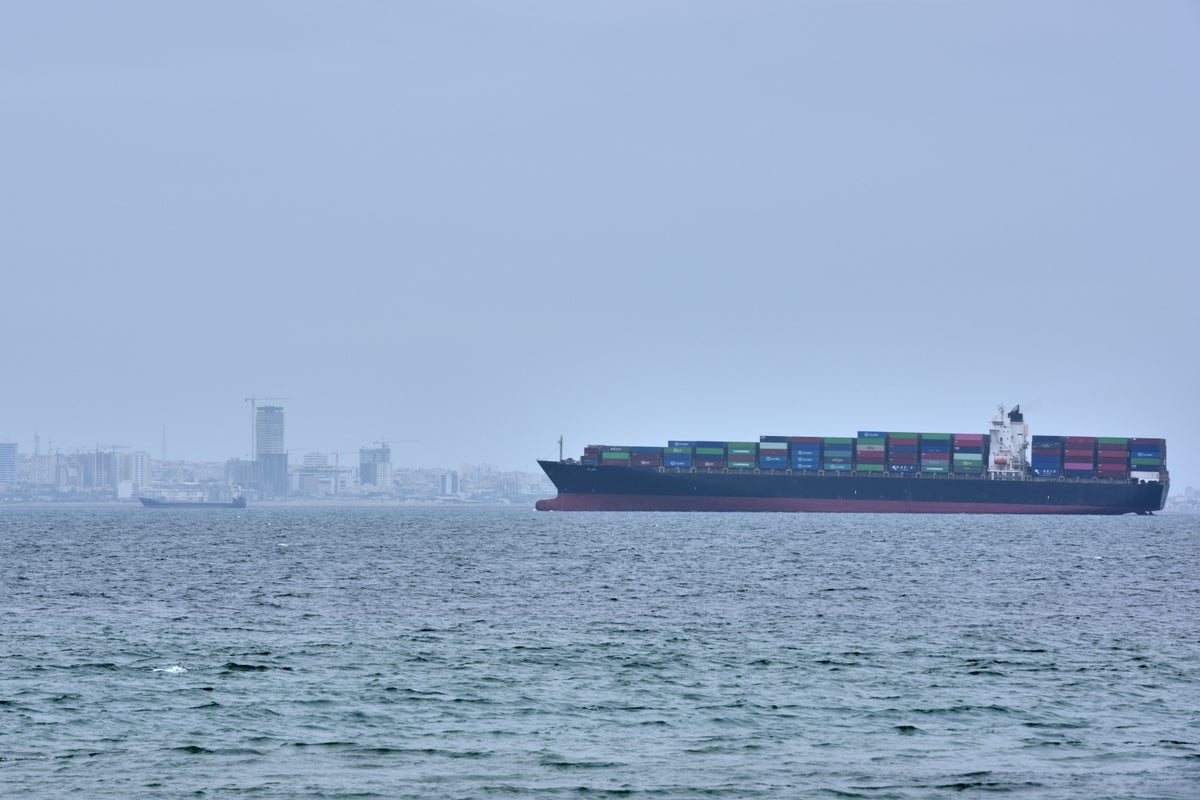
The "chokepoint" narrative is the most overused trope in energy journalism. Yes, roughly 20% of the world’s petroleum passes through that narrow stretch of water. But the idea that Iran would—or even could—permanently shut it down is a fantasy.
Closing the Strait is the geopolitical equivalent of a suicide vest. If Iran blocks the flow, they don't just starve the West; they starve themselves. Their entire economy, fragile and sanctioned as it is, relies on the ability to move barrels. More importantly, they would instantly lose their only remaining allies. China, the world's largest oil importer, has zero interest in seeing its energy costs triple because of a regional spat.
The "standoff" is the goal, not the obstacle. A standoff maintains a premium on every barrel sold globally. If the Strait were truly in danger, you wouldn't see insurance premiums rising by 10%; you would see the global economy grinding to a halt overnight. The fact that tankers are still moving, albeit with higher security, tells you exactly how much "danger" actually exists.
Trump and the Art of the Volatility Premium
The media treats the "shoot and kill" rhetoric as a dangerous escalation. In reality, it’s a price floor.
I’ve watched commodities traders for two decades. They don't trade on facts; they trade on the delta between expectation and reality. By issuing aggressive directives, the U.S. creates a permanent state of "what if." This uncertainty serves domestic interests that are rarely discussed in the context of Middle Eastern peace.
Consider the American shale industry. For the Permian Basin to remain profitable, oil needs to stay above a certain price point. High-tension rhetoric in the Middle East provides a convenient buffer. Every time a drone is downed or a threat is issued, the value of domestic American production ticks upward.
This isn't about protecting "freedom of navigation." It’s about protecting the balance sheet of the global energy sector.
The Hidden Symmetry of Agression
What the "lazy consensus" misses is the mutual benefit of this friction. Tehran needs a villain to distract from internal dissent. Washington needs a bogeyman to justify massive defense outlays and maintain its grip on regional security architecture.
If the Strait were actually cleared of all tension, the "security dividend" would vanish.
- Defense contractors would lose their most effective sales pitch.
- Oil prices would likely crater in a world of oversupply.
- The political leverage of being a "protector" of the sea lanes would evaporate.
We are witnessing a symbiotic performance. Both sides are reading from a script that requires the other to play the aggressor. The "shoot and kill" order isn't a directive to start a war; it’s a directive to keep the tension high enough to be profitable, but low enough to avoid a total systemic collapse.
The Intelligence Gap
People often ask: "Won't a mistake lead to a real war?"
This question assumes that the people on the ground are operating in a vacuum. In reality, the back-channels between Washington, Tehran, and Riyadh are more active during a "crisis" than at any other time. There is a sophisticated language of escalation that outsiders rarely understand.
A "warning shot" is an email. A "seized tanker" is a diplomatic memo. These actions are calculated to the millimeter. The goal is to move the needle on a Bloomberg terminal, not to sink a carrier strike group.
The risk isn't "accidental war." The risk is that the public eventually realizes the theater is costing them at the pump while the major players reap the rewards of the chaos.
Follow the Insurance, Not the Tweets
If you want to know if we are actually going to war, stop reading the headlines and start looking at the Lloyd’s of London "War Risk" ratings.
Insurance markets are the most cold-blooded entities on the planet. They don't care about "shoot and kill" orders unless those orders result in a statistically significant increase in hull losses. Currently, the markets are pricing in "nuisance" levels of risk. They are charging more because they can, not because they expect to pay out for a sunken fleet.
When the insurers stop writing policies for the Gulf, then you can panic. Until then, you are just watching a commercial for the military-industrial complex.
The Strategy of Forced Inefficiency
Modern geopolitics has moved beyond the era of total conquest. We are now in the era of forced inefficiency. By making the Strait of Hormuz a "dangerous" zone, the U.S. forces every other nation to pay a tax for global trade.
This tax manifests as:
- Increased shipping costs.
- Higher crude prices.
- Expanded naval budgets.
This is a brilliant, if cynical, way to maintain hegemony. You don't need to own the oil if you can control the cost of moving it. The "standoff" is the mechanism of that control. It is a dial that can be turned up or down depending on the economic needs of the moment.
The Wrong Question
The mainstream media asks: "Will there be war in the Strait?"
The correct question is: "Who profits if the tension never ends?"
The answer is everyone except the consumer. The oil majors profit. The arms manufacturers profit. The regimes on both sides of the water profit from the consolidation of power that "external threats" provide.
Stop waiting for a resolution. The standoff is the product. The tension is the intended outcome.
The most dangerous thing that could happen to the global energy market right now isn't a war—it's a lasting peace that makes the Strait of Hormuz boring again. Boring doesn't pay the bills. Boring doesn't justify a trillion-dollar navy. Boring doesn't keep the price of West Texas Intermediate where the banks need it to be.
The "shoot and kill" order is just the latest marketing slogan for an industry that thrives on the specter of a disaster it has no intention of actually triggering.
Bet on the theater. It's the only thing in the Middle East that never closes.