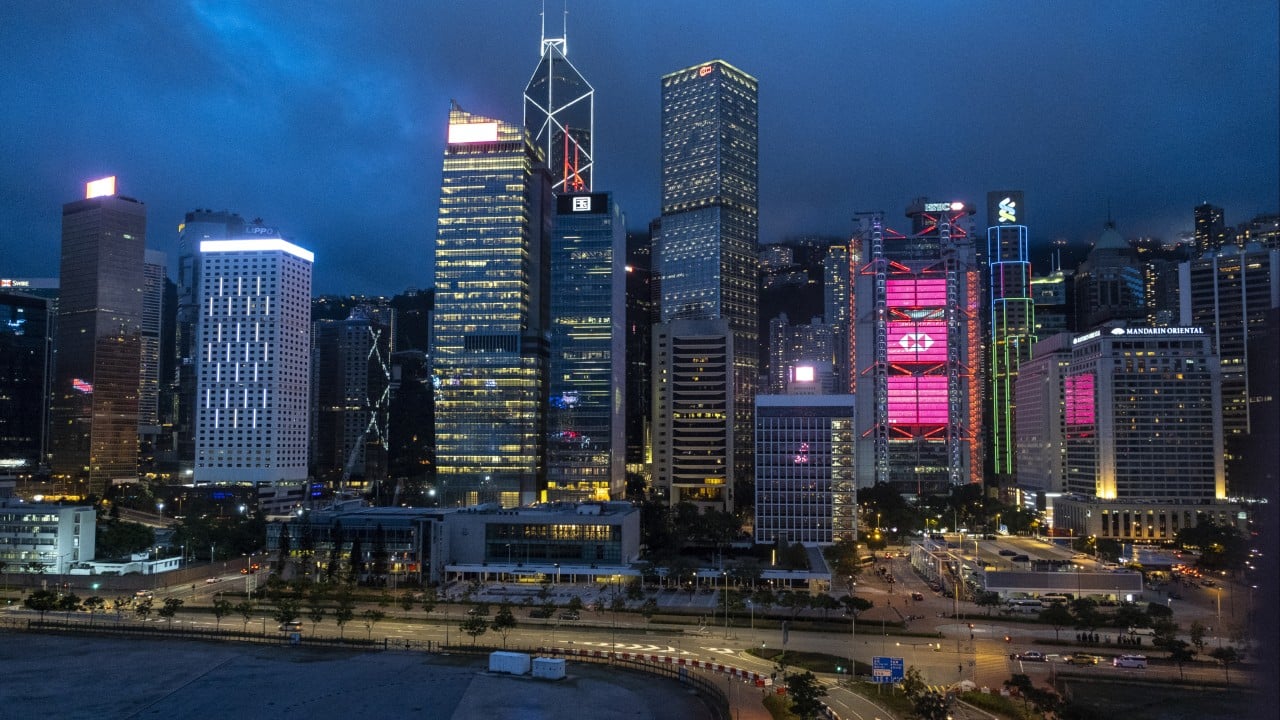
On April 10, 2026, the Hong Kong Monetary Authority (HKMA) effectively closed the door on the wild west of digital finance. By awarding the first official stablecoin licenses to HSBC and a Standard Chartered-led joint venture, the city-state signaled that its "conservative" rollout was actually a calculated takeover by the old guard.
Out of 36 formal applications, only two survived the first cut. That is a 5.6% approval rate. This is not a slow start; it is a filter designed to ensure that the future of programmable money in Asia looks exactly like the past, just with better code.
For years, the crypto industry viewed stablecoins as the ultimate disintermediation tool. They were meant to bypass the friction, fees, and gatekeeping of the traditional banking system. Hong Kong has flipped that script. By mandating a HK$25 million paid-up capital floor and requiring reserve assets to be held in local custody, the HKMA has built a regulatory fortress that only the largest financial institutions can comfortably occupy.
The Bank as a Gatekeeper
The selection of HSBC and Standard Chartered is no accident. It is deliberate sequencing. While the crypto world obsessed over "decentralization," the HKMA focused on "supervisory familiarity."
HSBC’s entry, FRS02 on the new register, is particularly telling. The bank plans to bake its HKD-denominated stablecoin directly into PayMe, an app already used by 3.3 million people. This is not about building a new ecosystem. It is about upgrading a captive audience. When your stablecoin is locked inside a proprietary retail app, the "permissionless" promise of blockchain disappears. You are not holding a universal digital asset; you are holding a high-tech version of bank credit.
Standard Chartered’s venture, FRS01, targets the institutional plumbing. They are chasing the B2B2C market—supply chain finance and cross-border settlement. By positioning themselves as the regulated alternative to the US dollar’s dominance, they are betting that corporate treasurers will value local compliance over global liquidity.
The Cost of Compliance
The barriers to entry are high. Extremely high. Under the Stablecoins Ordinance that took effect in August 2025, an issuer must maintain 100% backing in high-quality liquid assets. These assets must be segregated from the issuer's own balance sheet and protected against all other creditors.
For a nimble fintech startup, these requirements are a death sentence. The operational overhead alone—daily reporting, constant audits, and the mandate to process redemptions within one business day—demands a massive back-office infrastructure.
- Paid-up Capital: HK$25 million minimum.
- Liquidity: Enough to cover 12 months of operating expenses.
- Currency Matching: Reserves must match the stablecoin’s denomination.
This last point is the real kicker. If you issue a Hong Kong Dollar (HKD) stablecoin, your reserves must be in HKD. In a world where the US dollar remains the undisputed king of crypto liquidity, an HKD-only mandate creates a friction point. It forces users to care about foreign exchange risks they previously ignored when using Tether (USDT) or Circle (USDC).
Why the Global Giants are Hesitating
The conspicuous absence of names like Tether and Circle from the first round of licensing exposes a fundamental rift. Global issuers operate on a model of offshore flexibility. They move fast and keep their reserves where the yields or the laws are most favorable.
Hong Kong’s "holding out" clause makes this strategy impossible. If you target Hong Kong residents, you fall under HKMA jurisdiction, regardless of where your servers sit. The penalty for operating without a license is a HK$5 million fine and up to seven years in prison.
For the big players, the math doesn't yet add up. Why submit to the HKMA’s invasive oversight for a market of 7.5 million people when you already dominate the global trade? By demanding local incorporation and local custody, Hong Kong is asking global giants to chop up their liquidity pools into small, regulated islands. Most are choosing to stay on the mainland of the global market for now.
The Myth of Innovation
We are told this framework will "foster" innovation. That is a sanitized way of saying it will professionalize the sector. Real innovation in the stablecoin space usually happens at the edge—algorithmic experiments, decentralized collateral, or novel yield-bearing structures.
The HKMA has explicitly banned these. Algorithmic stablecoins and crypto-collateralized assets like DAI are out of scope. They are, for all intents and purposes, illegal for retail offer in Hong Kong. What is left is a "safe" version of a technology whose primary value proposition was its lack of safety-nets and its raw, programmable utility.
The sandbox phase, which preceded this rollout, was less of a playground and more of a vetting room. Participants like JD Coinlink and RD InnoTech (led by former HKMA chief Norman Chan) spent months proving they could act like banks. The result is a market that looks less like a tech disruption and more like a franchise system.
The Pivot to Tokenized Reality
The real endgame here isn't peer-to-peer payments. It is the tokenization of everything else. Stablecoins are the "settlement leg" for Real World Assets (RWA). If you want to trade tokenized real estate, gold, or government bonds on a blockchain, you need a stable, regulated medium of exchange to close the trade.
By controlling the stablecoin, the HKMA controls the liquidity of the entire tokenized economy. If you want to participate in Hong Kong’s digital future, you must use their rails, their banks, and their rules.
This conservative rollout reveals a city that is no longer interested in being a neutral hub for the global crypto movement. Instead, it is building a walled garden. It is a sophisticated, highly secure, and incredibly efficient garden, but the walls are high and the gatekeepers wear suits.
The stablecoin has been successfully domesticated. It is no longer a threat to the financial system; it is now a feature of it. For those who believed blockchain would democratize finance, the message from Hong Kong is clear: the house always wins, especially when the house owns the ledger.
The next phase of this experiment will not be a surge of new startups. It will be the gradual migration of existing bank balances into these "stable" digital shells. Users will gain the speed of a blockchain with the security of a tier-one bank, but they will lose the last vestiges of financial anonymity and the freedom to move capital outside the watchful eye of the regulator. The trap is set, and it is paved with gold-standard compliance.