Western supply chains are fracturing, global interest rates are volatile, and trade restrictions keep stacking up. If you look at the headlines, Hong Kong is caught right in the middle of a messy geopolitical tug-of-war.
But behind the scenes, a completely different economic play is unfolding. The city is shifting its focus away from traditional Western markets to anchor itself between two massive economic regions: Southeast Asia and Southern China.
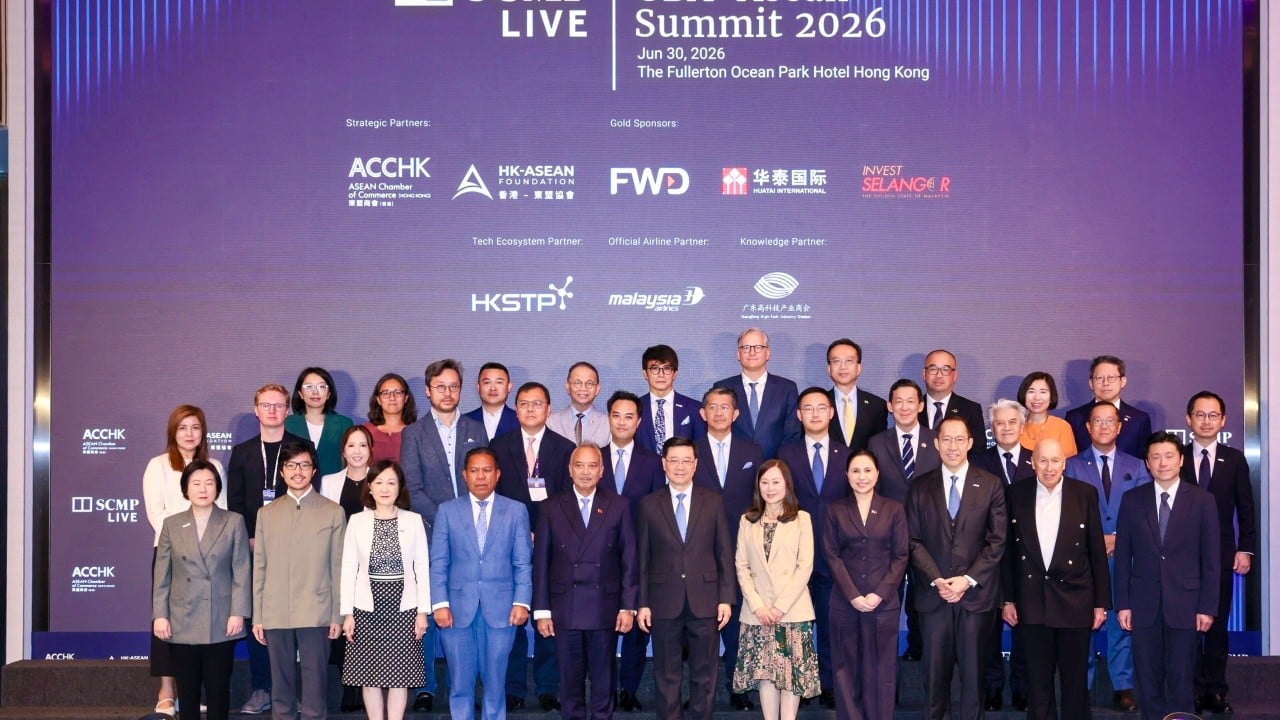
At the South China Morning Post Greater Bay Area-ASEAN Summit, Chief Executive John Lee made the strategy clear. The plan relies on turning the city into an indispensable economic middleman.
The math behind this move explains why. The Association of Southeast Asian Nations (ASEAN) has been Hong Kong’s second-largest merchandise trading partner for 16 consecutive years. In 2025 alone, bilateral trade in goods surged by 29% year-on-year, hitting a massive $214 billion. Service trade topped $20 billion in 2024, making the Southeast Asian bloc the city's third-largest services trade partner.
This is not a temporary trend. It is a long-term economic realignment.
The Two Front Strategy
To understand how this works, you have to look at what Hong Kong is connecting. On one side is the Greater Bay Area (GBA), a megacity cluster of 87 million people that pulls together the financial weight of Hong Kong and Macao with the tech manufacturing power of Shenzhen and Guangzhou. On the other side is ASEAN, a rapidly growing market of over 600 million people.
The city is trying to play both sides by capturing two distinct corporate movements:
- Mainland Firms Going Global: Chinese companies face increasing scrutiny and regulatory blocks when trying to set up shops directly in Europe or North America. Instead, they are heading south into Vietnam, Indonesia, and Malaysia. Hong Kong created the GoGlobal Task Force to give these mainland firms a one-stop shop for legal advice, financing, and cross-border certification to ease their entry into Southeast Asia.
- ASEAN Firms Entering China: Southeast Asian companies want a piece of the massive mainland consumer market but often struggle with capital controls and regulatory differences. Using Hong Kong as a base lets them operate under a familiar common law legal system while keeping direct, duty-free access to Southern China.
The Northern Metropolis Push
This strategy is not just about paperwork and banking; it involves massive physical infrastructure. The city is pouring resources into the Northern Metropolis, a mega-development taking up a full third of Hong Kong's total land area right along the border with Shenzhen.
This area is designed to serve as the physical link to the Greater Bay Area, functioning as a hub for technology, higher education, and international research. Lee used the summit to directly invite Southeast Asian conglomerates to invest in the project, hoping to anchor regional supply chains right on the border.
Getting Into the Worlds Largest Trade Bloc
The biggest missing piece in this regional puzzle is the Regional Comprehensive Economic Partnership (RCEP), the largest free-trade bloc on earth. Even though Hong Kong sits geographically at the center of the RCEP member states, it is still not an official member.
Lee used his speech to lobby Southeast Asian leaders to back the city's long-delayed bid to join the pact. Accession would eliminate tariffs and simplify rules of origin for raw materials moving through the city, which would instantly lower transaction costs for businesses using the GBA-ASEAN corridor. While individual member countries like Malaysia and Vietnam have voiced support during past diplomatic trips, bureaucratic hurdles within the bloc have kept the application pending.
Real Action Beats Corporate Talk
If your business is trying to navigate this regional shift, relying on high-level speeches will not help you clear customs or move capital. You need to take concrete steps to tap into this corridor:
- Review Rules of Origin Early: Do not assume your goods will move freely between the GBA and ASEAN. Check how your supply chain structures its manufacturing processes to ensure you qualify for existing bilateral tax agreements while the RCEP application plays out.
- Utilize Local Incentives: Look into specific funding schemes like the Dedicated Fund on Branding, Upgrading and Domestic Sales (BUD Fund), which provides matching grants for businesses expanding into ASEAN markets.
- Establish Dual Hubs: Set up your intellectual property and regional holding companies in Hong Kong to utilize the legal protections of common law, while placing your operational and logistics hubs in manufacturing hotspots like Vietnam or western GBA cities like Dongguan.