He holds a smartphone in his palm, feeling the slight vibration of an incoming text. It is a mundane, almost subconscious act. Billions of people do it every hour. But inside that sleek glass and aluminum sandwich rests a microscopic speck of neodymium. Without it, the phone cannot vibrate. The screen cannot display its vibrant hues. The speaker stays silent.
Most of us have never seen neodymium. We have never touched dysprosium or scraped our fingers against europium. These are the rare earth elements—seventeen obscure metals buried deep within the periodic table. They are not actually that rare in the Earth's crust, but finding them in concentrations worth mining is a geological miracle. And right now, the global supply of these invisible miracles is tightening like a vice.
China has just tightened its grip on rare earth exports once again. To the casual observer scanning financial headlines, it reads like a standard bureaucratic update about trade quotas and customs regulations. But look closer. This is not a story about logistics. It is a story about tectonic shifts in global power, told through the medium of invisible dust.
The Monopoly in the Dirt
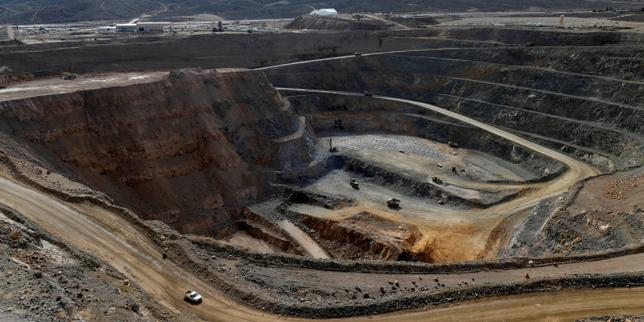
Consider a square meter of red earth in Bayan Obo, Inner Mongolia. For decades, this region has been the beating heart of the high-tech world. It is not pretty work. Extracting rare earths requires crushing rock and bathing it in toxic acid baths over and over to separate the precious elements from the waste.
While the West spent the late twentieth century outsourcing its heavy manufacturing to keep its own skies blue, China dug in. They endured the environmental scars. They perfected the chemistry. They played the long game.
Now, that patience is paying off. The new regulations require exporters to track every single gram of rare earths through the supply chain, revealing exactly who is buying what, and where it is going. It is total visibility for Beijing, and total opacity for everyone else.
The strategy is simple. Power.
If you control the ingredients for the future, you control the future itself. Every wind turbine spinning off the coast of Scotland, every electric vehicle accelerating down a California highway, and every missile guidance system in the Pentagon's arsenal relies on these seventeen elements. We built a glittering digital civilization on a foundation of sand, and someone else owns the beach.
The Illusion of Alternatives
It is tempting to think we can just dig somewhere else. The United States has the Mountain Pass mine in California. Australia has rich deposits. But mining the rock is only five percent of the battle.
The real magic—and the real monopoly—lies in the processing.
Imagine having a recipe for the world’s greatest cake, but only one bakery on Earth owns the oven required to bake it. You can gather all the flour and sugar you want, but you still have to send your batter to that one oven. Right now, China controls roughly 60 percent of rare earth mining, but a staggering 90 percent of the refining capacity. If a Western company scoops up a handful of lanthanum in the American desert, it almost certainly has to ship it across the Pacific just to get it cleaned.
This creates a terrifying vulnerability. It is a quiet dependency that shapes foreign policy without a single shot being fired. When diplomatic tensions flare, the export valves turn just a fraction of a millimeter. Prices spike. Supply chains shudder. Boardrooms in Tokyo, Munich, and Cupertino break into a cold sweat.
The panic is palpable, but it is a slow-burning panic.
The Microscopic Geopolitics of Tomorrow
We like to think of technology as clean. We talk about the "cloud" as if our data floats in the ether, detached from the physical realities of the planet. We praise electric cars for having zero emissions.
But green technology is incredibly resource-intensive. A conventional combustion-engine car uses about twice as much copper and manganese as an electric vehicle, sure. But that electric vehicle requires miles of specialized wiring and massive permanent magnets packed with dysprosium to keep the motor running efficiently under high temperatures.
Our clean future is incredibly dirty to build.
The new export restrictions are a reminder that the transition away from fossil fuels is not a transition away from resource dependency. We are merely swapping oil fields for open-pit mines. Instead of OPEC dictating the price of a barrel of crude, a single capital city will influence the cost of a megawatt of wind energy.
The Human Cost of a Smarter World
Step back from the geopolitical chessboard for a moment. Think about what this means for the engineers trying to build the next generation of medical imaging tech.
An MRI machine requires tons of superconducting magnets. If the supply of gadolinium dries up, or becomes prohibitively expensive, hospitals face a choice. They can pay exorbitant premiums, passing the cost down to patients, or they can delay upgrading their equipment.
This is where the cold facts of a trade ministry press release hit the human bone. It affects whether a doctor can spot a tumor early. It affects how quickly a grid can recover from a blackout. It affects the price of the laptop a student buys for college.
We have spent generations optimizing for efficiency. We built "just-in-time" supply chains that assumed peace and predictability were permanent fixtures of the global economy. We forgot that nature distributes its wealth unevenly, and humans have a habit of weaponizing that unevenness.
The West is scrambling to catch up. Billions of dollars are being poured into recycling old electronics to harvest the tiny fractions of rare earths inside them. Scientists are pulling all-nighters in laboratories from Boston to Seoul, trying to invent magnets that do not rely on these elusive elements.
But science takes time. Mines take decades to open.
Until then, the world waits on the next regulatory update. We continue to tap our screens, oblivious to the fact that the invisible dust inside them is the most contested real estate on the planet.
A lone freighter slips out of a port in Shanghai, its hull riding low in the water. Deep in its cargo hold sit crates of gray, unassuming powder. It looks like nothing. But as it journeys across the ocean, it carries the weight of the modern world.